Start with the strength you want, not the filter name
The NiSi Swift Black Mist 1/8 and 1/4 both soften highlights and lower contrast, but they do it to different degrees. The 1/8 is the lighter touch: it adds a subtle glow and keeps more of the original contrast and detail. The 1/4 is more pronounced, with stronger blooming around light sources and a softer overall look. Neither is 'better'—the right choice depends on how much diffusion you want in-camera and how much control you want to keep in post.
This comparison focuses on the 1/8 because that is the version with full supplied specifications here. The 1/4 is included as the stronger alternative, but the evidence for its exact behavior is limited to general descriptions of Black Mist diffusion. Where the supplied information does not confirm a detail, I say so rather than guess.
What the 1/8 actually does
-
NiSi SWIFT Black Mist 1/8 Filter for 67mm True Color VND and Swift System: Reduces highlights and lowers contrast while softening wrinkles and blemishes, creating a soft, pastel-like quality of light. This is the core effect of Black Mist diffusion; the 1/8 applies it gently, so skin and textures are smoothed without erasing detail.
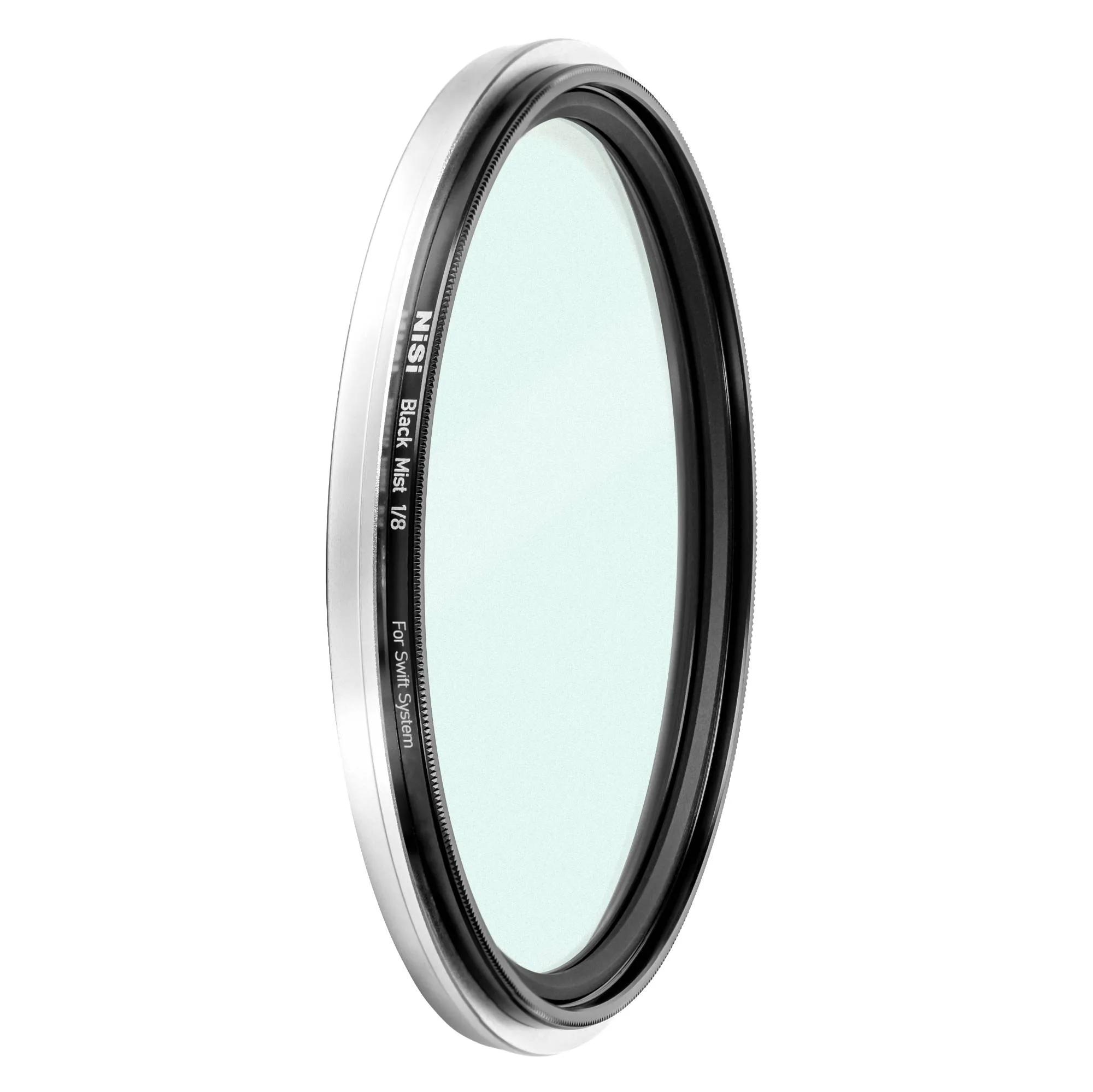
NiSi SWIFT Black Mist 1/8 Filter for 67mm True Color VND and Swift System
-
NiSi SWIFT Black Mist 1/8 Filter for 67mm True Color VND and Swift System: With an extra layer of black specks, provides little loss of detail across the image compared to traditional diffusion filters. If you want diffusion but still need sharpness for landscapes or product shots, the 1/8 is the safer starting point.
-
NiSi SWIFT Black Mist 1/8 Filter for 67mm True Color VND and Swift System: Adds extra blooming and gradients to highlights; direct light sources become more film-like with a smoother, buttery texture around the highlights. This is the look most people want from Black Mist—glowing practical lights and soft highlight roll-off—and the 1/8 delivers it subtly.
1/8 vs 1/4: how the strengths differ in practice
The 1/4 is not documented in the supplied evidence with the same level of detail as the 1/8, so I cannot quote exact numbers for its effect. What is clear is that Black Mist filters are graded by strength, and the 1/4 is stronger than the 1/8. That means more highlight bloom, lower contrast, and a softer overall image. Use the 1/8 when you want a hint of atmosphere; use the 1/4 when you want the diffusion to be obvious.
- Highlight bloom: 1/8: subtle glow around bright sources. 1/4: noticeably larger, softer halos—better for dreamy portraits or cinematic night scenes.
- Contrast: 1/8: keeps most of the original contrast. 1/4: lowers contrast more, giving a flatter, more filmic base that often needs a contrast boost in post.
- Detail retention: 1/8: minimal loss of detail, even in fine textures. 1/4: softer across the frame, which can flatter skin but may blur distant foliage or architectural lines.
- Best use case: 1/8: everyday video, events, landscapes where you still want clarity. 1/4: narrative work, music videos, or any scene where atmosphere outweighs sharpness.
Using either strength with the True Color VND
Both filters are designed for the NiSi Swift System. The 1/8 can be pressed directly onto the front of the NiSi True Color 1-5 stop VND, turning it into a VND with Black Mist. Alternatively, use the optional Swift adapter ring (sold separately) to attach the filter directly to your lens. The 1/4 works the same way, but the supplied information does not include its specific stacking guidance. The key point is that the Swift System lets you add diffusion without a separate matte box or filter holder.
Stacking filters can introduce vignetting at wide focal lengths. For the 1/8, NiSi provides suggested focal lengths: with the True Color 1-5 stop VND plus one Swift filter, no vignetting at 18mm full frame; with two Swift filters, no vignetting at 20mm. These figures are a guide at infinity focus and can vary with lens design. The 1/4's vignetting behavior is not specified in the supplied evidence, so treat it with similar caution when stacking.
Compatibility and handling details
- NiSi SWIFT Black Mist 1/8 Filter for 67mm True Color VND and Swift System: Designed for use with the NiSi Swift System; can be used with the Swift System adapter ring or added on to the NiSi True Color VND 1-5 stops for even more protection against light. Confirms the 1/8 integrates with the VND you may already own, and the adapter ring gives you a second mounting option.
- NiSi SWIFT Black Mist 1/8 Filter for 67mm True Color VND and Swift System: Nano coating is waterproof and anti-reflective. Useful for shooting in wet conditions or against bright light sources, where reflections and water spots can ruin a take.
- NiSi SWIFT Black Mist 1/8 Filter for 67mm True Color VND and Swift System: Black Mist is for many applications, not only portrait photography; it can also be used for night photography, landscape, and still life to create a cinematic atmosphere. If you shoot a mix of genres, the 1/8 is versatile enough to leave on the camera without overwhelming every scene.
What the supplied information does not settle
The 1/4 filter's exact effect on detail, contrast, and vignetting is not documented in the evidence provided here. I can only say it is stronger than the 1/8 based on the naming convention. If you need precise data for the 1/4—such as recommended focal lengths for stacking—check the product page or ask NiSi directly. Also, the 1/8's suggested focal lengths are for full-frame at infinity focus; your results may differ with other sensor sizes or focus distances. Neither filter's compatibility with non-Swift systems is confirmed, so assume they are for the Swift System only unless stated otherwise.