Quick answer
Choose the swim blouse if you want easy upper-body coverage with a front zipper and raised collar; choose the swim onesie if you want the same UPF 40+ protection extended to the knees for more leg coverage. Both are valid UV swimwear for toddlers, so the decision comes down to how much skin you want covered and how your child handles dressing.
Coverage differences that change your swim day
The swim blouse covers the torso and arms, with a raised collar and a sturdy front zipper. That design leaves the legs bare, which can be cooler on hot days but means you need to apply sunscreen to exposed legs and feet. The swim onesie covers the upper body and extends down to the knees, so it protects more skin without extra sunscreen. The trade-off is that more coverage can feel warmer and may take slightly longer to dry, though both use a stretchy recycled polyester fabric.
Fit and sizing: what to check before you buy
Both styles are sized, so use your child's current measurements rather than guessing. A swim blouse should fit closely but not restrict arm movement; the zipper should lie flat without pulling. A swim onesie needs enough length in the torso so the knees aren't pulled up, and enough room in the shoulders to raise arms comfortably. Because both are stretchy, a slightly snug fit is usually better than a loose one for UV protection, but always follow the size chart. Neither product listing specifies a separate size range for tall or slim toddlers, so if your child is between sizes, consider the larger size for the onesie to allow for leg length.
Practical trade-offs for pool and beach
The swim blouse's front zipper makes it quick to put on and take off, which helps during frequent bathroom breaks or when applying sunscreen to the legs. The swim onesie requires more wriggling to remove, especially when wet, but it stays in place during active play and reduces the need to reapply sunscreen on the legs. Neither style includes a swim diaper or built-in absorbency, so plan accordingly for non-toilet-trained toddlers. Both are made with at least 80% GRS-certified recycled polyester, which is a nice sustainability point but doesn't change the functional trade-off.
Key trade-offs at a glance
- Coverage vs. sunscreen: The swim blouse protects the torso and arms but leaves legs exposed; the swim onesie covers to the knees, reducing sunscreen needs on the legs. Choose the onesie if you want less application and reapplication on a long day. Remember that only covered areas are protected, and protection may decrease when wet or stretched.
- Dressing speed vs. secure fit: The blouse's front zipper is quicker for changes and potty breaks; the onesie stays put during active play but takes longer to remove when wet. If your toddler is in swim diapers or needs frequent bathroom trips, the blouse may be more practical. Test the zipper and neck opening before your first swim to ensure easy on and off.
- Warmth and drying: The onesie covers more skin, which can feel warmer in direct sun but may be preferable on breezy days; the blouse dries faster because it has less fabric. Neither fabric is described as quick-dry, so rinse and hang both promptly. Pack a dry change of clothes for either style, as wet UV swimwear can chill a toddler quickly.
Product facts
-
FLORENCE SWIM BLOUSE - sea moss: Long-sleeved swim blouse with a raised collar and sturdy front zipper, UPF 40+. The zipper makes dressing and bathroom breaks faster, while the collar adds neck coverage without a separate accessory.
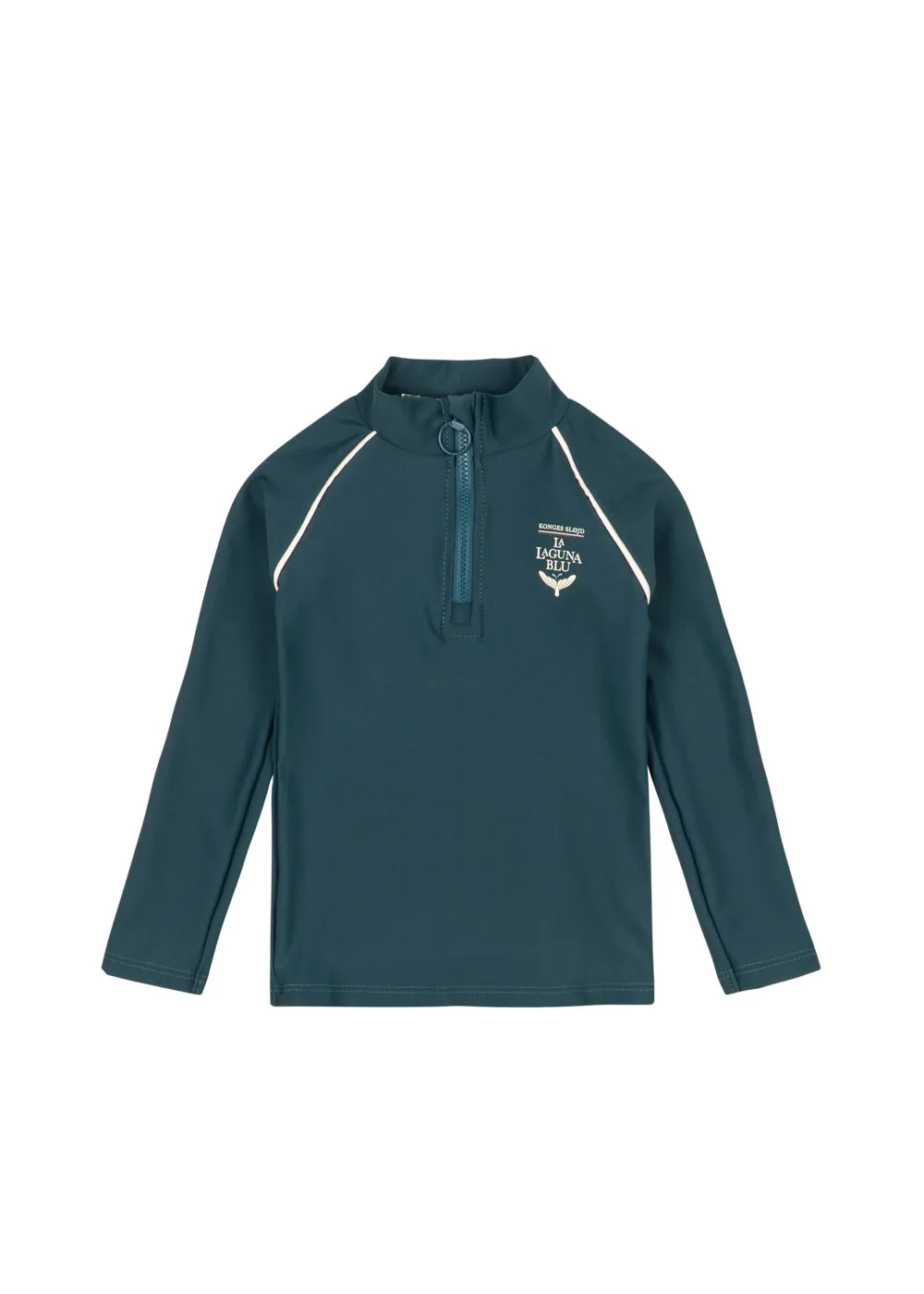
FLORENCE SWIM BLOUSE - sea moss
-
ASTER SWIM ONESIE - mon grand citron: Long-sleeved swim onesie covering the upper body and legs to the knees, UPF 40+. The knee-length coverage reduces exposed skin, which is helpful for long beach days but means more fabric to manage during changes.
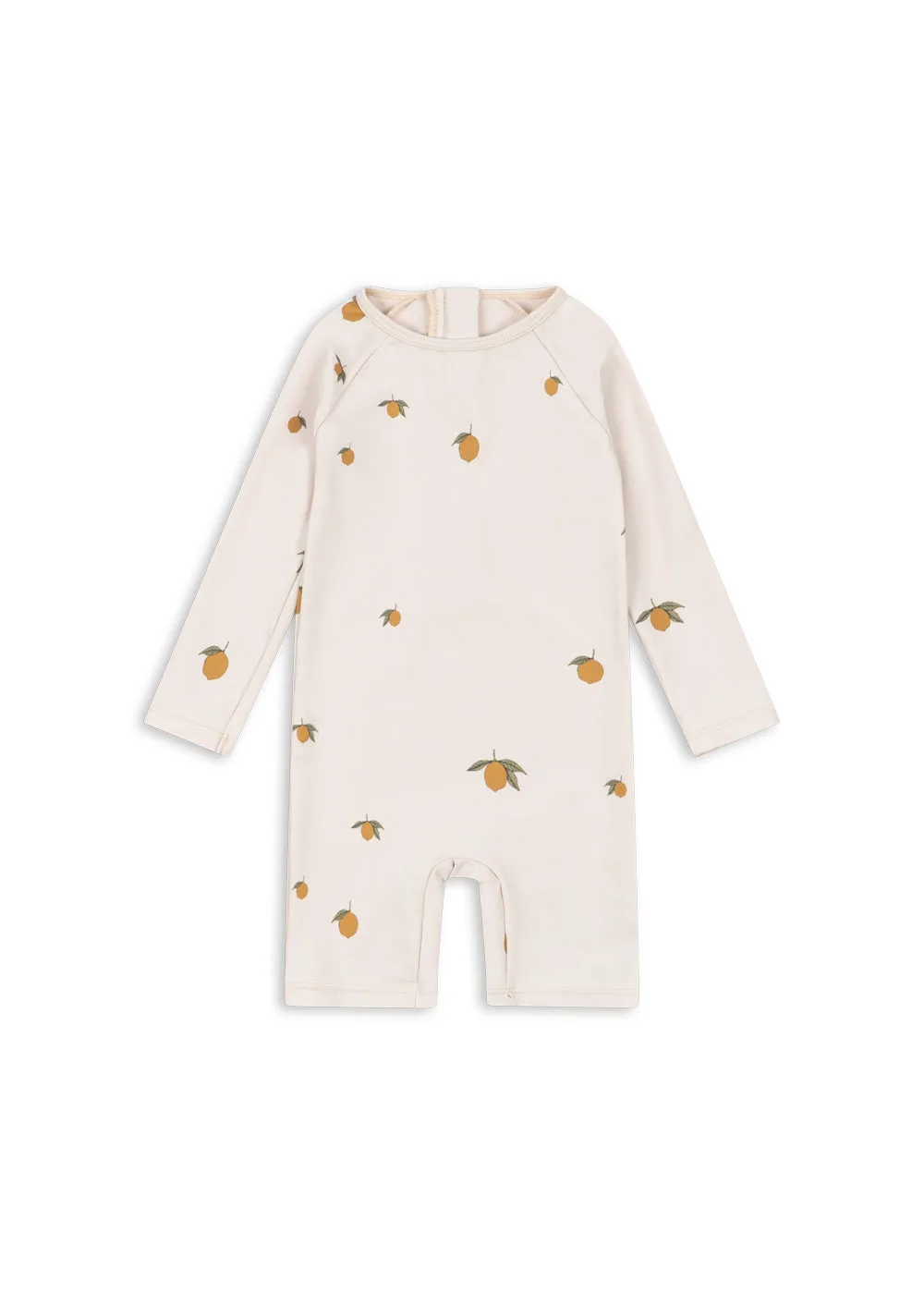
ASTER SWIM ONESIE - mon grand citron
Which style fits your toddler's needs?
Best for
- Toddlers who need quick bathroom breaks or resist dressing—the blouse's front zipper simplifies changes.
- Hot pool days where you want upper-body coverage with less fabric and faster drying.
Not for
- Full leg coverage without sunscreen—choose the swim onesie instead.
- Children who prefer a one-piece that stays in place during vigorous play—the onesie may be a better fit.