Quick answer
A hard-shell swim goggle case is the simplest way to prevent scratched swim goggles: it keeps lenses away from keys, sand, and the bottom of a duffel. Look for a lightweight EVA goggle case that fits your goggle shape without pressing on the lenses, and let goggles air-dry before you zip them in.
Goggles rarely fail in the water. They fail in the bag on the way home, where loose keys and grit grind against the lens coating. A case is cheap insurance for the gear you actually look through.
These are the questions swimmers ask most about storing and carrying goggles, answered in short form so you can skim to the one that matches your routine.
What does a swim goggle case actually protect against?
Three things cause most goggle damage: abrasion, compression, and heat. Abrasion comes from loose gear in a bag. Compression happens when something heavy lands on your goggles in a packed car or overhead bin. Heat softens gaskets and can shorten the life of anti-fog coatings. A hard-shell case addresses the first two directly and gives you a place to keep goggles out of a hot trunk.
A case does not fix a scratched lens or restore a worn anti-fog layer. It prevents those problems from starting, which is why it belongs in your routine before the damage shows up.
- Rinse goggles in fresh water after salt or chlorine exposure, then air-dry before closing the case.
- Keep the case out of direct sun when it is sealed; trapped heat is harder on gaskets than a shaded bag.
Why choose an EVA goggle case over a soft pouch?
EVA foam is lightweight, high-density, and holds a molded shape, so it absorbs pressure instead of passing it to the lens. A soft pouch or microfiber bag protects against scratches but does almost nothing when something heavy presses down on your pack. If your goggles travel in a checked bag, a boat bag, or a shared gear bin, the rigid shell matters more than the fabric.
The tradeoff is bulk. An EVA case takes up more room than a pouch, so if you are counting grams on a thru-hike or squeezing into a small swim bag, a pouch plus careful packing may be enough. For everyone else, the shell is the better default.
- Check that the case closes without pressing on the lens; a case that is too shallow can flex the frame.
- Choose a color you can spot quickly in a dark bag.
How should I store swim goggles between swims?
Rinse, shake, and air-dry. Chlorine and salt left on the gasket break down silicone faster, and moisture trapped in a closed case encourages mildew on the strap. Once dry, place goggles lens-up in the case so the frame rests on its edges rather than the lens surface.
At home, store the case open or loosely closed in a cool, dry spot. Do not hang goggles by the strap for long periods; stretched silicone loses its snug fit and starts leaking.
- Never store goggles wet inside a sealed case for more than a day.
- Keep a spare strap or a second pair if you swim several times a week.
Is a swim goggles travel case worth packing?
Yes, if your goggles leave the house in anything other than your hand. A travel case keeps lenses off sandy towels, protects them from the crush of a carry-on, and gives wet goggles a defined home so they do not dampen clothes. It also makes the morning swim easier: everything is in one place, and you are not digging through a bag at the pool deck.
The case earns its space when you swim away from home regularly. If you only swim at one pool and keep goggles in a locker, a pouch may be sufficient.
- Pack the case near the top of your bag so it does not sit under heavier items.
- If you carry a towel and goggles together, put the towel in a separate compartment.
How do I prevent scratched swim goggles in a shared bag?
Separate hard objects from the lens. Keys, water bottles, and carabiners are the usual culprits. A case solves this by giving goggles their own shell, but if you skip the case, at least wrap goggles in a soft cloth and place them at the top of the bag.
Also check how you set goggles down at the pool. Resting them lens-down on concrete or a pool deck is a common way to pick up fine scratches that you only notice in the water.
- Set goggles lens-up on a towel, never lens-down on concrete.
- Replace a case once the shell cracks; a split shell no longer spreads pressure.
Goggle case care checklist
Rinse and dry before storage
Fresh water rinse, shake off excess, air-dry fully before the case closes. Wet goggles stored sealed are the fastest route to a mildewed strap.
Lens-up placement
Rest the frame on its edges inside the case so the lens never contacts the shell. Contact points are where scratches start.
Separate hard gear
Keep keys, bottles, and carabiners in a different pocket from the goggle case. The case only works if nothing sharp is pressing on it.
Products that fit this routine
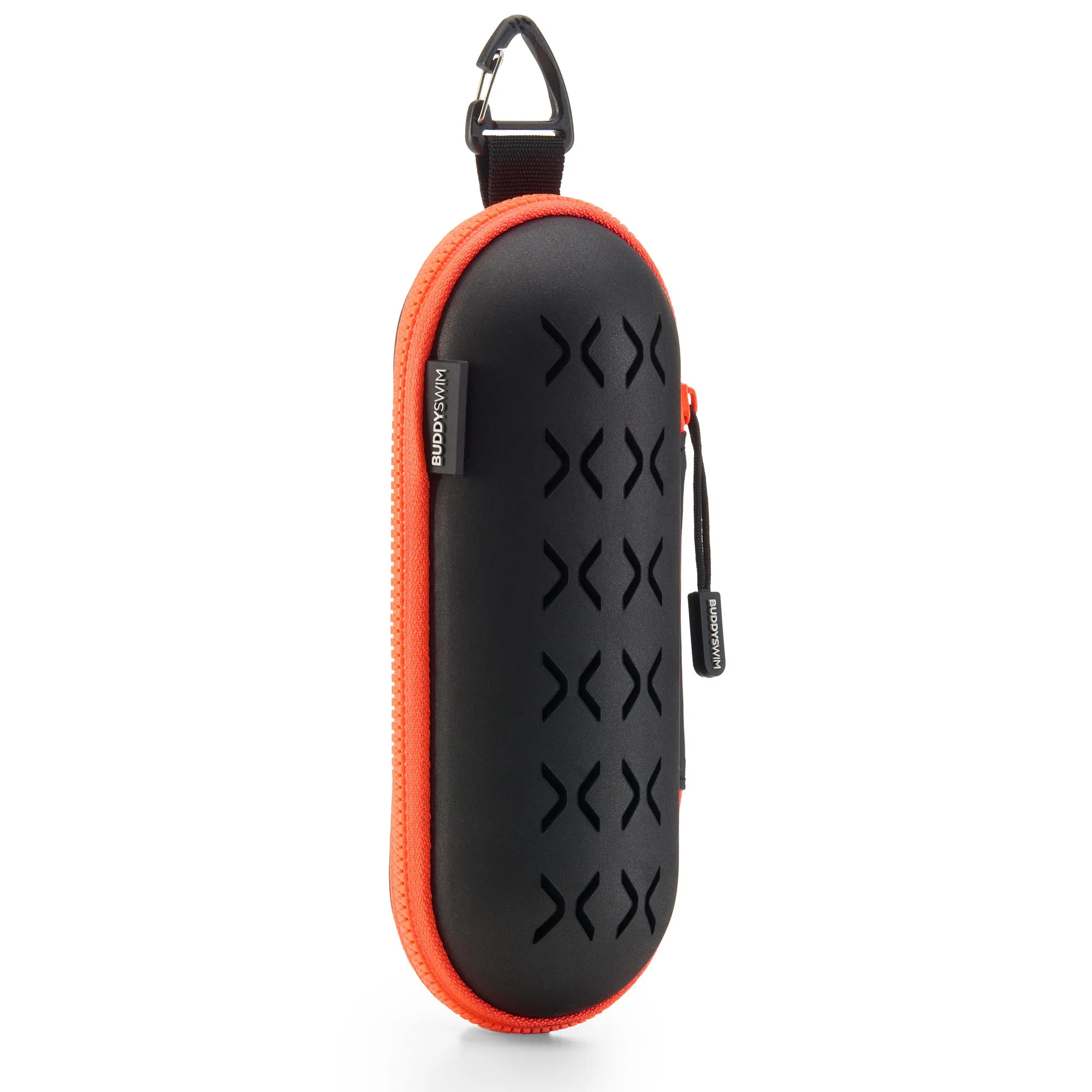
- Buddyswim EVA Swim Google Case: Durable hard-shell case made from lightweight, high-density EVA foam, built to protect goggles from scratches, crushing, and everyday wear. This is the direct answer to preventing scratched swim goggles: a rigid shell absorbs the pressure that soft pouches pass straight to the lens.
- Blackout Travel Eye & Sleep Mask: Anatomically shaped, plush cushioning that keeps out natural and artificial light, useful for busy hotels, long layovers, and long flights. If you travel to swim meets or early practices, sleep quality on the road often matters as much as gear protection.
- Passport Holder & Organizer: Durable nylon compartments keep passports, cards, and cash organized, with a secret cash pocket and a slim, lightweight design. For swim travel that crosses borders, keeping documents separate from damp gear keeps the trip running smoothly.
A swim goggle case is a small purchase that protects the one piece of gear you cannot work around. Rinse, dry, store lens-up, and your goggles will stay clear for more seasons than they would loose in a bag.