Quick answer
Choose swim goggles if you want a low-profile, low-drag fit for lap swimming, training, or racing. Choose a swim mask if you want a wider field of view and more coverage around the eyes and nose for snorkeling, casual swimming, or sensitive eyes. Neither is universally better; the right pick depends on where you swim and how the seal feels on your face.
Swim goggles vs. swim mask is really a question about priorities: do you want minimal drag and a precise fit, or do you want a wider view and more coverage? Both protect your eyes from chlorine, salt, and debris, but they sit on your face differently and suit different kinds of swimming.
This comparison focuses on how each option fits, what it covers, and which swimming situations each one handles best. It uses real product examples from the Grand Trunk lineup to make the trade-offs concrete, and it points out where a decision is limited by missing information rather than guessing.
How swim goggles and swim masks differ
Swim goggles are small, separate eye cups that seal around each eye socket. They keep water out, reduce drag, and let you see clearly underwater without covering your nose. Because they sit close to the face, they are the default choice for lap swimming, triathlon training, and anyone who wants to move fast through the water without gear catching the current.
A swim mask uses a single lens or a connected frame that covers both eyes and often the nose. That larger footprint gives you a wider field of view and more protection around the eyes, which many casual swimmers and snorkelers prefer. The trade-off is more surface area, slightly more drag, and a seal that depends on a broader area of your face fitting well.
- Goggles: separate eye cups, low profile, minimal drag, nose stays free.
- Mask: wider coverage, broader view, often includes the nose area.
Fit and seal: where the decision is usually made
Fit matters more than any spec sheet. Goggles seal around the bony orbit of each eye, so they can work for many face shapes if the strap tension is right. A mask seals across a larger area that includes the cheeks and sometimes the nose bridge, so it is more sensitive to face width, nose shape, and whether you have a low or high nose bridge.
If you have tried goggles and keep getting leaks, a mask is worth testing because the seal area is different. If a mask feels bulky or presses on your nose, goggles are the better path. The only reliable test is to try the gear on dry land first: press it gently to your face without the strap and see whether it holds suction briefly. If it does, the seal is promising.
- Test the seal without the strap first; suction is a good sign.
- Adjust the strap last, and only enough to keep the gear in place.
Protection and care for your eye gear
Both goggles and masks protect your eyes, but they do not protect themselves. Scratches and crushed lenses are the most common ways swim eye gear fails, and a hard-shell case is a simple fix. The Buddyswim EVA Swim Google Case is made from lightweight, high-density EVA foam and is designed to protect goggles from scratches, crushing, and everyday wear, whether you are heading to the lake or tossing gear into a backpack after an early morning swim.
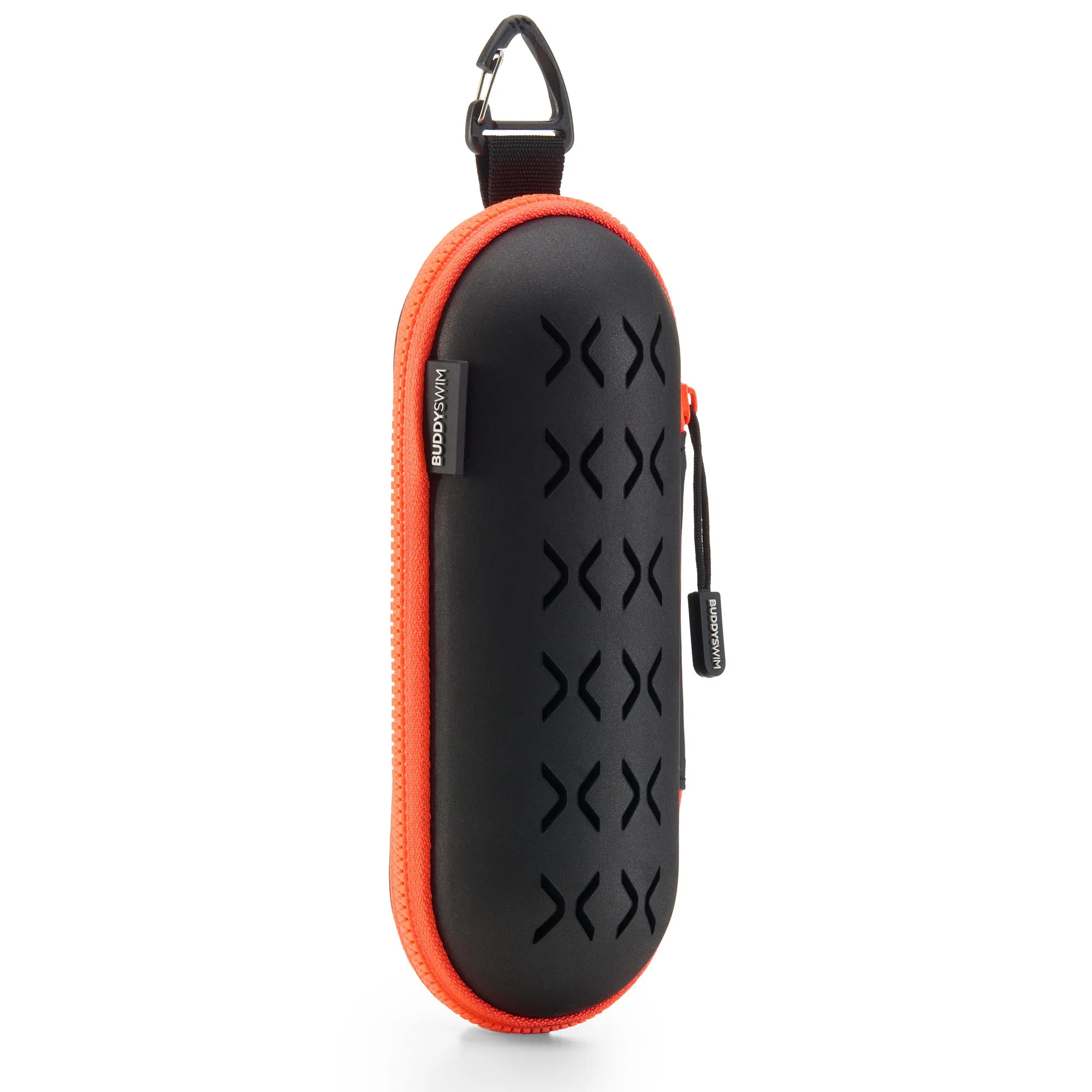
Buddyswim EVA Swim Google Case
If you swim in open water, visibility and buoyancy are separate concerns from eye protection. The Restube Swim Buoy Pro is designed for visibility and added buoyancy while you swim, and it doubles as a dry bag for water sports adventures. It does not replace goggles or a mask, but it can make an open-water swim more comfortable and easier for others to spot you.
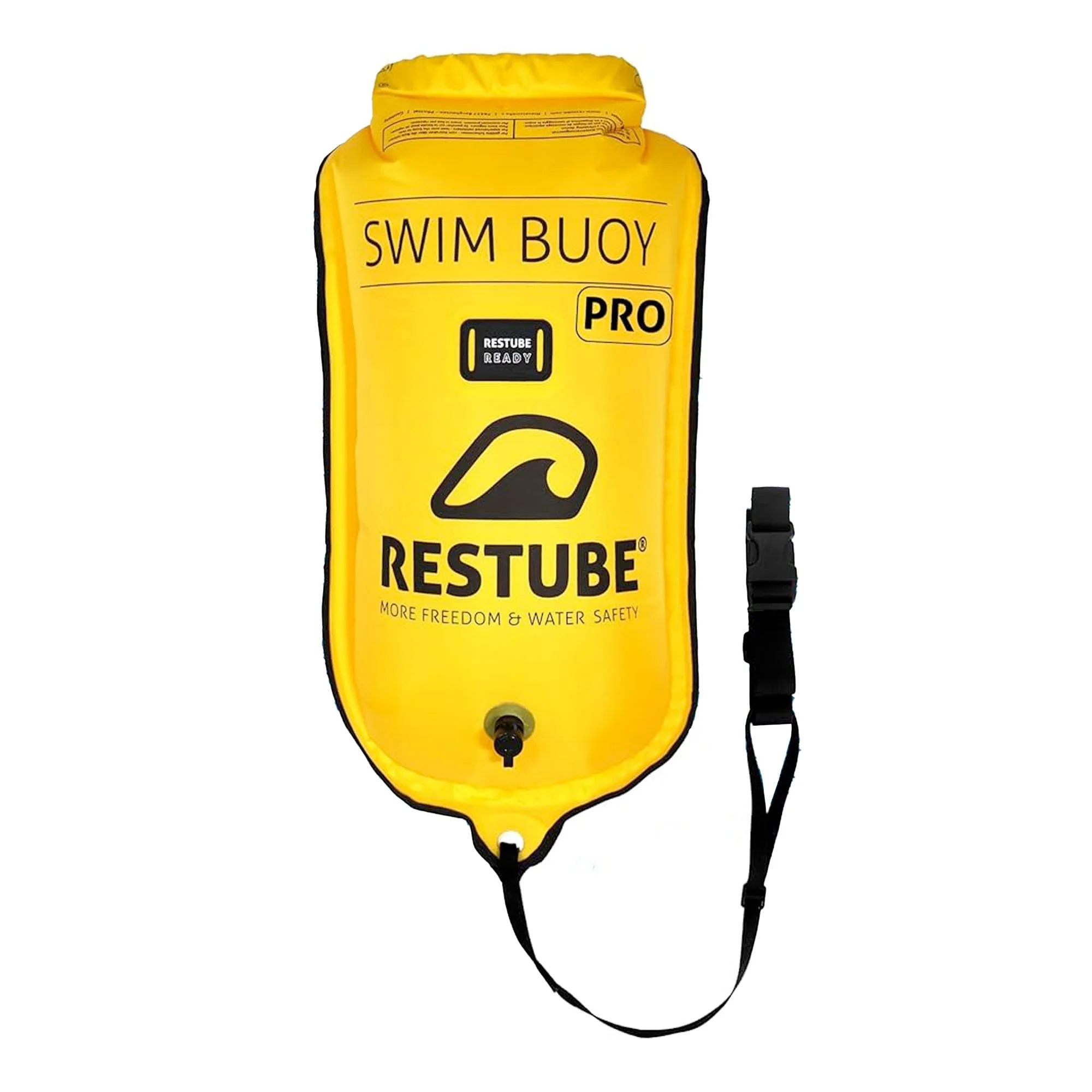
Restube Swim Buoy Pro
- Rinse eye gear in fresh water after swimming and let it air dry.
- Store goggles or a mask in a hard case to avoid scratches and crushing.
Which one is better for your swimming?
For lap swimming, training, and racing, goggles are usually better because they are lighter, lower profile, and less likely to catch water. For snorkeling, casual swimming, or anyone who wants a wider view and more coverage around the eyes and nose, a mask is often the more comfortable choice. Neither option is inherently superior; the swimming you actually do should drive the pick.
If you are unsure, start with goggles if you care about speed and a minimal feel, and start with a mask if you care about view and coverage. You can also own both: many swimmers keep goggles for training and a mask for vacation snorkeling or relaxed days in the water.
- Laps, training, racing: goggles.
- Snorkeling, casual swimming, wider view: mask.
Trade-offs at a glance
- Field of view: A mask covers both eyes in one frame, which usually gives a wider view than separate goggle cups. Choose a mask if seeing more around you matters more than a minimal feel.
- Drag and profile: Goggles sit close to the face with less surface area, so they tend to create less drag in the water. Choose goggles for lap swimming, training, or racing.
- Seal and fit: Goggles seal around each eye socket; a mask seals across a larger area that includes the cheeks and sometimes the nose bridge. Test both if you have had leaks, and pick the one that holds a gentle suction without the strap.
- Protection and storage: Lenses scratch and frames crush, so a hard-shell case such as the Buddyswim EVA Swim Google Case protects your investment. Store eye gear in a case rather than loose in a bag.
Product facts that help you decide
- Buddyswim EVA Swim Google Case: Made from lightweight, high-density EVA foam, this durable hard-shell case helps protect goggles from scratches, crushing, and everyday wear. A case keeps whichever eye gear you choose in working condition between swims, especially when it rides in a backpack or beach bag.
- Restube Swim Buoy Pro: Designed for visibility and added buoyancy while you swim, and doubles as a dry bag for water sports adventures. Useful for open-water swimmers who want to be seen and keep a few items dry, though it does not replace goggles or a mask.
How to choose between goggles and a mask
Best for
- Lap swimmers, triathletes, and anyone who wants a low-profile, low-drag fit
- Swimmers who prefer separate eye cups and a free nose
Not for
- Swimmers who want a wider field of view and more coverage around the eyes and nose
- Snorkelers or casual swimmers who find separate eye cups uncomfortable
Pick goggles for speed, a minimal feel, and lap swimming, and pick a mask for a wider view and more coverage in casual or snorkeling situations. Test the seal before you commit, store your eye gear in a hard case, and let the swimming you actually do make the call.