The real difference is who decides where the light lands
Fixed ceiling spots are aimed at the factory. Once the fixture is up, the light goes where the housing points, and your only adjustment is usually the bulb. Swiveling spot heads let you change that after installation, which matters when furniture moves, a reading chair lands in a different corner, or you want to wash a wall instead of the floor.
The tradeoff is not quality versus flexibility. It is predictability versus control. Fixed spots suit rooms where the layout is settled and the ceiling position already points at the right surface. Swiveling heads suit rooms where the target is uncertain or likely to change, and they ask a little more of you at setup because you have to aim them.
Swiveling vs fixed: what changes in daily use
- Aiming after installation: Swiveling heads can be redirected to focus light where needed. Fixed spots cannot be re-aimed without moving the fixture or changing the bulb.
- Placement tolerance: A swiveling fixture forgives a ceiling position that is slightly off-target, because the head can compensate. A fixed spot makes an off-center mount more obvious.
- Setup effort: Swiveling heads need a deliberate aiming pass after mounting. Fixed spots are effectively aimed the moment the housing is level.
- Glare control: Adjustable heads can be tilted away from seated eye level, which helps in living rooms. Fixed spots depend on where the housing points and what bulb you use.
- Style range: Fixed spots tend to read as minimal and architectural. Swiveling designs can carry more visible hardware, which is why materials and shade design matter as much as the mechanism.
When adjustable spot heads are worth the extra setup
Choose swiveling heads when the room has more than one job. A kitchen that also hosts homework, a living room with a gallery wall, or a bedroom with a chair that moves seasonally all benefit from being able to redirect light without calling an electrician.
They also help when you are unsure about ceiling placement. If the junction box is not centered over the counter or table you want to light, an adjustable head can bridge that gap. Fixed spots cannot.
How the Depuley 2-way spotlight handles aiming
-
Depuley 2 Way Spotlight Ceiling with Swiveling Spots Heads, Ceiling Light Hollow Design,Iron Rattan Lampshade, Spot Lights for Kitchen, Living Room, Bedroom,Black: Two flexible track heads: 90° rotatable light head and 330° rotatable main bracket. This is the practical range that separates a swiveling spotlight ceiling fixture from a fixed spot. The 330° bracket rotation lets you swing the arm across the ceiling; the 90° head tilt lets you angle the beam up or down.
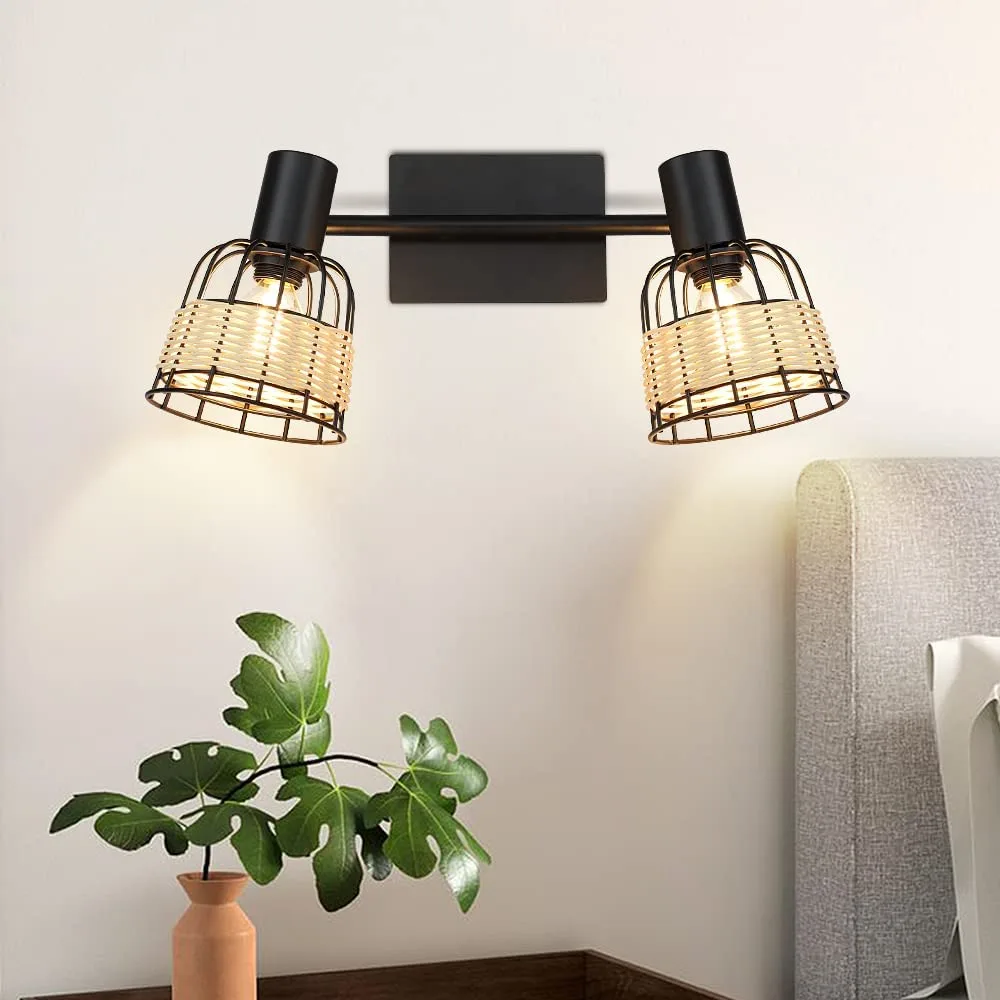
Depuley 2 Way Spotlight Ceiling with Swiveling Spots Heads, Ceiling Light Hollow Design,Iron Rattan Lampshade, Spot Lights for Kitchen, Living Room, Bedroom,Black
-
Depuley 2 Way Spotlight Ceiling with Swiveling Spots Heads, Ceiling Light Hollow Design,Iron Rattan Lampshade, Spot Lights for Kitchen, Living Room, Bedroom,Black: Adjust the track-style lamp to place the light where you need it. The fixture is designed to be re-aimed after installation, which is the core advantage over fixed spots.
-
Depuley 2 Way Spotlight Ceiling with Swiveling Spots Heads, Ceiling Light Hollow Design,Iron Rattan Lampshade, Spot Lights for Kitchen, Living Room, Bedroom,Black: Can be installed on a sloped or vaulted ceiling. Sloped ceilings are where fixed spots often fail, because the housing points at an angle you cannot correct. An adjustable head can compensate.
Where fixed spots still make more sense
If your ceiling position is already correct and the room layout is stable, fixed spots are simpler. There is no aiming pass, no risk of a head drifting out of position, and fewer visible joints to dust. In a hallway, a utility area, or a kitchen where the counter run is fixed and the ceiling can is centered over it, a fixed spot does the job with less fuss.
Fixed spots also suit very clean, minimal interiors where visible adjustment hardware would distract. That is a style decision, not a performance one.
The iron rattan spotlight: style plus adjustment
The Depuley 2-way ceiling spotlight combines swiveling heads with a metal and rattan cage shade. The hollow iron rattan lampshade softens the light and gives the fixture a farmhouse or pastoral look, which is unusual for an adjustable spotlight. If you want the aiming flexibility of a swiveling spotlight ceiling fixture but do not want a bare industrial head, this is the compromise.
It uses two E12 bulbs (US 110–120V, UL certified) with a maximum of 40W each, and it is compatible with a dimmer when you use dimmable bulbs and a dimmable switch. The fixture is fully dimmable under those conditions. Note that bulbs are not included, so factor that into the cost.
Depuley 2-way spotlight: specs that affect the decision
- Depuley 2 Way Spotlight Ceiling with Swiveling Spots Heads, Ceiling Light Hollow Design,Iron Rattan Lampshade, Spot Lights for Kitchen, Living Room, Bedroom,Black: US version: 110–120V, E12 bulb, UL certified. Also available in UK version: 230V, E14. Bulb base and voltage differ by region, so confirm your version before buying bulbs. The E12 base is smaller than the more common E26.
- Depuley 2 Way Spotlight Ceiling with Swiveling Spots Heads, Ceiling Light Hollow Design,Iron Rattan Lampshade, Spot Lights for Kitchen, Living Room, Bedroom,Black: Max 40W per bulb; compatible bulb types include incandescent, halogen, CFL, and LED, plus dimmable. The 40W ceiling per bulb limits how bright the fixture can be. If you need high output, check that two 40W-equivalent bulbs are enough for the room.
- Depuley 2 Way Spotlight Ceiling with Swiveling Spots Heads, Ceiling Light Hollow Design,Iron Rattan Lampshade, Spot Lights for Kitchen, Living Room, Bedroom,Black: Dimensions: 15.7" × 4.3" × 8.7"; weight 2.08 lb. The long, narrow footprint means the fixture spans a stretch of ceiling rather than clustering in one spot, which suits a counter run or a wall wash.
- Depuley 2 Way Spotlight Ceiling with Swiveling Spots Heads, Ceiling Light Hollow Design,Iron Rattan Lampshade, Spot Lights for Kitchen, Living Room, Bedroom,Black: Includes all mounting hardware and a canopy mounting plate. You do not need to source a separate mounting plate, which simplifies the install compared with some adjustable fixtures.
A simple way to decide before you order
- 1. Mark the target surfaces: Stand in the room and note what you want lit: counter, table, art, or floor. If the ceiling position is already centered on those targets, fixed spots are enough.
- 2. Check the ceiling: Sloped or vaulted ceilings favor adjustable heads, because fixed housings will point off-target. Flat ceilings with centered mounting can go either way.
- 3. Count the bulbs you need: Two heads at 40W max each may not light a large kitchen alone. Decide whether this is task lighting or ambient lighting before committing.
- 4. Confirm the bulb base: The Depuley 2-way uses E12 in the US and E14 in the UK. Check your existing bulb stock or plan to buy the right base.
- 5. Decide on style: If you want the rattan cage look, the adjustable mechanism comes with it. If you want a bare, minimal spot, a fixed fixture may match better.
What the supplied information does not settle
The provided records do not include a beam angle, a recommended mounting height, or a dimmer compatibility list beyond the general dimmable-bulb-and-switch requirement. Those details matter for precise lighting design, so treat them as open questions rather than assume a specification. The records also do not confirm whether the rattan shade is removable, which affects cleaning.
For most rooms, the aiming range and bulb limits above are enough to make the swiveling-versus-fixed call. If you need photometric data, ask the manufacturer before ordering.