Quick Answer
Choose a traction splint like the CT-6 when you suspect a femur fracture and need to reduce pain and bleeding; choose a rigid leg splint for general immobilization of fractures below the knee.
Why the distinction matters in the field
In tactical and austere settings, the difference between a traction splint and a rigid leg splint is not just about preference—it affects patient outcomes. Traction splints are specifically designed for femur fractures, where muscle spasms can cause severe pain and internal bleeding. Rigid splints, on the other hand, stabilize the entire limb but do not provide the longitudinal pull that a traction device offers.
Understanding the mechanism of injury and your scope of practice is critical. If you are trained to apply a traction splint and have the space to do so, it is the superior choice for mid-shaft femur fractures. If you are dealing with fractures near the knee or lower leg, a rigid splint is more appropriate and less risky.
Training and space considerations
Traction splints require specific training to apply correctly. Misapplication can cause joint damage or worsen the injury. Additionally, they take up more space in a kit and require a longer application time. Rigid splints are simpler and faster, making them a better option for responders with limited training or in confined spaces.
Your medical director or unit protocol may dictate which device you can carry. Always follow your local guidelines and only use devices you are credentialed to apply.
Decision Framework: Traction vs Rigid Splint
- Femur fracture suspected: Use a traction splint to reduce pain, muscle spasm, and bleeding. Apply only if you are trained and the patient has no knee or hip injury.
- Fracture below the knee: Use a rigid splint to immobilize the joint above and below the fracture. Traction is not indicated and could cause harm.
- Limited training or space: Choose a rigid splint for faster application and easier storage. Traction splints require more skill and room to apply correctly. If you are unsure, a rigid splint is the safer default for most leg injuries.
Product Facts
-
CT-6 Tactical Leg Traction Splint: The CT-6 Tactical Leg Traction Splint weighs only 5.2 oz and folds to 20.5 x 6.75 x 0.75 inches. Its lightweight, compact design makes it practical to carry in a medical kit without adding significant weight.
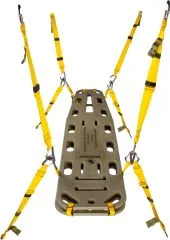
CT-6 Tactical Leg Traction Splint
Which Should You Choose?
Best for
- Trained tactical medics who suspect femur fractures and need a compact, lightweight traction device
- Teams that prioritize reducing pain and bleeding in high-acuity femur injuries
Not for
- First responders without traction splint training
- Situations involving knee or hip fractures, where traction is contraindicated