Two very different ways to support a backbend
The MeFree Tall Backbender and the MeFree Yoga Wheel Pro both help you open the chest and extend the spine, but they do it in opposite ways. The Tall Backbender is a fixed wooden structure you rest against or lie over; the Yoga Wheel Pro is a padded wheel you roll on or place under the back. That difference in form drives everything else: storage, portability, price, and how much control you have during the pose.
If you are choosing between them for a supported backbend at home, start by asking whether you want a stable platform that stays put or a mobile tool that moves with your body. The evidence below shows what each prop actually offers, so you can match it to your practice rather than to marketing language.
Side by side: what the catalog tells us
- Form and material: Tall Backbender: solid pinewood, handcrafted, light brown. Yoga Wheel Pro: EVA and PVC, available in Sky Blue or Green.
- Size and weight: Tall Backbender measures 50 cm long x 33 cm wide x 56 cm high and weighs 8.4 kg. Yoga Wheel Pro measures 16.5 cm wide x 32.5 cm high and weighs 2.3–2.5 kg.
- Assembly: Tall Backbender ships as a do-it-yourself prop with a numbered assembly guide in the package. The Yoga Wheel Pro is a single unit with no assembly steps listed.
- Supported poses named in the catalog: Tall Backbender: Viparita Dandasana and Urdhva Dhanurasana. Yoga Wheel Pro: Chakrasana, Setubandh Sarvangasana, and Viparita Dandasana.
- Care: Wipe the Tall Backbender with a damp cloth for spots or stains and let it dry fully before storing. Wipe the Yoga Wheel Pro around the surface with a clean, damp sponge or cloth.
- Catalog price: Tall Backbender: USD 9,323.37 (comparison price USD 14,799.00). Yoga Wheel Pro: USD 1,775.26 (comparison price USD 2,399.00). Prices are as listed at the time of writing.
When the Tall Backbender makes more sense
The Tall Backbender is built for experienced practitioners who want a stable base to deepen backbends and open the chest. Its fixed pinewood frame lets you rest your back along the support, which the catalog says helps reduce strain on the lower back while you hold poses like Viparita Dandasana and Urdhva Dhanurasana. Because it is a rigid structure, it gives you a consistent shape to lean into—useful if you are working on spinal alignment and want the prop to stay exactly where you put it.
The tradeoffs are real: at 8.4 kg and 56 cm high, it is not something you tuck into a cupboard after each session. It also requires assembly, though the package includes a numbered guide. And the catalog describes it as designed specifically for experienced practitioners, so beginners may find it too much prop too soon. If you have a dedicated practice space and want a long-term backbend station, this is the more permanent solution.
When the Yoga Wheel Pro is the better fit
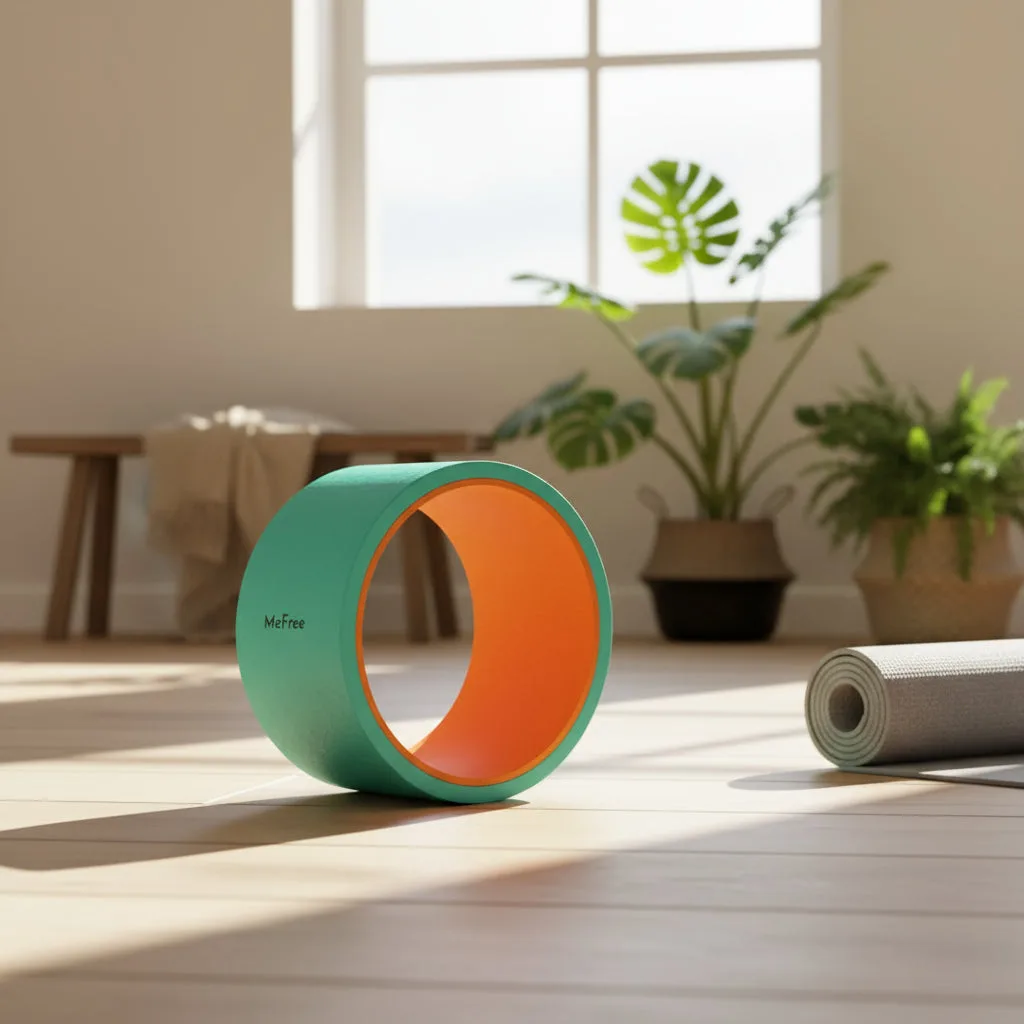
The Yoga Wheel Pro is the more versatile and portable option. At 2.3–2.5 kg and 32.5 cm high, it is easy to move around, store, and take to class. The wheel's curved surface supports gradual, controlled chest opening as you roll over it, and the catalog notes it suits both beginners and experienced practitioners depending on how you use it. It is also named for a wider range of poses—Chakrasana, Setubandh Sarvangasana, and Viparita Dandasana—so it can serve as a general mobility tool, not just a backbend prop.
The wheel asks more of your own control: because it rolls, you need to manage balance and pressure yourself. The catalog does not list specific operating instructions or weight limits, so if you are recovering from an injury or have concerns about stability, treat the wheel as a tool to explore gradually and consult a teacher or therapist for personal guidance. For many home practitioners, though, the lower price and smaller footprint make it the easier starting point.
Tall Backbender: key facts for your decision
-
Tall Backbender: Material: solid pinewood; dimensions 50 cm length x 33 cm breadth x 56 cm height; weight 8.4 kg. The wooden frame and substantial weight signal a stable, stationary prop that suits a dedicated practice area rather than a portable setup.
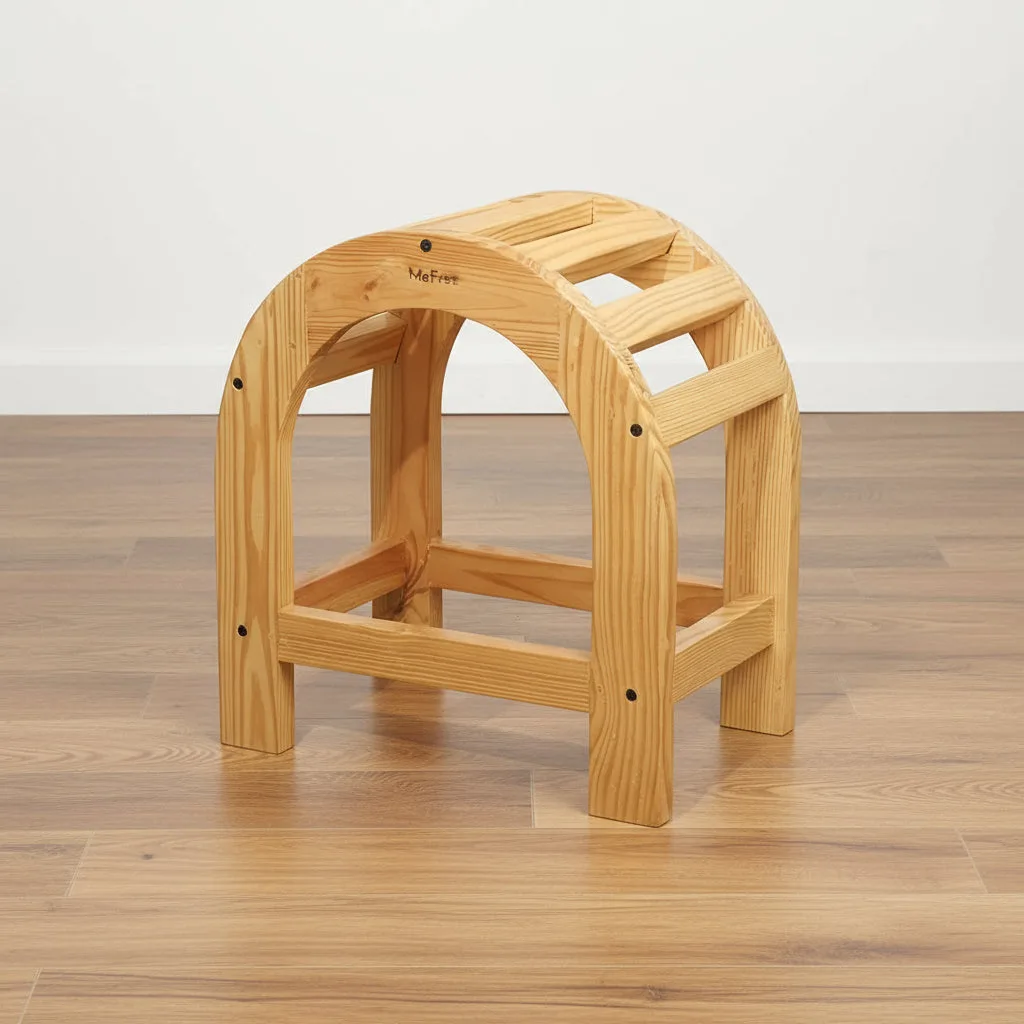
Tall Backbender
-
Tall Backbender: Easy assembly with a numbered guide included in the package. You will need to put it together, but the guide reduces the guesswork; plan for a one-time setup rather than out-of-the-box use.
-
Tall Backbender: Designed specifically for experienced practitioners to deepen backbends and enhance flexibility. If you are new to backbends, this prop may be more support than you need at first; the catalog positions it for those already working on depth.
Yoga Wheel Pro: key facts for your decision
-
Yoga Wheel Pro: Material: EVA and PVC; dimensions 16.5 cm breadth x 32.5 cm height; weight 2.3–2.5 kg; colors Sky Blue or Green. Lightweight and compact, the wheel is easy to store and carry, and the color choice is a small personal preference.
Yoga Wheel Pro
-
Yoga Wheel Pro: Suitable for both beginners and experienced practitioners, depending on how it is used; supports poses including Chakrasana, Setubandh Sarvangasana, and Viparita Dandasana. The wheel can grow with you from gentle stretches to deeper work, making it a more versatile first backbend prop.
-
Yoga Wheel Pro: Care: wipe the area around the wheel gently with a clean, damp sponge or cloth. Simple surface cleaning keeps the wheel ready for regular use without special products.
The honest trade-off: stability vs. portability
Neither prop is universally better; they solve different problems. Choose based on how you practice and where you store your props.
- Choose the Tall Backbender if: You are an experienced backbender, have a permanent space for a 56 cm-high wooden prop, and want a stable, handcrafted base for deep chest opening and supported backbends. Accept the higher price and assembly as part of the investment.
- Choose the Yoga Wheel Pro if: You want a versatile, portable prop for a range of poses, are working within a smaller budget, or are newer to backbends and want to build confidence gradually. Accept that you will need to control the roll yourself.
- Consider both if: You want a wheel for mobility and travel plus a backbender for deep, stationary work at home. They complement rather than duplicate each other.