Quick answer
A tanga has moderate back coverage with a wider side band, a thong has a narrow strip of fabric in back, and a g-string has the least coverage with a thin string. If you want minimal lines but more fabric in front and back, start with a tanga. If you want the least coverage, choose a g-string.
Tanga, thong, and g-string get used interchangeably, but they are not the same cut. The difference comes down to how much fabric sits in back, how wide the side bands are, and how much coverage you get in front. Those details change how the panty feels, how it stays put, and what it looks like under clothes.
This guide breaks down tanga vs thong and thong vs g string difference using real b.tempt'd styles, so you can match the cut to your outfit and your comfort level instead of guessing from the name.
What each cut actually is
A tanga is a minimal-coverage panty with a moderate back. It usually has a wider side band than a thong and more fabric across the back, so it sits between a bikini and a thong in coverage. If you like the idea of less fabric but still want something to hold onto, a tanga is the middle ground.
A thong has a narrow strip of fabric that runs between the glutes. It typically has a bit more front coverage than a g-string and a slightly wider waistband. A g-string is the most minimal: the back is a thin string, and the front is often smaller too. In short, tanga gives the most coverage of the three, thong is in the middle, and g-string gives the least.
- Tanga: moderate back coverage, wider side band
- Thong: narrow back strip, more front coverage than a g-string
- G-string: thin string in back, minimal front
Coverage and feel: tanga vs thong vs g-string
Coverage is the main trade-off. A tanga covers more in back, so it can feel more secure if you are not used to minimal underwear. A thong reduces back coverage but often keeps a bit more fabric in front. A g-string removes almost all back coverage, which can feel liberating or too bare depending on your preference.
Fabric matters too. A lace tanga or thong can feel softer and more flexible than a smooth microfiber g-string, but lace may show more texture under thin clothing. Smooth fabrics tend to disappear under leggings and dresses, while lace adds a feminine look that you may prefer for everyday wear.
- Choose a tanga if you want minimal lines but more back coverage
- Choose a thong if you want less coverage and a clean look under clothes
- Choose a g-string if you want the least coverage possible
How to choose for your outfit and day
For tight dresses, leggings, or anything that clings, a thong or g-string in a smooth fabric is usually the safest bet against visible lines. If you are wearing looser trousers or a skirt, a tanga can be a comfortable compromise that still feels minimal. For everyday wear, many people rotate between a thong and a tanga depending on the outfit.
If you are new to minimal coverage, start with a tanga. It gives you the look of a thong without the full commitment. Once you know how the cut feels, you can try a thong, then a g-string if you want even less fabric.
- Tanga: good first step into minimal coverage
- Thong: everyday choice under most clothing
- G-string: best for no-line looks and minimal feel
Fit matters more than the label
Whichever cut you pick, fit decides whether it stays put or shifts around. The waistband should sit flat without digging in, and the back should not pull or twist. If a thong or g-string rides up, sizing up often helps because the fabric has more room to lie flat.
Look for stretch and a smooth finish at the edges. A panty that stretches gently over the body moves with you instead of against you. If a style has an elastic-free waistband or an invisible leg finish, that can reduce digging and lines, which matters most with minimal cuts.
- Check that the waistband lies flat and does not roll
- Size up if the back pulls or twists
- Smooth edges reduce lines under clothes
Trade-offs at a glance
- Tanga: More back coverage and a wider side band than a thong, so it feels more secure but may show slightly more fabric under very tight clothing. Best if you want minimal lines with a little more coverage.
- Thong: Narrow back strip and typically more front coverage than a g-string. It disappears under most clothes but can feel like less support if you are not used to it. A solid everyday choice for most outfits.
- G-string: Thin string in back and minimal front. It gives the least coverage and the cleanest look under clothes, but some people find it too bare for all-day wear. Choose it when you want the least coverage possible.
b.tempt'd styles that show these differences
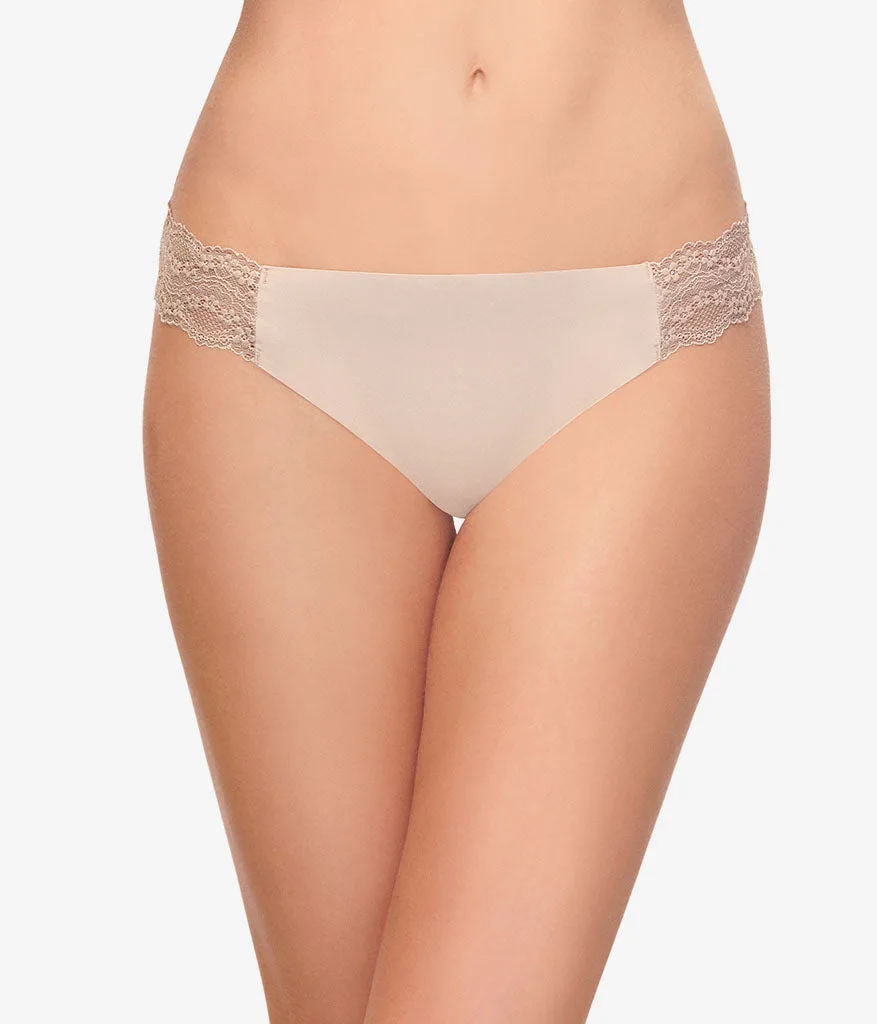
- b.bare Thong: Lightweight fabric for a barely-there feel, with a clean silhouette that stays hidden under clothing. Available in Au Natural, Blue Coral, and Cerise, sizes S to XL. A good everyday thong if you want minimal lines and a smooth look under clothes.
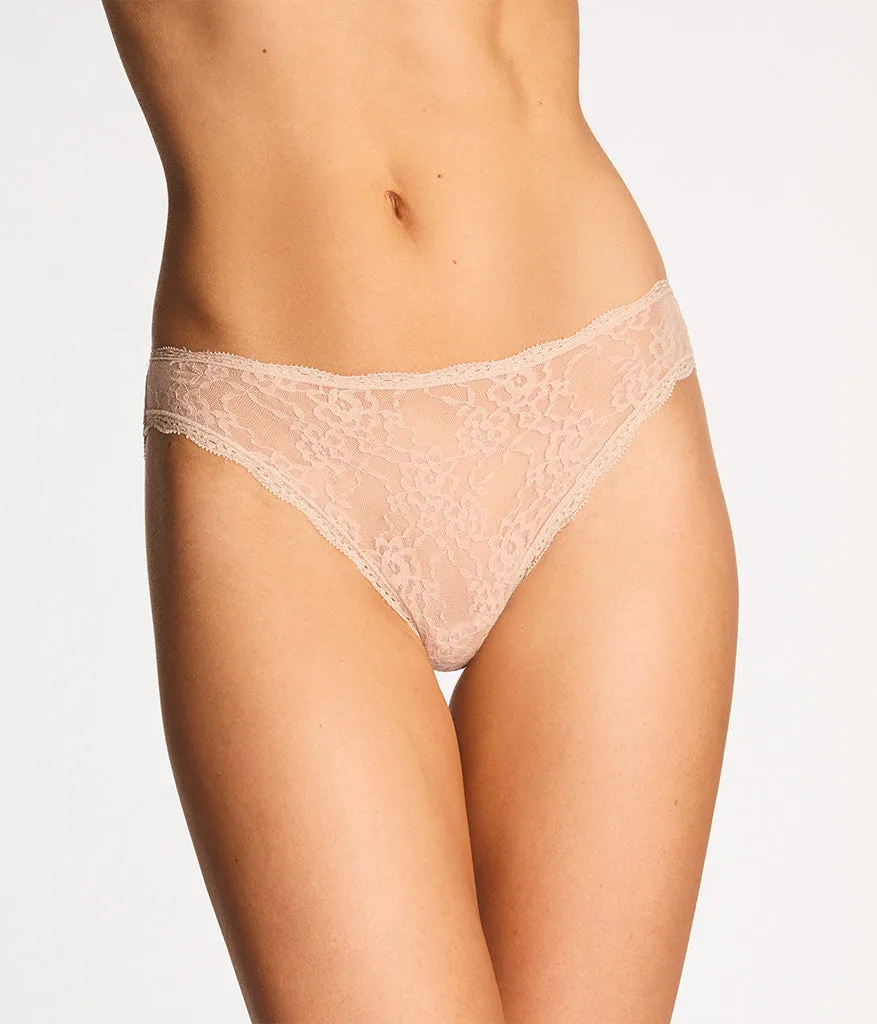
- Effortlessly Lace Hi-Leg: All-over lace styling with a hi-leg cut that creates a lengthening line. Stretch fabric is made to live in, providing ease and flexibility. Sizes S to XL. A lace option if you want a flirty look with more coverage than a thong, though the hi-leg cut is different from a tanga.
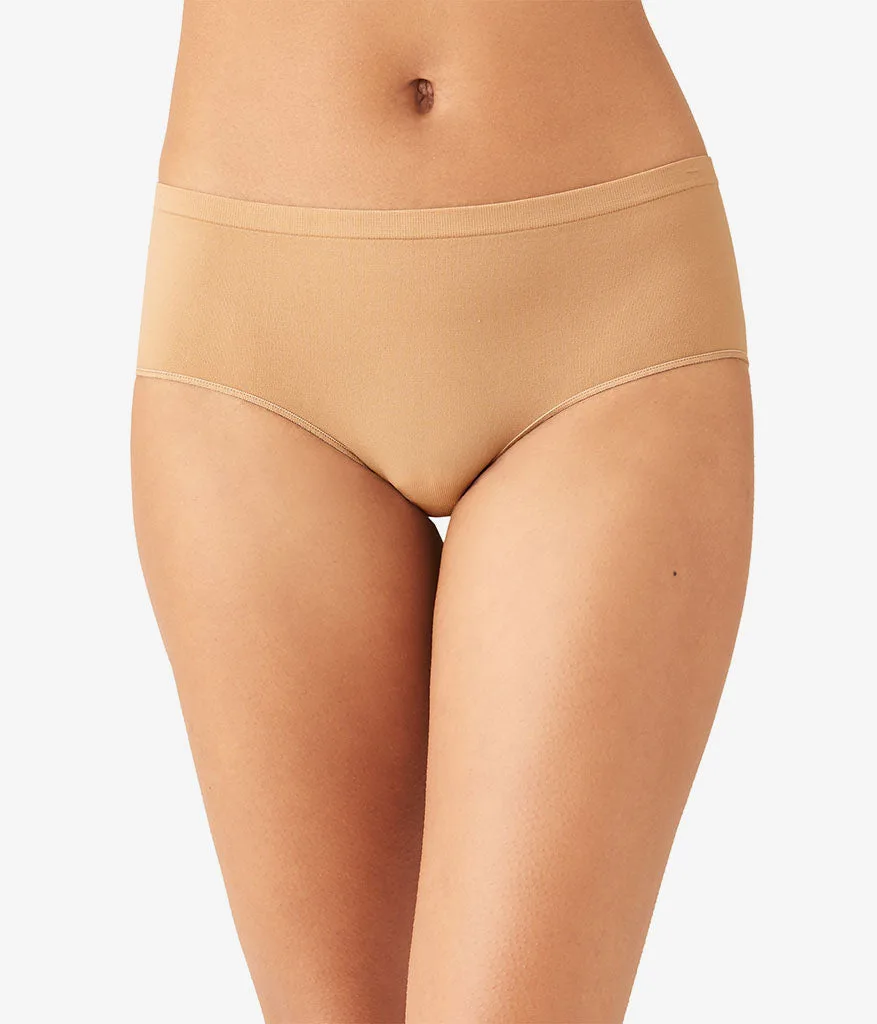
- Comfort Intended Hipster: Soft, stretchy hipster with an elastic-free waistband and an invisible leg finish for a clean look and total comfort. If you want more coverage than a tanga, thong, or g-string, this hipster shows what a full-coverage alternative feels like.
Which one should you choose?
Best for
- Tanga: if you want a step down from bikini coverage without going fully bare in back
- Thong: if you want an everyday panty that stays hidden under leggings and dresses
- G-string: if you want the most minimal coverage and no visible lines
Not for
- Tanga: if you want the absolute least coverage or no back fabric at all
- Thong: if you dislike any fabric between the glutes
- G-string: if you prefer more front coverage or a wider waistband
The right pick comes down to how much coverage you want in back and how the fabric feels on your body. Start with a tanga if you are new to minimal cuts, move to a thong for everyday no-line wear, and try a g-string when you want the least coverage. Fit and fabric matter more than the name on the label.