What are tart cherry preserves, and what makes them different from jam?
Hunter & Hilsberg Tart Cherry Preserves are a traditional preserve made with produce from farms across the northeast USA. The catalog describes them as a spread for toast, bagels, biscuits, and croissants, or as a topping for cottage cheese, yogurt, or granola. Some people eat them plain from the jar as a snack.
The supplied product information does not include an ingredient list, allergen statement, or a formal definition of how this preserve differs from jam or jelly. If you need those details—for example, to check for added pectin or specific allergens—treat the jar label as the authoritative source rather than assuming.
Serving and pairing questions
What can I serve with tart cherry preserves?
The catalog suggests toast, bagels, biscuits, and croissants, plus cottage cheese, yogurt, and granola. Those are starting points, not a limit—the tart cherry flavor also works as a condiment alongside cheese or cold meats if you want a sweet-tart contrast.
Are these preserves a good cherry spread for cheese?
The product record does not list cheese as a suggested pairing. However, the preserve's texture and tart-sweet profile make it a plausible addition to a cheese board. Treat this as a serving idea, not a manufacturer claim, and taste a small amount first to see how the cherry flavor interacts with the cheese you have.
Can I eat tart cherry preserves straight from the jar?
Yes—the catalog explicitly notes that some people eat them plain as a snack. If you do, use a clean spoon each time to avoid introducing crumbs or moisture that could affect the rest of the jar.
How much should I serve per person?
The supplied information does not include a serving size or nutrition facts. For toast or yogurt, a spoonful or two is typical; for a cheese board, put a small dish out and let guests help themselves. Adjust based on how strong you want the cherry flavor to be.
Storage and shelf-life questions
How should I store an unopened jar of tart cherry preserves?
The product record does not specify storage conditions before opening. A cool, dry pantry is a common default for unopened preserves, but check the jar label for any specific instructions from Hunter & Hilsberg.
Where should the jar go after opening?
The supplied information does not confirm whether this preserve should be refrigerated after opening. Many opened preserves are refrigerated to maintain quality, but follow the jar label rather than guessing. If the label is unclear, contact the manufacturer.
How long do tart cherry preserves last after opening?
No shelf-life information is provided in the product record. The jar label or the manufacturer's guidance is the only reliable source for a use-by window. Do not rely on general preserve timelines for this specific product.
Can I freeze the preserves?
Freezing is not mentioned in the supplied information. If you want to extend storage, check with the manufacturer first; freezing can change texture in ways the label may not address.
What the Hunter & Hilsberg product record confirms
-
Hunter & Hilsberg Tart Cherry Preserves: Made with produce from farms all over the northeast USA. This tells you the fruit is regionally sourced, which may matter if you prefer domestic produce.
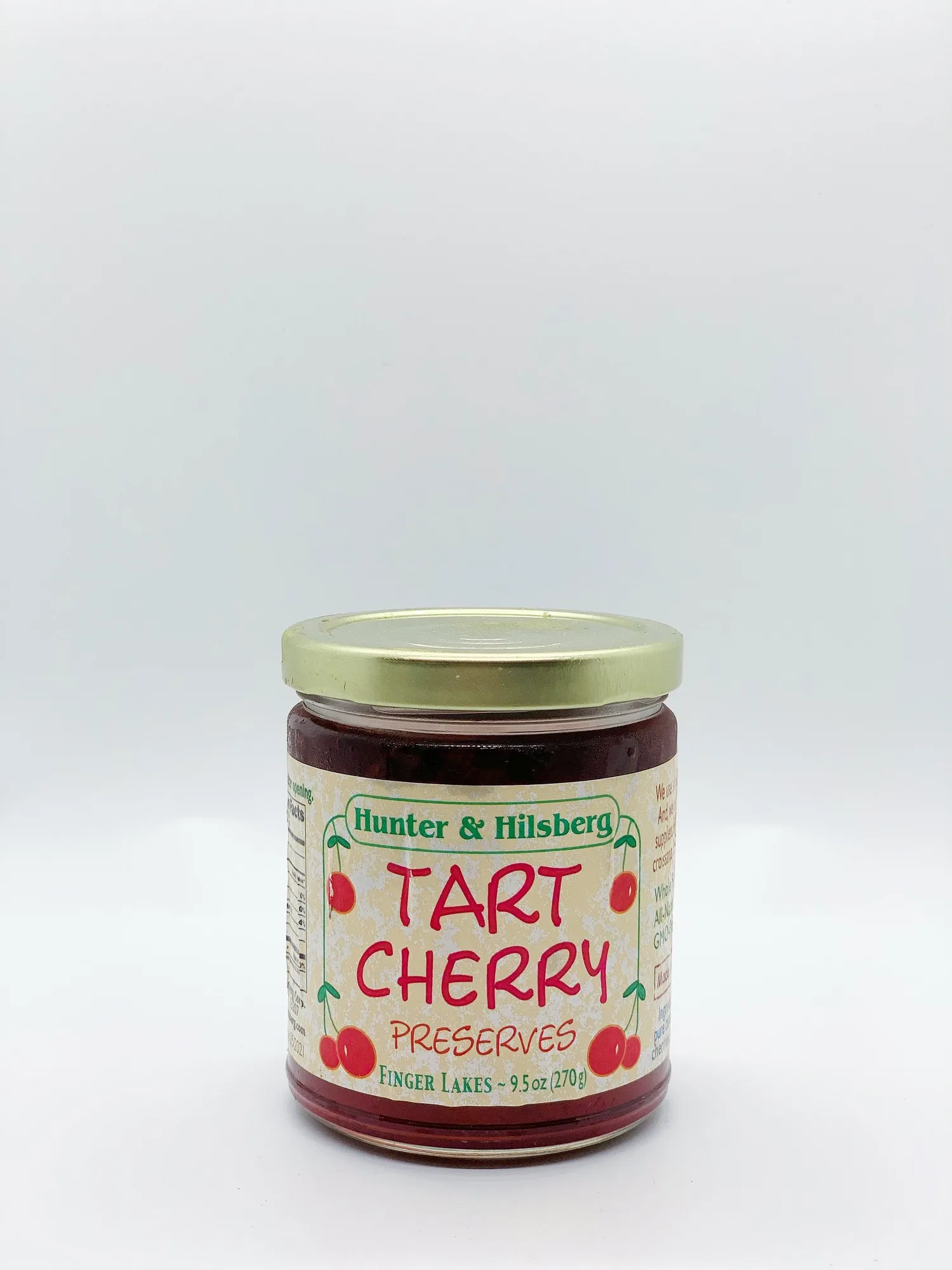
Hunter & Hilsberg Tart Cherry Preserves
-
Hunter & Hilsberg Tart Cherry Preserves: Suggested uses include toast, bagels, biscuits, croissants, cottage cheese, yogurt, granola, or eaten plain as a snack. These are the manufacturer's own serving suggestions, so you can plan breakfast or snack options without guessing.
-
Hunter & Hilsberg Tart Cherry Preserves: Catalog price is USD 4.89, compared with a catalog comparison price of USD 6.99. The lower price may make it easier to try a jar for pairing experiments, but confirm current pricing at checkout.
What to check on the label before you buy
Because the supplied record does not include ingredients, allergens, or storage instructions, the jar itself is your best source. Look for an allergen statement (particularly if you avoid gluten or specific fruits), a refrigeration note, and a use-by date. If you are serving someone with dietary restrictions, read the label rather than relying on the product name alone.
The record also does not confirm whether the preserve is organic, low-sugar, or free of added pectin. If those attributes matter to you, verify them on the packaging or with the store before purchasing.