Toner is the step that resets your skin after washing
If your skin is oily or breakout-prone, the temptation is to scrub harder, rinse longer, and pile on more actives. That usually backfires. The product record for Tea Tree Toner makes a narrower, more useful point: cleansers are a bit alkaline, otherwise they would not clean, and after washing you want to apply a toner with a lower pH to help protect skin and keep it from feeling stripped.
That is the job of a toner in this routine. It is not a second cleanser and it is not a treatment you should layer on aggressively. Used after cleansing, a low-pH tea tree toner is meant to help re-set the skin's surface after the alkaline step of washing. The Tea Tree Toner record lists a pH of 4.2, which is the kind of lower-pH step the brand describes as protective rather than cleansing.
A simple after-cleansing routine for oily skin
Keep the order short. The fewer steps between washing and toning, the easier it is to tell whether the toner itself is comfortable on your skin.
- 1. Cleanse gently: Use a cleanser that lathers and removes makeup or buildup without leaving skin tight. The Charcoal Tea Tree Gel Cleanser in the Tea Tree Toner set is described as lathering nicely and removing makeup or buildup, and as leaving skin hydrated and supple-feeling rather than dry.
- 2. Pat skin partially dry: You do not need to scrub skin dry with a towel. Move from cleansing to toning while skin is still calm, so the toner is the next thing that touches it.
- 3. Apply the toner: Apply Tea Tree Toner after cleansing as the step that follows washing. The product record describes it as a toner-astringent with a lower pH than cleanser, meant to be used after you wash.
- 4. Stop there if your skin is reactive: If your skin stings, burns, or turns red after toning, do not add more products on top to 'fix' it. Pause the toner and let your skin settle before trying again.
How often to use tea tree toner
The supplied product record does not give a fixed number of times per day or week for Tea Tree Toner. That means there is no manufacturer-stated frequency to copy. What the record does support is the sequence: toner comes after cleansing, as the step that follows an alkaline wash.
A practical approach for oily, non-sensitive skin is to start with once a day, after your evening cleanse, and see how your skin feels over the next few days. If it feels comfortable and not tight, you can keep that pace. If you notice stinging, redness, or unusual dryness, use it less often or pause it. The record describes the toner as suitable for acne, oily, or any skin type that is not sensitive, which is a clear boundary: sensitive skin is not the target user for this product.
What the Tea Tree Toner record confirms
-
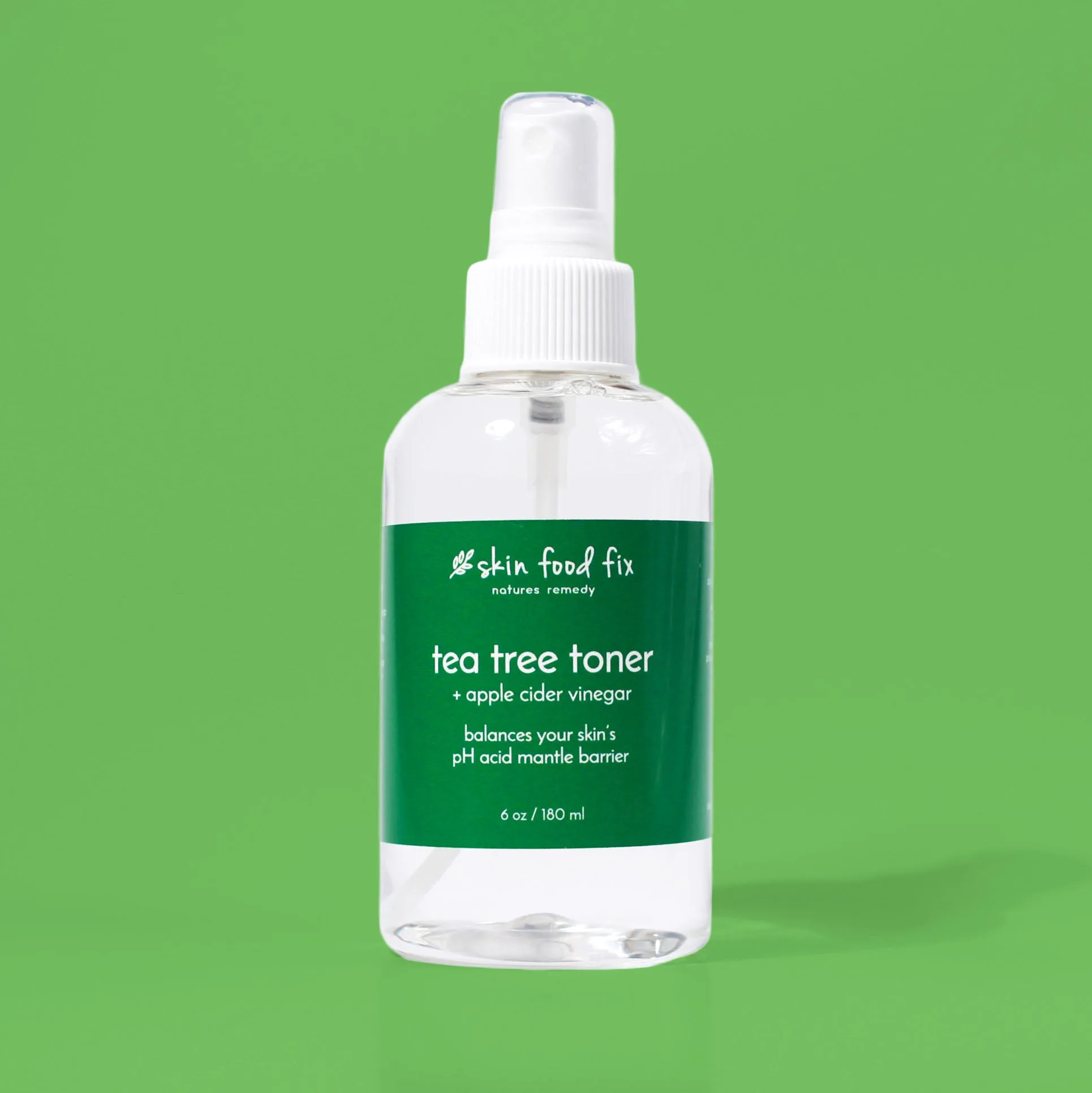
Tea Tree Toner: Tea Tree Toner is listed with a pH of 4.2 and ingredients that include organic aloe leaf juice, organic apple cider vinegar, tea tree leaf oil, and organic white willow bark. The lower pH is the reason this toner belongs after cleansing rather than before it. The ingredient list is also the place to check if you already know you react to any of these components.
Tea Tree Toner
-
Tea Tree Toner: The toner is described as suitable for acne, oily, or any skin type that is not sensitive. This is the clearest fit guidance in the record. If your skin is sensitive or currently irritated, the product is not presented as the right match.
-
Tea Tree Toner: The set pairs the toner with a Charcoal Tea Tree Gel Cleanser, and the record notes that both products contain tea tree. If you are prone to irritation from tea tree, using both in the same routine concentrates that ingredient. The record does not state a maximum amount or a required break, so the sensible checkpoint is how your skin feels.
Irritation checkpoints that matter more than a schedule
Because the record does not give a frequency or a waiting time, your own skin response is the checkpoint. Watch for these signs rather than pushing through them.
- Stinging or burning right after application: This is not a normal 'working' sensation to ignore. Stop using the toner and let skin recover before testing it again.
- Redness that appears after toning and fades slowly: The record does not describe redness as an expected effect. If it shows up, reduce how often you use the toner or set it aside.
- Dryness or flaking in oily areas: Oily skin can still be dehydrated. If toning leaves skin tight or flaky, the routine is doing too much, not too little.
- Breakouts that get worse, not better: Tea tree is included for breakout-prone skin, but the record does not promise a timeline for improvement. Worsening breakouts are a reason to reassess, not to apply more.
Where the toner fits if you also use a tea tree wash
The Tea Tree Toner listing includes several options beyond the toner alone: a 6 oz Toner, a 2 oz Toner, an 8 oz Tea Tree Body + Hair Wash, a 6 oz Toner + 8 oz Tea Tree Body/Hair Wash set, a Charcoal Tea Tree Gel Cleanser 6 oz, a Charcoal Tea Tree Gel Cleanser + Tea Tree Toner set, and a 2 oz Tea Tree + MCT Oil 40% Strength option. If your goal is a simple face routine, the cleanser-and-toner pairing is the most direct match to the after-cleansing step described in the record.
If you also use the Tea Tree Body + Hair Wash, keep it as a wash step rather than layering it with the toner on your face. The record describes that wash as a head-to-toe product and notes that it is made like a face cleanser, but it does not describe using it as a leave-on toner. The toner's role stays the same: after cleansing, not instead of it.
Practical details from the product record
- Tea Tree Toner: The Tea Tree Toner is packaged in a BPA-free plastic bottle and described as a 2-piece set for cleansing and toning. If you are buying the set, you are getting both the cleanser and the toner, which matches the cleanse-then-tone order the record describes.
- Tea Tree Toner: The record lists the toner ingredients as pH 4.2 organic aloe leaf juice, organic apple cider vinegar, tea tree leaf oil, organic white willow bark, polysorbate 20, and tetrasodium glutamate. This is the full ingredient list supplied for the toner. Check it against anything you already know you react to before adding the product to a breakout-prone routine.