Quick answer
Start with Numbers And Symbols for open-ended counting and symbol matching, then introduce Math Bingo as a structured game once your child recognizes numbers 1–10. Keep sessions short, follow your child's pace, and use the equation cards to bridge from counting to simple arithmetic.
Why start with tiles before the bingo game
Numbers And Symbols lets children handle individual tiles, sort odd and even numbers by color, and experiment with operation symbols without the pressure of a game. This tactile stage builds the number sense that Math Bingo later relies on. Math Bingo asks players to solve equations to find the called number, so children need to recognize numerals and understand that symbols like + and − represent actions before they can play smoothly.
When to move to Math Bingo
Introduce Math Bingo when your child can confidently name numbers 1–10 and match a numeral to a quantity. The game's equation cards turn calling numbers into a small problem-solving task, which is engaging for children who already have basic counting skills. If your child is still learning to count objects one by one, spend more time with the tiles first—rushing the game can lead to frustration.
Step-by-step early math routine
- Set up a short, focused session: Choose one skill to practice—counting, number matching, or symbol recognition—and lay out only the tiles or game pieces you need. Keep the session to 10–15 minutes. A common mistake is putting out all materials at once, which can overwhelm young children. End on a successful note before your child loses interest.
- Explore numbers and symbols freely: Let your child handle the Numbers And Symbols tiles. Ask them to sort by color (even vs. odd) or line up numbers in order. Then introduce the symbol tiles one at a time, naming each (plus, minus, multiply, divide) and demonstrating with objects like blocks or snacks. Check that your child can point to the correct numeral when you say it.
- Model simple equations with tiles: Use the tiles to build an equation such as 2 + 3 = 5. Place the corresponding number tiles after the equals sign (if you have a separate equals tile—otherwise say 'makes'). Let your child copy you, then try one on their own. A common mistake is correcting too quickly; give them time to count on their fingers or with objects. If your child struggles, go back to counting objects for each number.
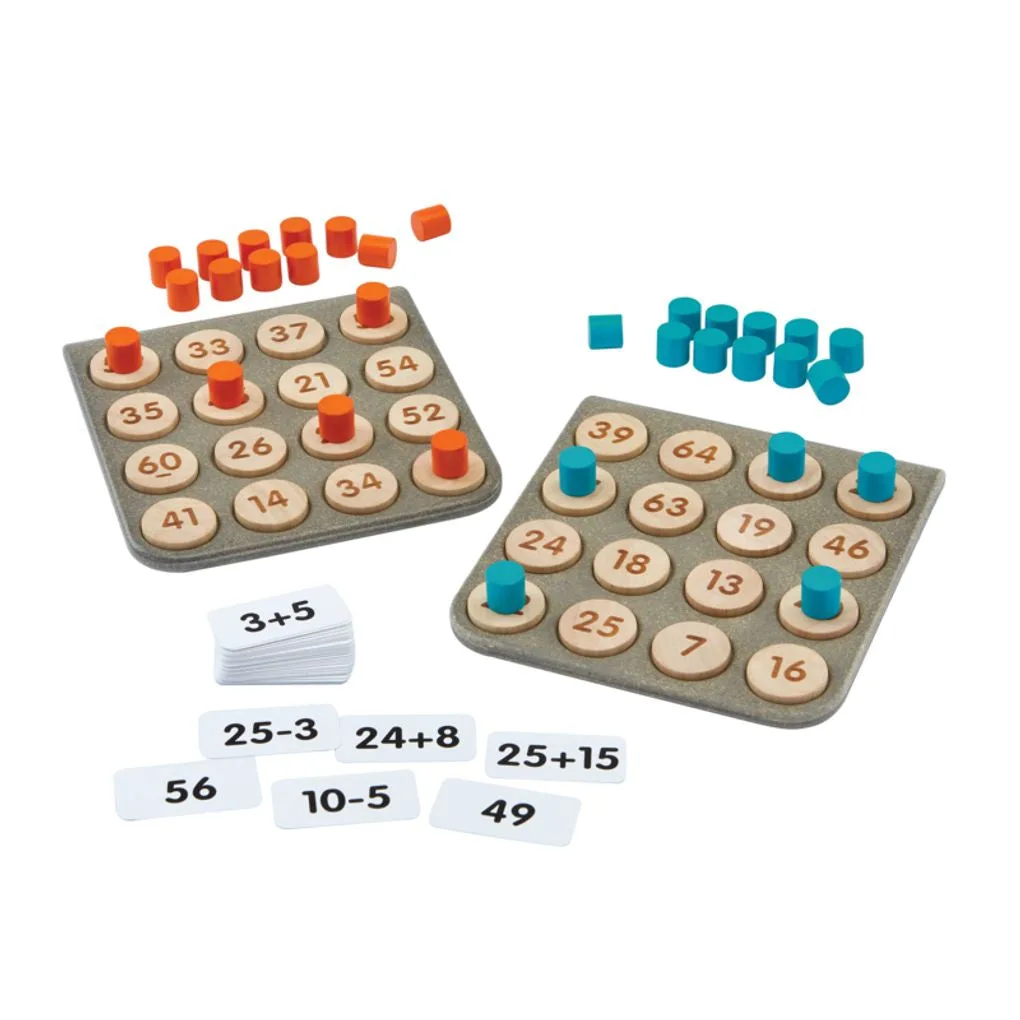
- Introduce Math Bingo as a two-player game: Start with just the trays, pegs, and a few equation cards. Take turns drawing a card, solving the equation together, and placing a peg on the matching number. The first to four in a row wins. For the first few rounds, work as a team rather than competing. Make sure your child can solve the equations on the cards before playing competitively.
- Gradually increase difficulty: As your child becomes comfortable, add more equation cards or introduce multiplication and division tiles from Numbers And Symbols. Keep the game playful and stop if frustration builds. A common mistake is advancing too fast—repeat the same level until your child is confident. Celebrate effort and strategy, not just winning.
What you need
-
Numbers And Symbols: Includes numbered tiles 1–10 divided into even and odd color schemes, plus three two-sided tiles with math symbols. The color coding helps children visually group even and odd numbers, while the symbol tiles let them build and read simple equations.

Numbers And Symbols
-
Math Bingo: Players solve equations on playing cards to reveal the called number, and the first to get four in a row calls BINGO. This turns number recognition into a social game that reinforces mental math and turn-taking.
Math Bingo