Quick answer
Most teeter totters are designed for children ages 2 to 5 years, with weight limits typically ranging from 50 to 100 pounds total. Always check the specific product's guidelines, as designs vary.
Why age and weight matter for teeter totters
Teeter totters, or seesaws, rely on balanced motion. If children are too light or too heavy for the design, the ride can be jerky or unsafe. Age guidelines also reflect coordination and trunk control—younger toddlers may lack the stability to hold on securely.
Weight limits are not arbitrary; they are tied to the pivot mechanism and material strength. Exceeding them can cause the toy to tip or break. On the other hand, children who are far below the minimum weight may not create enough momentum for a smooth rock.
Teeter totter safety FAQ
What is the minimum age for a teeter totter?
Most teeter totters, including the Whale Teeter Totter, are recommended for children ages 2 and up. At this age, toddlers usually have enough balance and trunk strength to sit upright and hold onto the handles. Always supervise closely.
What is the typical weight limit for a teeter totter?
Weight limits vary by model. For example, the Little Tikes Teeter Totter Storage Bench supports children up to a combined weight of around 100 pounds. The Whale Teeter Totter is designed for two children, each typically up to 50 pounds. Check the product label or manual for exact numbers. Weigh your children together to ensure they stay under the combined limit.
Can a toddler use a teeter totter alone?
No, teeter totters are designed for two riders to balance each other. A toddler riding alone could tip the seat or cause the toy to slam down. Always pair children of similar weight and height for a safe, smooth ride. Pair children within 10–15 pounds of each other for best balance.
What safety features should I look for?
Look for sturdy construction, wide bases to prevent tipping, and handles or grips for small hands. Models like the Whale Teeter Totter have a low profile that minimizes fall height. Soft or padded seats, as on the Teeter Totter Storage Bench, add comfort and reduce injury risk. Inspect the teeter totter regularly for loose bolts or cracks.
Where should I place a teeter totter?
Place it on a flat, soft surface such as grass, rubber mulch, or a play mat. Avoid concrete or asphalt. Ensure there is clear space around the toy—at least 6 feet on all sides—so children don't hit walls, furniture, or other play equipment. Anchor outdoor teeter totters if the manufacturer provides ground stakes.
Product facts
-
Whale Teeter Totter - Blue: Sturdy construction supports up to two children, encouraging cooperative play. This ensures the teeter totter can handle typical sibling or friend play without wobbling, giving parents peace of mind.
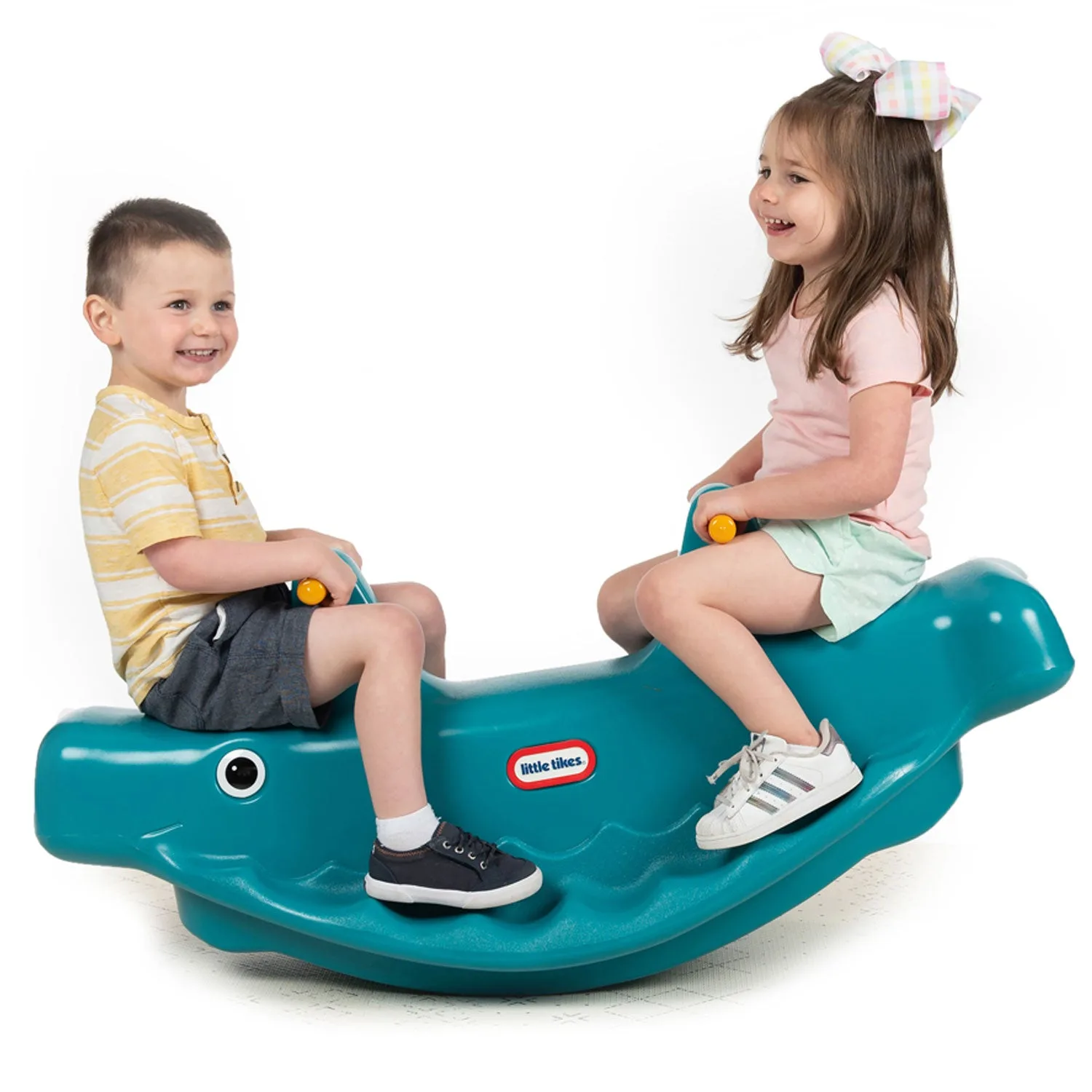
Whale Teeter Totter - Blue
-
Teeter Totter: Plush fabric seat cushions and supportive design for comfort. The cushioned seats help younger children sit securely and comfortably, reducing the chance of slips during rocking.
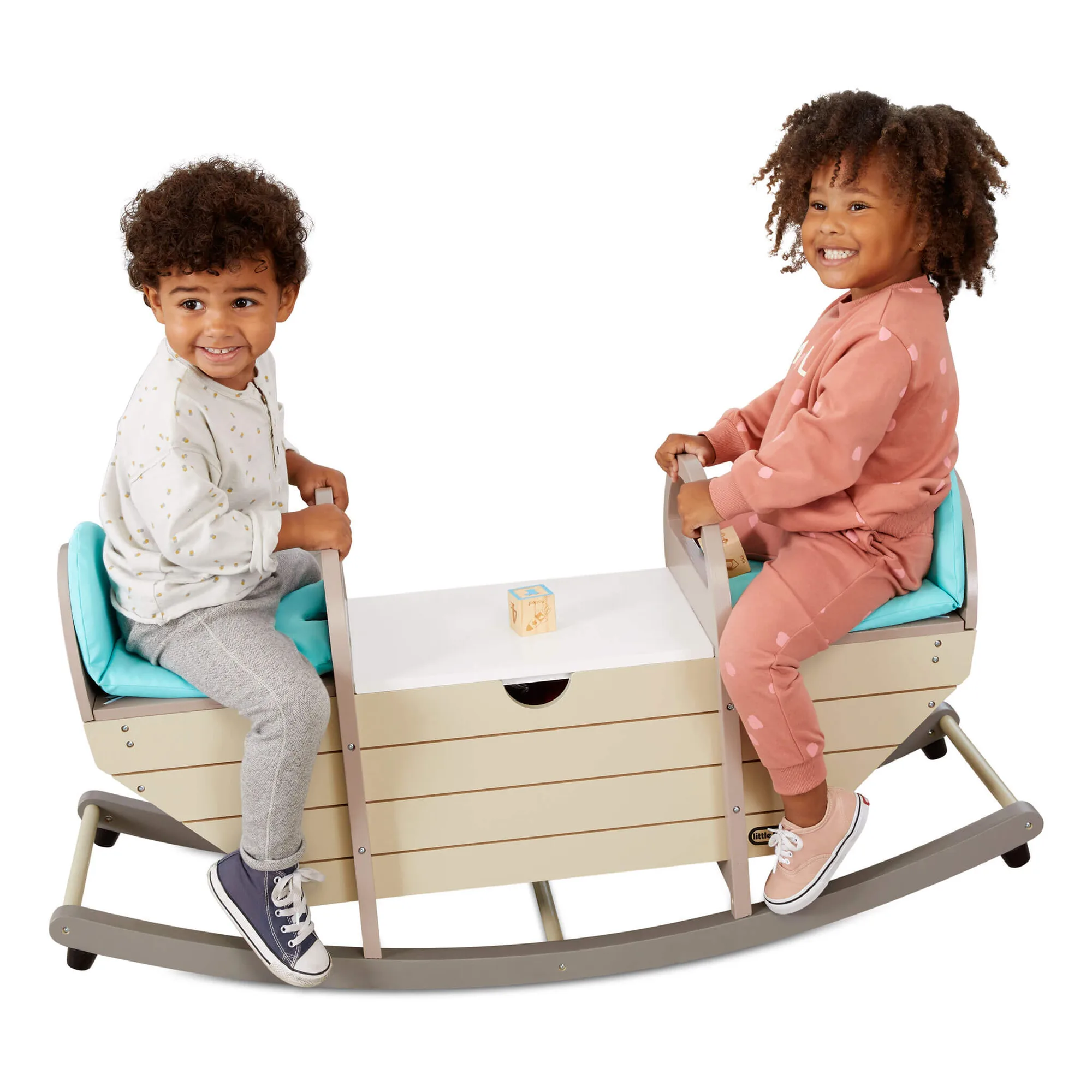
Teeter Totter