Quick answer
If your baby is actively teething and puts everything in their mouth, start with a teether. If they are alert, reaching, and ready to explore with hands and eyes, choose a sensory toy. Many babies need both, so pick one of each rather than forcing a single product to do two jobs.
Teethers and sensory toys overlap more than most product labels suggest, which is why the choice feels confusing. A teether is built around a safe chewing surface. A sensory toy is built around exploration: texture, sound, movement, stacking, or sorting.
The practical question is not which category is better. It is which job your baby needs done this month. Use the rules below to match the product to your baby's current stage, then adjust as their chewing and play habits change.
Start with the mouth, not the label
Watch what your baby does when you hand them something new. If it goes straight to the mouth and stays there, they are telling you they want a teether. A teether needs a soft, chewable surface and a shape small hands can hold without help. The Sensory Ball fits this stage because it works as a teether for young babies and is made from food-grade silicone with an open frame that is easy to grab.
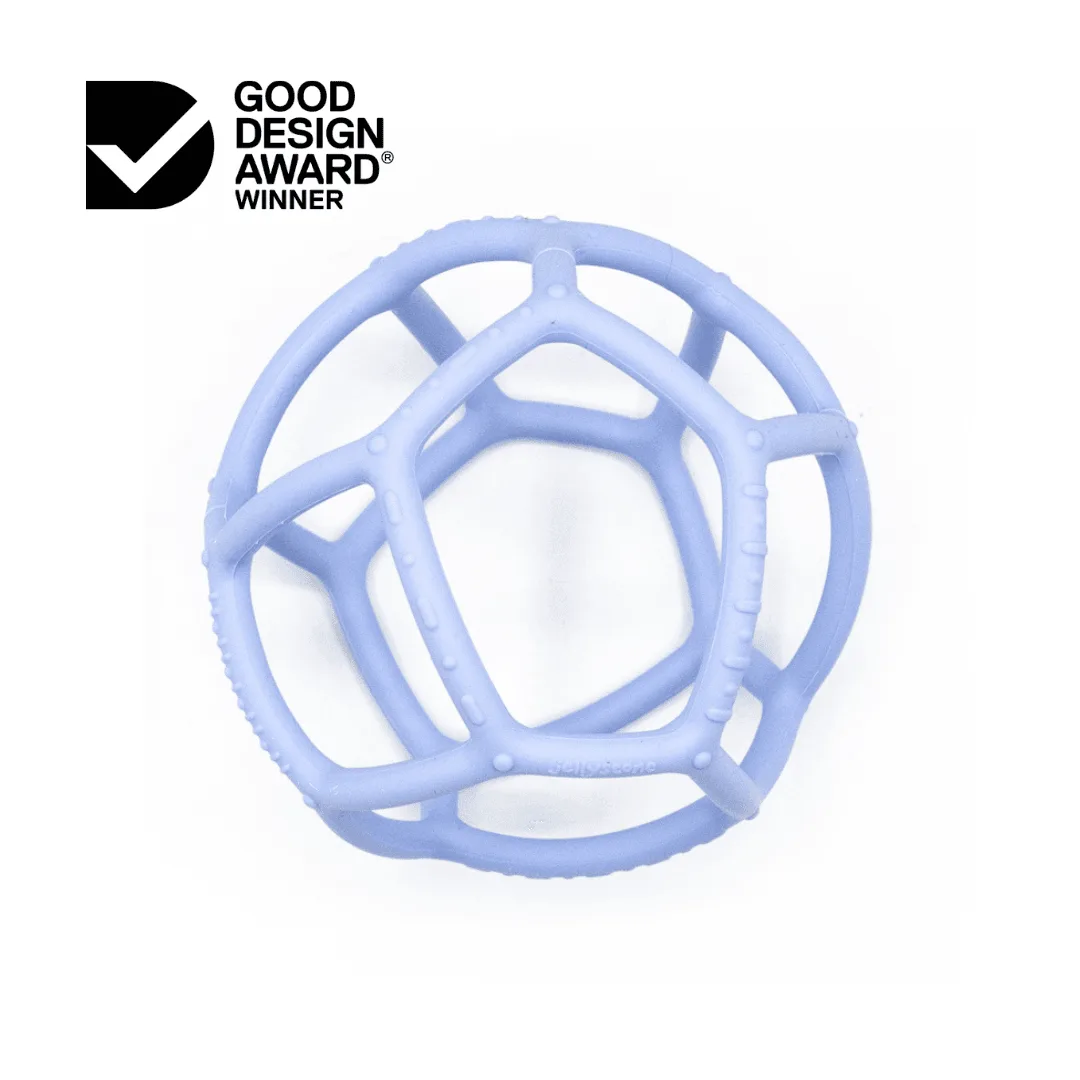
Sensory Ball
If your baby turns the object over, shakes it, bangs it, or watches it move, they are ready for a sensory toy. These products reward looking and doing rather than chewing. The Baby Calm Down Bottle is a clear example: it is sealed, prefilled with sparkles and water, and designed to captivate a baby through swirling motion rather than mouthing.
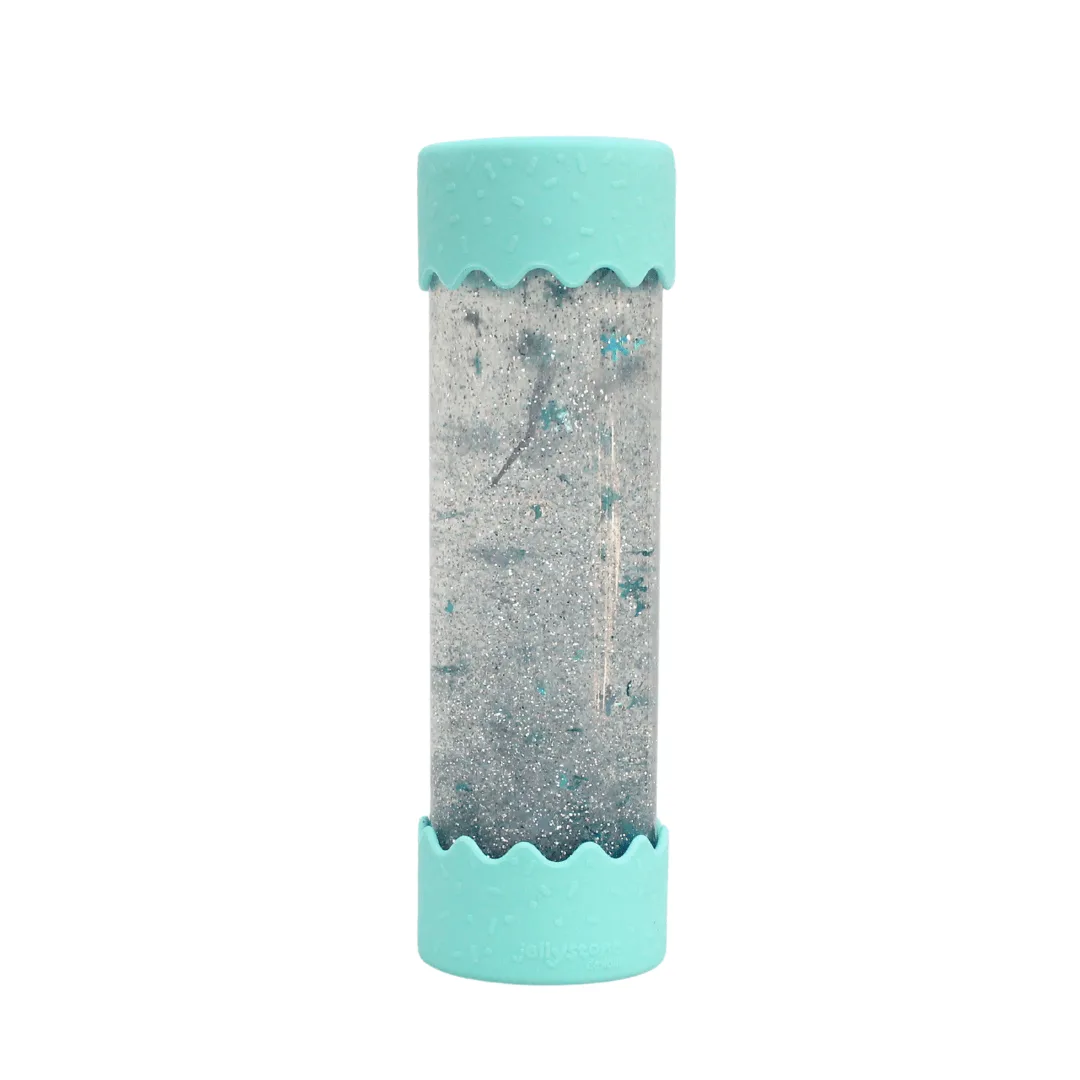
Baby Calm Down Bottle
- Mouth-first behavior points to a teether.
- Hands-and-eyes behavior points to a sensory toy.
- A baby can show both behaviors in the same week.
Match the product to the stage
Young babies who cannot sit or reach reliably need products that work with very little effort. A teether they can grip and chew, or a sealed bottle they can watch, both fit. The Baby Calm Down Bottle is sealed and prefilled, so there is nothing to open, refill, or lose, which matters when you are managing a newborn's schedule.
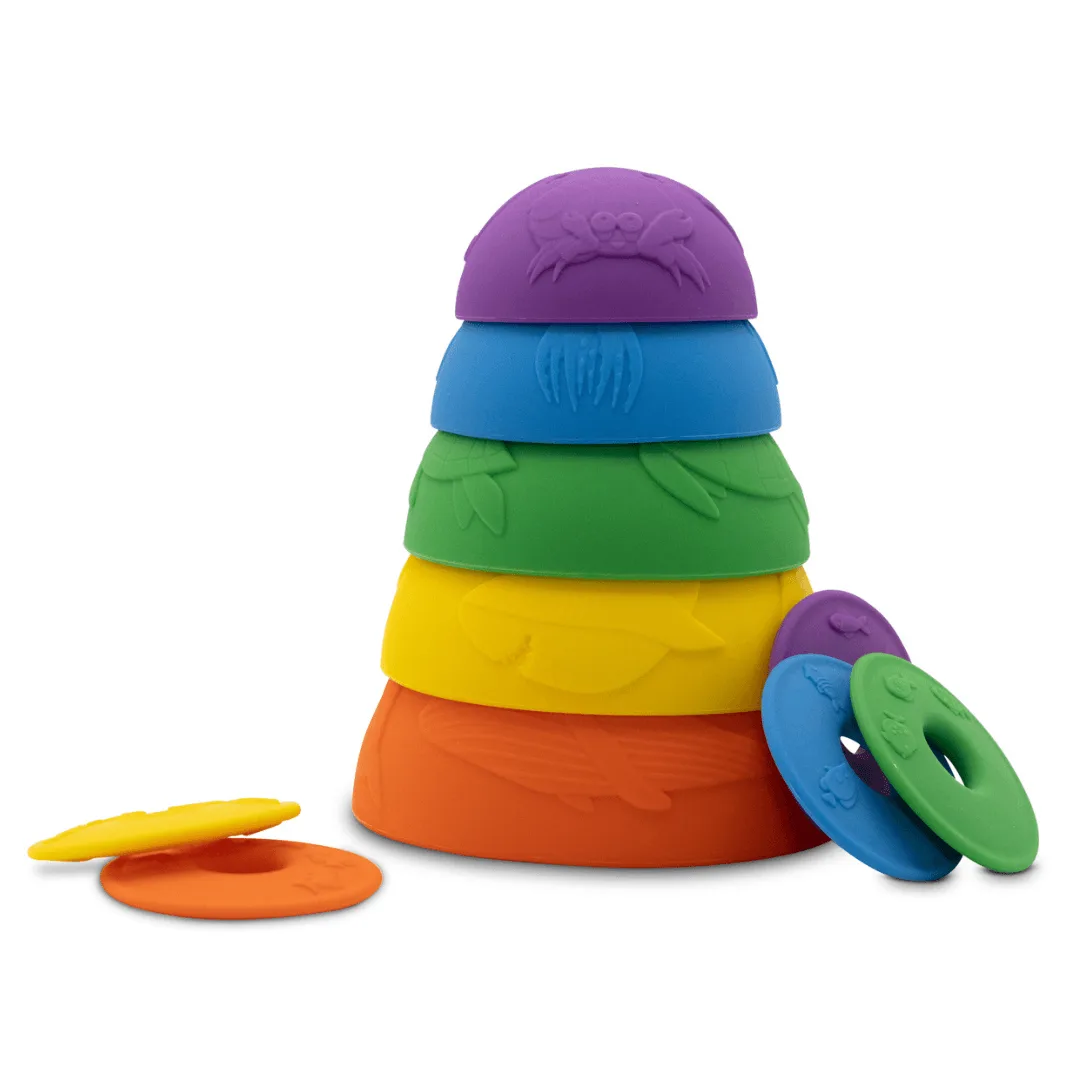
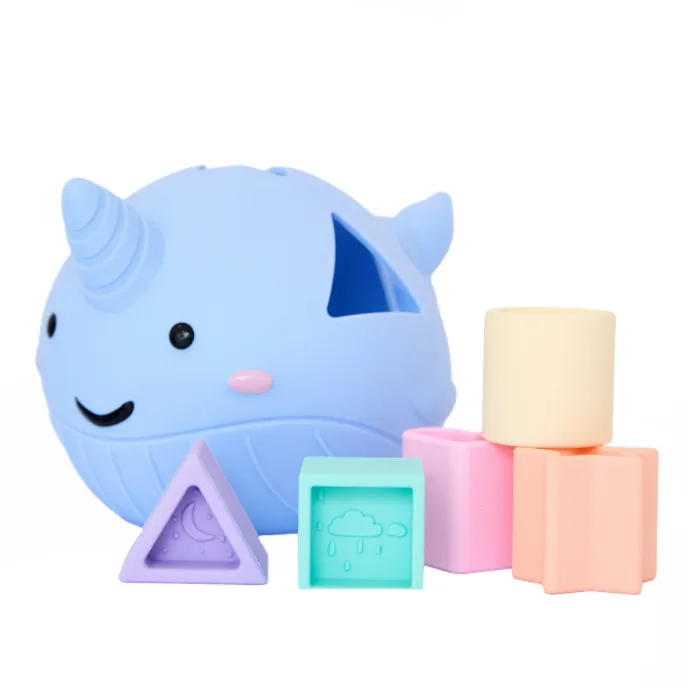
Older babies and toddlers need more challenge. Stacking, sorting, and building keep them engaged longer. The Ocean Stacking Cups include five cups plus five treasure coins, and they work across bath, sand, and water play. The Narwhal Shape Sorter adds a shape-matching task with a base that holds the blocks inside the narwhal until playtime starts again.
- Under 6 months: prioritize grip, softness, and sealed designs.
- 6 to 12 months: add stacking, dumping, and cause-and-effect toys.
- Toddler years: choose open-ended toys that grow with the child.
Think about where the toy will live
A teether usually lives in a diaper bag, a stroller pocket, or a hand. It needs to be small, light, and easy to rinse. A sensory toy often lives on the floor, in the bath, or in a play bin, so size and cleanup matter more than portability.
This is where a two-in-one product can save space. The 2 Pack Sensory Ball & Fidget Ball pairs a teether with a fidget ball, which covers chewing and busy-hands needs in one purchase. If you are building a small toy rotation, one combo pack plus one bath-friendly toy covers most of the day.
- Diaper bag: teether or compact sensory toy.
- Bath and sand: cups, scoops, and water-safe pieces.
- Playroom floor: stacking, sorting, and building toys.
Set a simple budget rule
You do not need a full shelf of toys. A workable rule is one teether, one calming toy, and one open-ended building or stacking toy. That covers mouthing, regulation, and active play without turning your living room into a toy store.
If you are choosing your first purchase, start with the product that matches the behavior you see most often. If your baby chews constantly, buy the teether first. If your baby is calm but bored, buy the sensory toy first. Add the second category only when you notice the need.
- One teether for mouthing.
- One calming toy for regulation.
- One open-ended toy for building and stacking.
Decision rules for teether vs sensory toy
- Rule 1: Follow the mouth: If your baby chews every object within seconds, choose a teether first. The Sensory Ball is designed as a teether for young babies with a soft, safe silicone surface. Buy the teether before the sensory toy.
- Rule 2: Follow the eyes and hands: If your baby watches, reaches, shakes, or tracks movement, choose a sensory toy. The Baby Calm Down Bottle is sealed and prefilled, so it works without any setup. Buy the sensory toy before the teether.
- Rule 3: Buy for the next three months: Teething needs fade and play needs grow. A product that spans both stages, like the 2 Pack Sensory Ball & Fidget Ball, reduces how often you replace toys. Choose overlap when you want fewer purchases.
- Rule 4: Match the setting: Bath, sand, and water play call for a set like Ocean Stacking Cups. Floor play and building call for stacking or sorting toys. Portable soothing calls for a teether or a sealed bottle. Pick the product that fits where it will actually be used.
Product facts that help you decide
- Sensory Ball: A teether and toy rolled into one, made from food-grade silicone with an open frame design for easy grabbing, and designed for all ages and stages. It covers the mouth-first stage and stays useful as a sensory toy later, so it is a strong first purchase if you only want to buy one item.
- Baby Calm Down Bottle: Comes prefilled with sparkles and water and is totally sealed, in a mini baby-friendly size. Nothing to open or refill, which makes it a low-effort calming option for babies who are not yet chewing purposefully.
- 2 Pack Sensory Ball & Fidget Ball: Combines a Sensory Ball and a Fidget Ball in one pack, described as a teether toy for early development. Useful when one child needs both chewing and busy-hands input, or when you want a spare for the diaper bag.
- Ocean Stacking Cups: A set of 5 stacking cups plus 5 treasure coins for bath and sensory play, including stacking, nesting, hiding objects, texture stamping, and coin matching. Best for babies past the constant-chewing stage who need water, sand, and stacking play in one set.
Who each choice fits
Best for
- Babies who chew constantly and need a safe silicone surface
- Parents who want one product that works as both a teether and a sensory toy
- Babies who need a sealed, no-setup calming tool for car rides or diaper changes
Not for
- Toddlers who need building, sorting, or shape-matching challenges
- Families looking for bath and sand play in the same purchase
- Children who need a larger open-ended play set rather than a single handheld item
Choose based on what your baby does right now, not on which category sounds more educational. Start with the behavior you see most, add the second category when the need appears, and let the toy change as your baby does.