Quick answer
For most Singapore households, the 24cm Daisy frypan is the most versatile everyday size, while the 20cm suits small portions and the 28cm wok pan is best for stir-fries and family-sized dishes. Match the pan to the task, not the other way around.
Why pan size changes more than portion size
A larger pan spreads the same heat over a wider surface, so food browns instead of steaming. A smaller pan concentrates heat, which is why a 20cm pan can scorch a thin sauce if you treat it like a 28cm wok. The Daisy range uses Tefal's Titanium non-stick coating and Thermo-Fusion base, but neither feature compensates for overcrowding: if food sits in a single crowded layer, it will release moisture and stew.
The trade-off: storage and handling versus capacity
The 28cm wok pan gives you the surface area for tossing vegetables and noodles, but it also takes up more cupboard space and feels heavier when full. The 20cm frypan is easy to lift and wash, yet it limits you to one or two servings. Before buying, measure your widest hob ring and your storage slot; a pan that does not sit flat or fit away will rarely get used.
How to choose and use each Daisy pan size
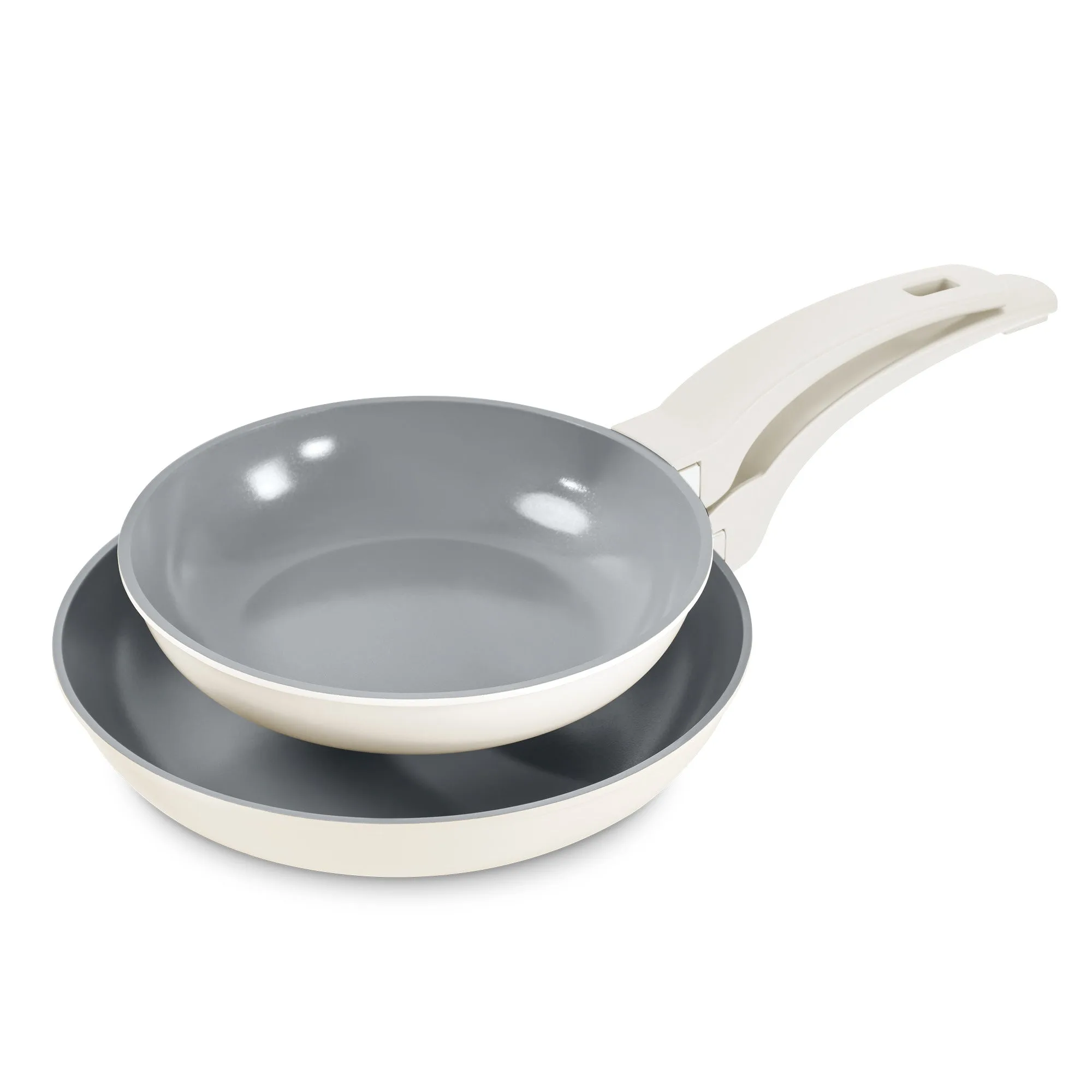
- Start with the 24cm frypan for daily cooking: Use the 24cm pan for eggs, omelettes, searing two chicken breasts, or reheating rice for two people. Common mistake: filling it to the rim with vegetables, which traps steam. Checkpoint: keep food in a single layer with a little space between pieces. If you cook for two most nights, make the 24cm your first pan.
- Use the 20cm frypan for small, quick tasks: Reach for the 20cm when melting butter, toasting spices, frying a single egg, or making a small sauce. Common mistake: using high heat on such a small surface. Checkpoint: keep the flame below the base and stir constantly. The 20cm pan is a helper, not a main pan for family meals.
- Choose the 28cm wok pan for stir-fries and tossing: Heat the 28cm wok over medium-high heat, add oil, then add ingredients in batches so they sear rather than steam. Common mistake: overcrowding the wok with noodles or vegetables. Checkpoint: cook no more than two-thirds of the wok's surface at once. For a family of four, the 28cm wok replaces both a large frypan and a sauté pan.
- Match the pan to your hob and storage: Place the pan on your largest hob ring before buying. The base should sit flat without overhanging. Then check that the pan fits your cupboard or hanging rack. Common mistake: buying the 28cm wok only to find it does not fit under a low cabinet. Measure twice: hob ring and storage height.
- Clean and store to protect the non-stick coating: Let the pan cool before washing, use a soft sponge and mild detergent, and stack with a felt protector between pans. Common mistake: plunging a hot pan into cold water, which can warp the base. Checkpoint: the pan should feel cool to the touch before it goes into the sink. Cool first, then clean, then stack with protection.
Product facts
-
Tefal Daisy Frypan,Wok Pan 20cm/24cm/28cm: Titanium-infused non-stick coating for effortless clean-up. Less scrubbing matters most on the 28cm wok, where sticky stir-fry sauces cover more surface.
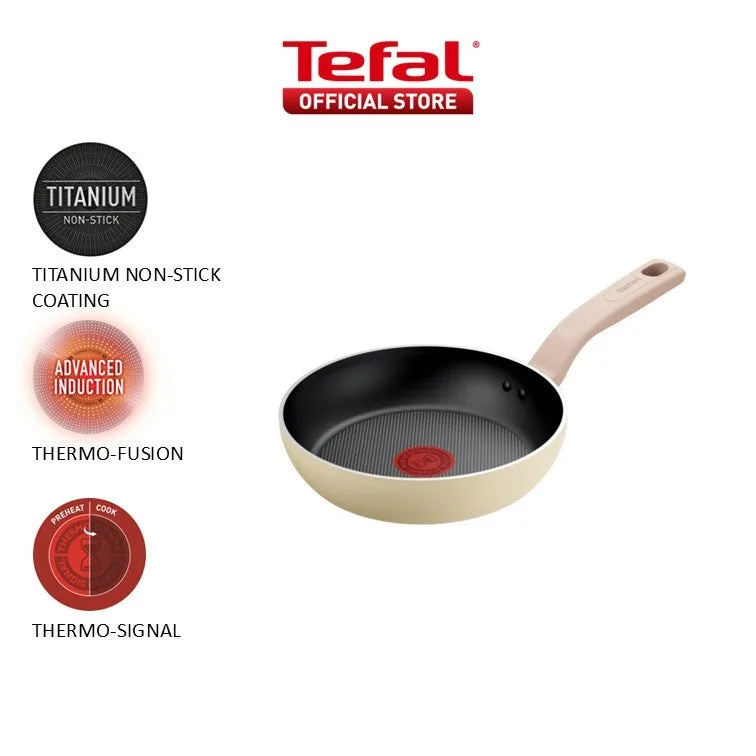
Tefal Daisy Frypan,Wok Pan 20cm/24cm/28cm
-
Tefal Daisy Frypan,Wok Pan 20cm/24cm/28cm: Thermo-Fusion base for fast and even heat. Even heat helps the 24cm frypan handle both searing and gentle reheating without hot spots.