Quick answer
Buy tent accessories in this order: pegs that match your ground, a footprint or mat sized to your inner tent, and a tarp or awning only if you want shade or rain cover. Skip anything that duplicates a feature your tent already has. If you camp on hard or rocky ground, upgrade pegs first — they are the cheapest fix with the biggest payoff.
Most campers do not need more tent accessories. They need the right three or four. The trick is matching each accessory to your tent's size, your usual terrain, and the weather you actually camp in — not the weather you imagine.
This guide gives you decision rules instead of a shopping list. Every rule points to a concrete choice, and where a product record is missing a detail, we say so rather than guess.
Start with ground conditions, not gear lists
Your campsite decides your peg choice before any brand does. Loose sand and soft soil need longer, wider pegs that hold under load. Hard-packed or rocky ground punishes thin pegs and rewards stainless steel that will not bend on the first mallet strike. If you camp in both, carry two peg types rather than one compromise set.
The Shakeen Peg Set comes in Large (11 inches) and Medium (8 inches), with 8 pegs per set, made from high-hardness stainless steel. That gives you a straightforward rule: Large for soft or loose ground and longer guy lines, Medium for firm ground and smaller tarps. Because the set is sold by size, you can buy the length your terrain calls for instead of guessing.

Shakeen Peg Set
- Carry at least four spare pegs beyond what your tent needs — bent or lost pegs end trips early.
- If you use a mallet, choose stainless steel over thin aluminum to avoid bent shafts.
Match mats and footprints to the inner tent, not the outer
A mat or footprint only works if it fits the inner floor. Too large and it pools water or sticks out past the fly; too small and you still feel every root and rock. Measure your inner tent floor before buying, and treat any mat described as designed for a specific tent as exactly that — a fit for that model, not a universal size.
The RX Pyramid Tent Mat (M) is designed specifically for the RX Pyramid Tent, with a 0.24-inch (6mm) cushioning layer. That thickness absorbs ground unevenness and adds insulation against ground cold. The trade-off is pack size and a model-specific fit: if you do not own an RX Pyramid Tent, this mat is not the right purchase.
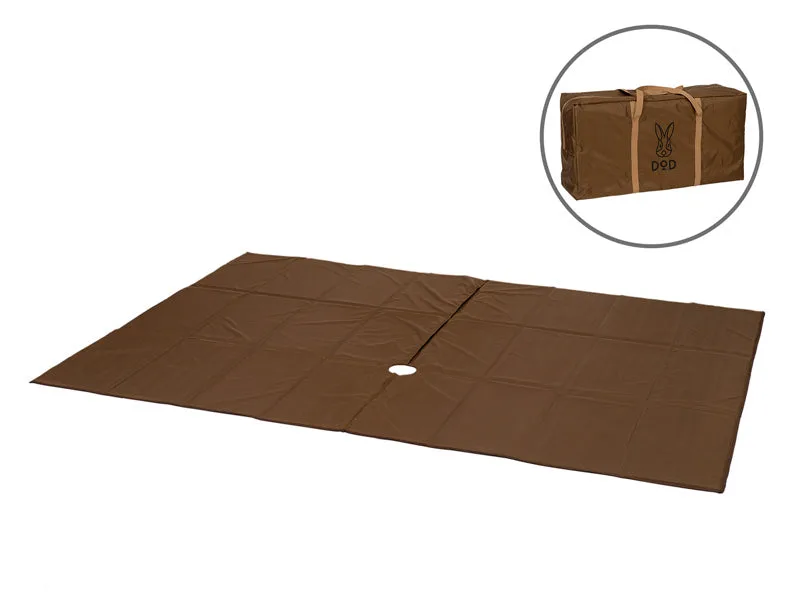
RX Pyramid Tent Mat (M)
- A 6mm mat is a comfort and insulation layer, not a replacement for a sleeping pad.
- If your tent model is not listed as compatible, measure and choose a generic cut-to-size footprint instead.
Add shade and rain cover only when your tent lacks it
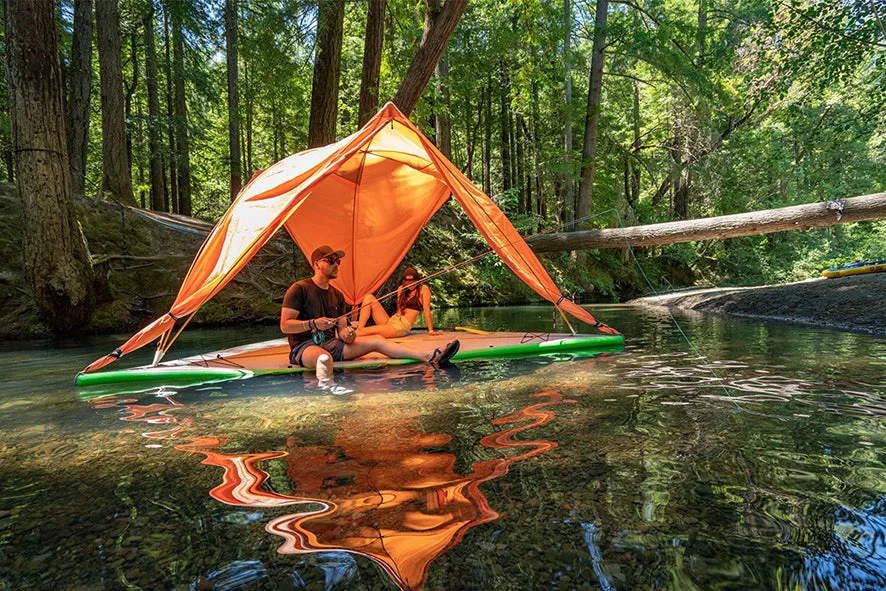
Awnings and tarps solve two problems: sun on the tent body and rain at the door. If your tent already has a large vestibule or an enclosed awning, you may not need a separate tarp at all. If it does not, an awning attached to a second door keeps the entry dry and gives you a shaded place to sit.
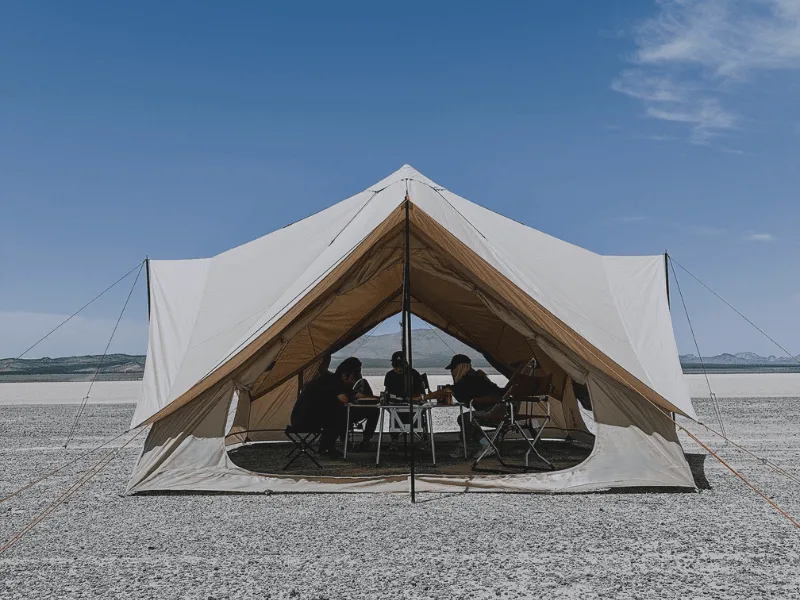
The Home Base Tent is one of the largest tents in the range, with a generous footprint and tall ceilings, and it can be set up by one person in less than 20 minutes. Its floor can be zipped out so the tent works as an event structure, and the Base Camp Awning attaches to another door to provide shade. That is a shelter decision, not an accessory decision — buy the awning because you want the shaded space, not because it is on a list.
- If you mostly camp in shade or mild weather, a tarp is optional; if you camp in open sun, it is close to essential.
- Check whether your tent already includes an awning connection before buying a separate shelter.
Keep the kit small enough that you actually pitch it
Every accessory adds setup time and pack weight. A tent that takes one pull to pitch loses that advantage if you then spend fifteen minutes rigging a tarp. Decide your maximum acceptable setup time first, then buy accessories that fit inside it.
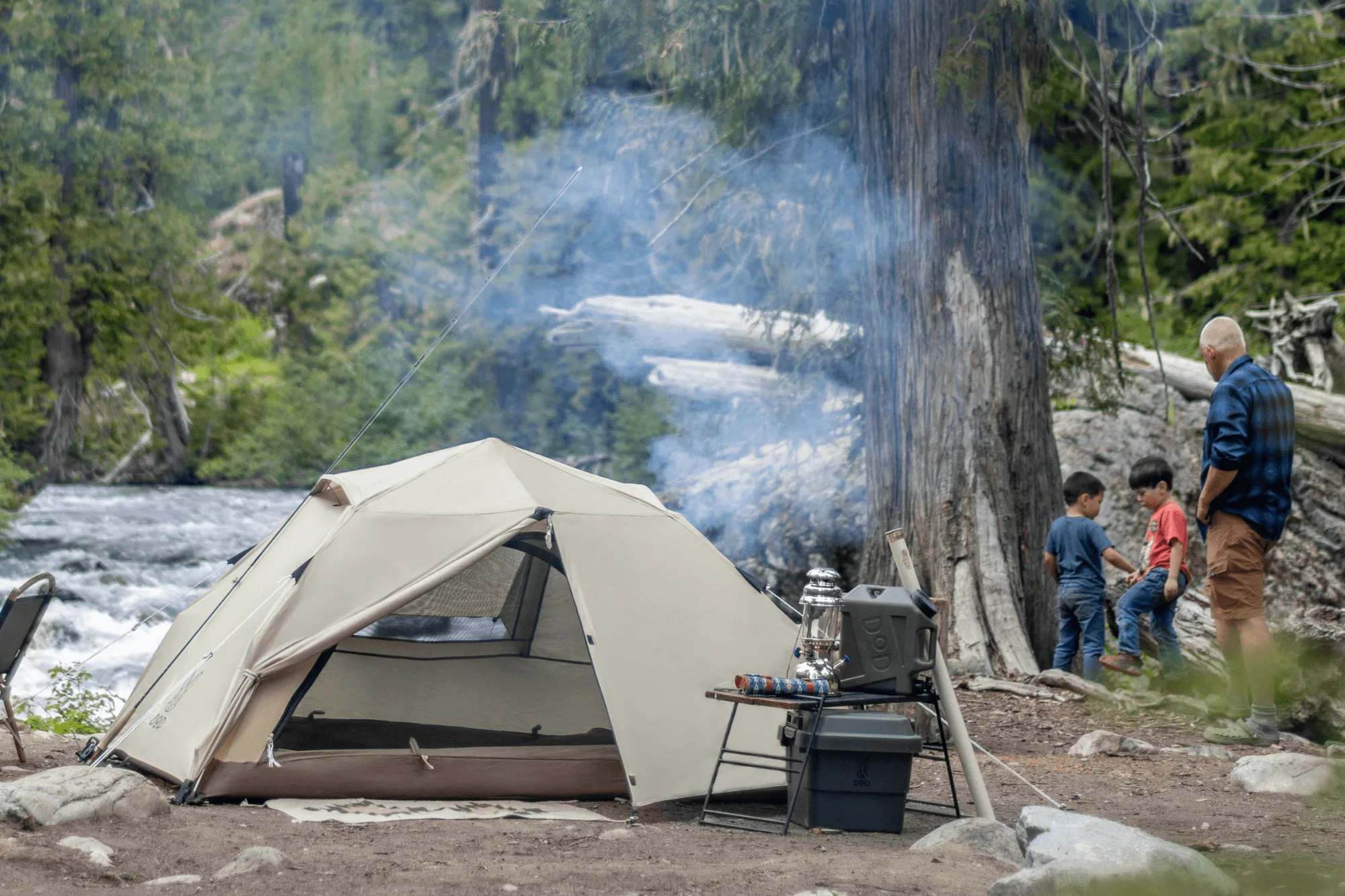
The Wagaya 1Pull Tent shows the principle: a polycotton inner tent that manages humidity and condensation, retains heat in cold conditions, and uses mesh panels for airflow in warm weather, with 35 sq ft of inner space plus a 15 sq ft enclosed awning. Because the awning is already part of the tent, you do not need to add a separate shade accessory for basic covered sitting space.
- Polycotton tents handle condensation differently than synthetic fabrics — do not add a mat expecting it to fix ventilation.
- If your setup time budget is under ten minutes, limit yourself to pegs and a mat.
Buy bundles only when you need both items
Bundles save money when every item inside is something you would have bought anyway. They cost more when one item sits unused. Read the bundle contents as a checklist against your existing gear before comparing prices.
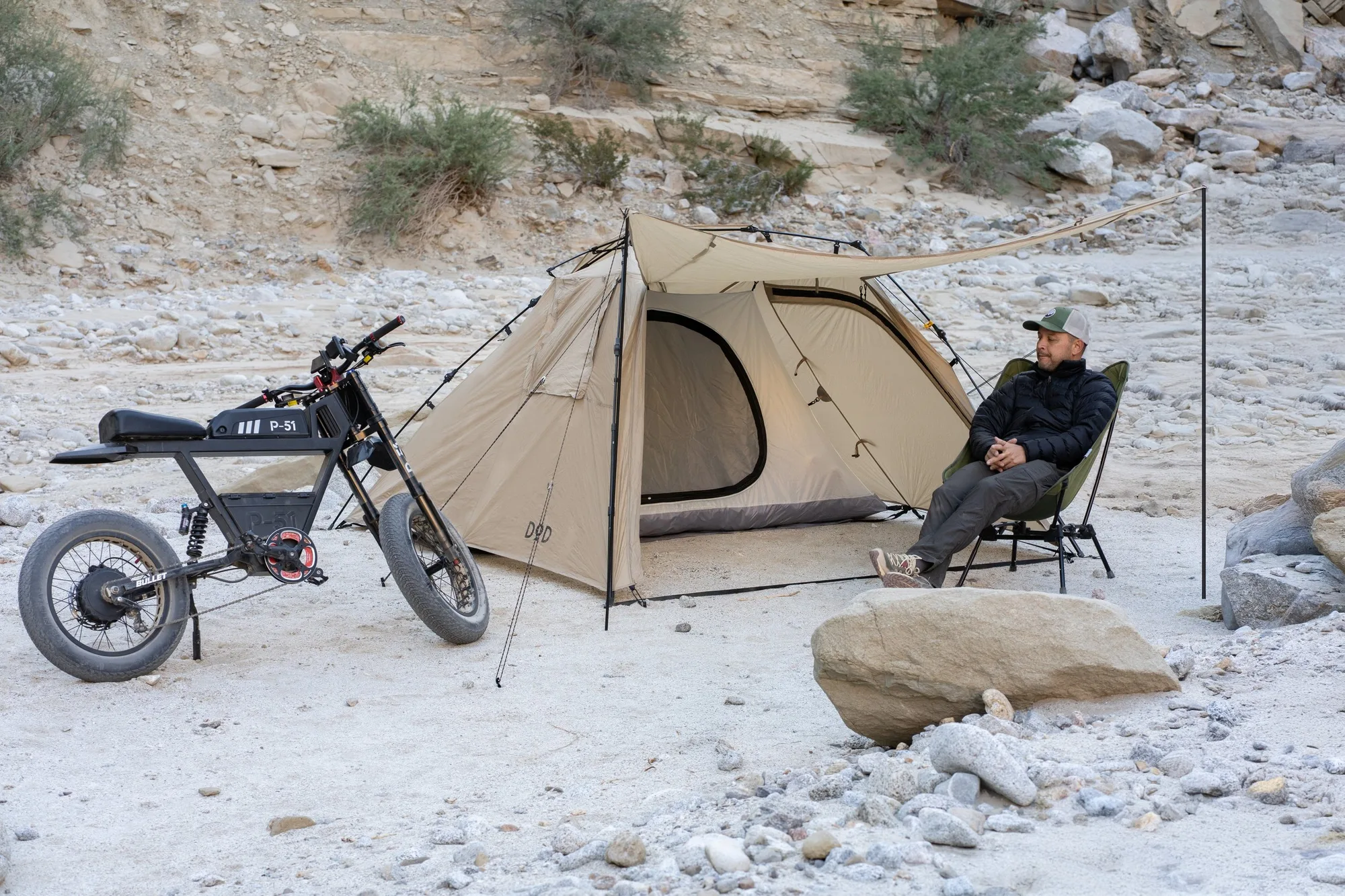
The MotoCamp Duo pairs the Moto 1Pull Tent, which sets up with a single pull, with the Sugoi Chair, built for comfort without the bulk. For a rider doing weekend trips, that is a coherent kit: light, simple, and reliable. For a car camper who already owns a comfortable chair, the bundle duplicates gear you have. The tent and chair colors are selectable, which matters if you are matching existing gear.
- List what you already own before buying any bundle.
- If only one item in a bundle is new to you, buy that item alone.
Decision rules for buying tent accessories
- Rule 1: Fix the ground connection first: If your pegs bend or pull out, upgrade to stainless steel pegs sized to your ground — Large for soft or loose soil, Medium for firm ground — before buying anything else. Pegs are the highest-return accessory purchase.
- Rule 2: Fit beats features on mats: Buy a mat only if it is designed for your tent model or you can measure and cut a generic footprint to your inner floor. A 6mm mat adds comfort and ground-cold insulation, not sleeping-pad-level support. Model-specific mats are a fit purchase, not a universal one.
- Rule 3: Do not duplicate shelter you already have: If your tent includes an enclosed awning or large vestibule, skip the separate tarp. If it does not, an awning or tarp is the accessory that adds the most usable space per dollar. Check your tent's existing coverage before buying shade.
- Rule 4: Cap your setup time: Set a maximum acceptable pitch-and-rig time, then buy only accessories that fit inside it. A one-pull tent plus a full tarp rig defeats the point of the one-pull design. Fewer accessories you actually pitch beat a full kit you avoid.
- Rule 5: Bundles must pass the duplication test: List your existing gear first. Buy a bundle only when every included item is something you would buy on its own — otherwise buy the single item you need. A bundle is only a deal if nothing in it sits unused.
Product facts that drive the decision
- Shakeen Peg Set: Available in Large (11 inches) and Medium (8 inches), 8 pegs per set, made from high-hardness stainless steel. Choose Large for soft or loose ground and Medium for firm ground; the size option is the whole decision.
- RX Pyramid Tent Mat (M): Designed specifically for the RX Pyramid Tent with a 0.24-inch (6mm) cushioning layer that absorbs ground unevenness and insulates against ground cold. Only buy it if you own an RX Pyramid Tent; the tailored fit is the value, and it is not a universal mat.
- Home Base Tent: One of the largest tents in the range, with a generous footprint and tall ceilings, one-person setup in under 20 minutes, a zip-out floor for event use, and a Base Camp Awning that attaches to another door for shade. If you already own this tent, the awning is the accessory that adds usable shaded space; if you do not, this is a shelter purchase, not an accessory purchase.
- Wagaya 1Pull Tent: Polycotton inner tent that manages humidity and condensation, retains heat in cold conditions, uses mesh panels for warm-weather airflow, and includes 35 sq ft inner space plus a 15 sq ft enclosed awning. The built-in awning removes the need for a separate shade accessory for basic covered sitting space.
Who this approach fits
Best for
- Campers who want a small, purposeful accessory kit instead of a full gear closet
- Campers who pitch on varied ground and need pegs that hold in both soft and firm soil
- Owners of a specific tent model who want a mat or awning that fits it correctly
Not for
- Campers looking for a universal accessory that works with any tent regardless of model
- Campers who want maximum covered space and are willing to accept longer setup times
- Buyers who need specifications that are not listed in the product record — check the product page before assuming a fit
Buy tent accessories in the order your campsite demands: pegs first, then a mat that fits your inner tent, then shelter only if your tent lacks it. Check the product record for the details that matter, and skip anything you cannot justify pitching on a real trip.