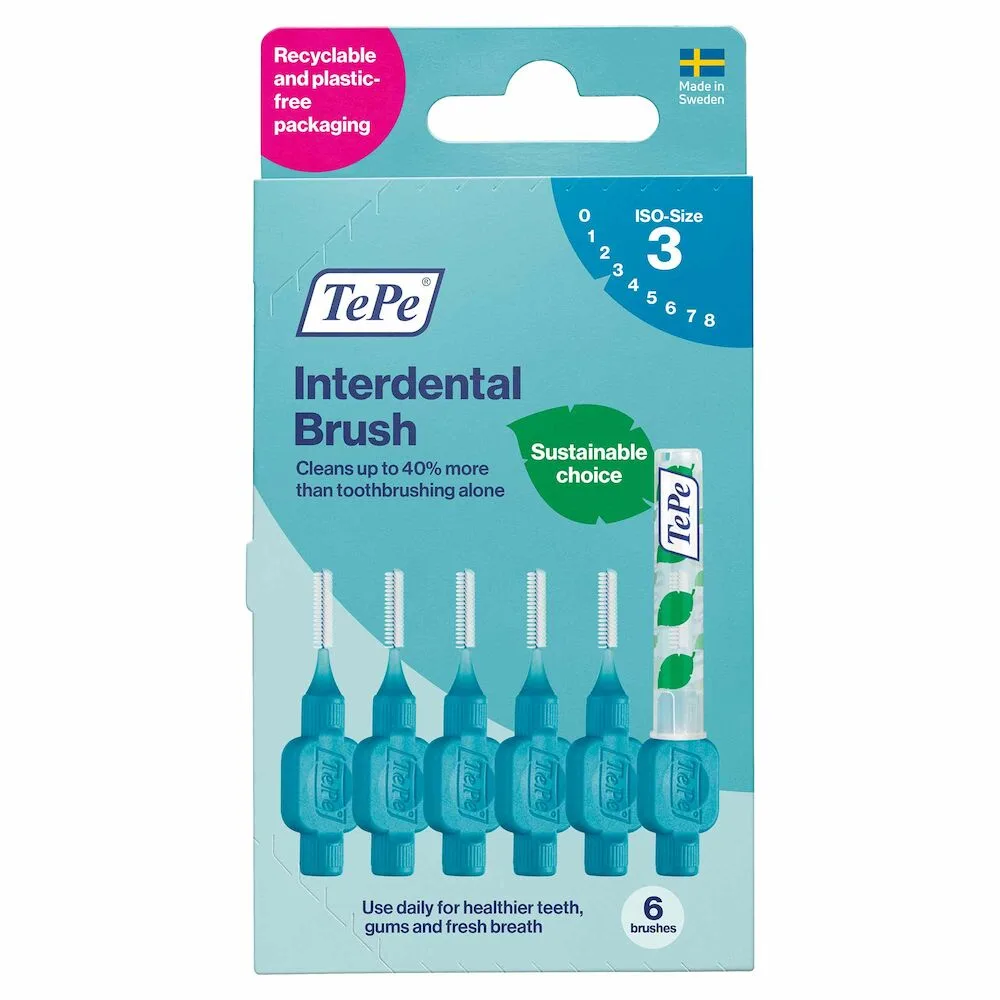
Choosing the right interdental brush size is crucial for effective cleaning and gum health. With TePe's color-coded system, finding your fit can be simple—if you know what to look for. This visual guide walks you through TePe's size range, explaining how to match each brush to your interdental spaces.
Whether you're new to interdental cleaning or looking to refine your routine, understanding TePe's size indicators will help you clean efficiently and comfortably. Let's dive into the world of TePe sizes and find your perfect match.
Understanding TePe's Color-Coded Size System
TePe interdental brushes are color-coded to indicate size, making it easy to identify the right brush at a glance. The colors range from pink (smallest) to black (largest), with each shade corresponding to a specific wire diameter and brush diameter. This system ensures you can quickly pick the brush that fits your gaps without guessing.
For example, the yellow and orange brushes are typically smaller, suitable for tight spaces, while blue and larger sizes are for wider gaps. The TePe Original range includes sizes from 0.4mm to 1.5mm, covering most interdental spaces. Understanding this color code is the first step to choosing the right fit.
- Pink: 0.4mm (extra tight gaps)
- Yellow: 0.5mm (tight gaps)
- Orange: 0.6mm (small gaps)
- Red: 0.7mm (medium-small gaps)
- Blue: 0.8mm (medium gaps)
- Green: 1.1mm (larger gaps)
- Purple: 1.3mm (very large gaps)
- Black: 1.5mm (extra large gaps)
How to Measure Your Interdental Spaces
Before selecting a brush, you need to know the size of your interdental spaces. A simple method is to use a TePe size indicator, which is a tool with color-coded probes that you gently insert between your teeth to find the best match. Alternatively, your dentist or hygienist can measure the gaps during a check-up.
If you don't have a size indicator, you can try a few different sizes and see which one fits snugly but comfortably. The brush should insert with slight resistance without forcing or causing pain. If the bristles bend excessively or the wire scrapes your gum, the brush is too large; if it slides in with no contact, it's too small.
- Use a mirror to see the gaps from different angles.
- Start with the smallest size and gradually increase until you feel gentle contact.
- When in doubt, consult your dental professional for a personalized recommendation.
Visual Comparison of TePe Brush Sizes
Seeing the brushes side by side can help you understand the size differences. TePe offers a range of brushes, including the Original line and the EasyPick, each with distinct size options. For instance, the TePe EasyPickTM (XS/S) is designed for very tight spaces, while the TePe EasyPickTM (XL) suits larger gaps. The Original brushes come in a variety of colors, each representing a specific size.
For a comprehensive visual guide, you can refer to the product images on our site, which show the brushes at actual size or with a scale. This is particularly helpful when you're choosing between similar sizes like orange and red. Remember that the brush diameter, not just the wire, determines the fit.
- Compare the brush head width to the gap between your teeth.
- Consider the wire thickness: a thicker wire provides more stability but may be less comfortable for tight spaces.
- If you have multiple gap sizes, a mixed pack like the TePe® Interdental Brushes Original Carton - Mix (3-5) offers variety.
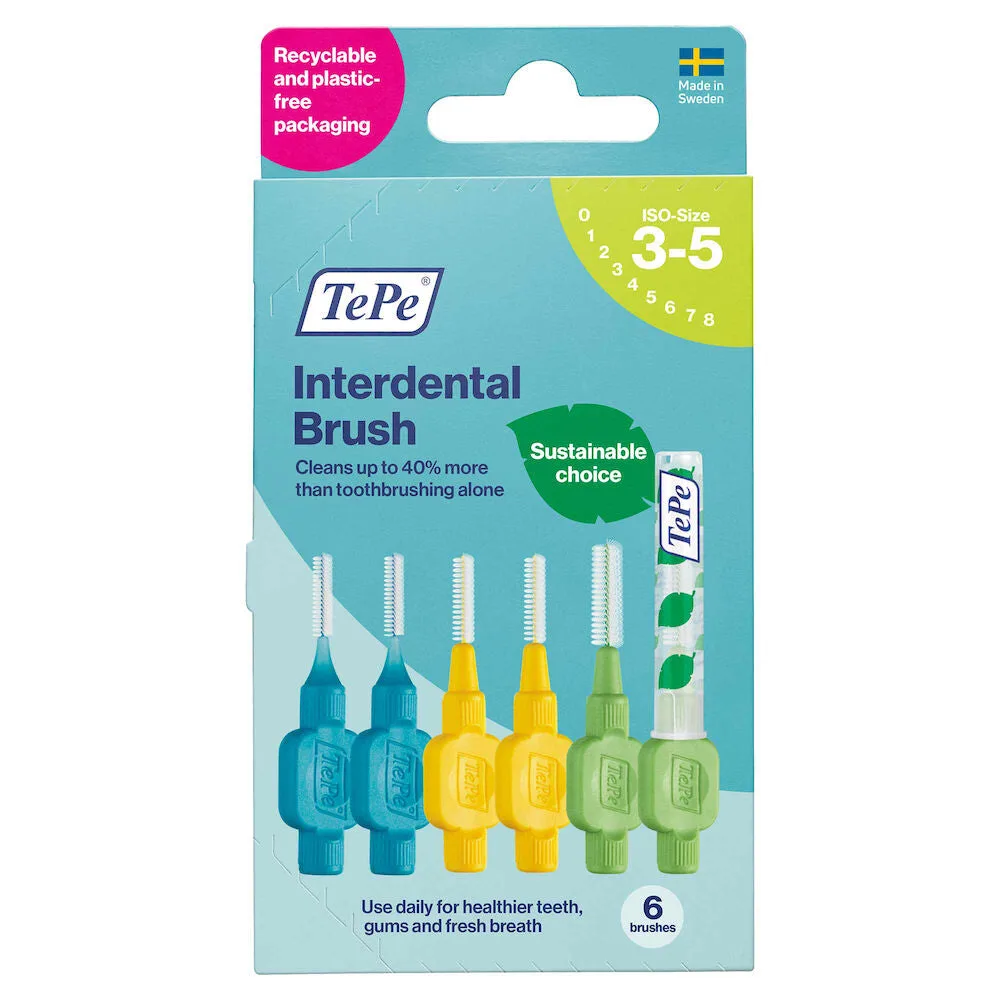
TePe® Interdental Brushes Original Carton - Mix (3-5)
Common Fit Issues and How to Solve Them
Even with a size guide, you may encounter fit issues. If the brush is too small, it won't clean effectively, leaving plaque behind. If it's too large, it can cause gum irritation or bleeding. Recognizing these signs helps you adjust your choice.
For example, if you feel the brush slipping out easily, try the next size up. If you experience pain or bleeding, go down a size. TePe brushes are designed to be flexible, but the right size ensures optimal cleaning without trauma. Remember that your gaps may change over time, so re-evaluate your size periodically.
- Bleeding gums: often a sign of too large a brush or improper technique; try a smaller size.
- Brush bends or flops: indicates too large a brush; switch to a smaller size.
- No resistance: the brush is too small; choose a larger size for better contact.
Specialized TePe Brushes for Different Needs
Beyond the standard sizes, TePe offers specialized brushes for specific situations. For orthodontic patients, the TePe® Ortho Kit includes brushes with a special shape to clean around brackets and wires. Similarly, the TePe InterspaceTM is designed with a longer, angled handle for easier access to back teeth.
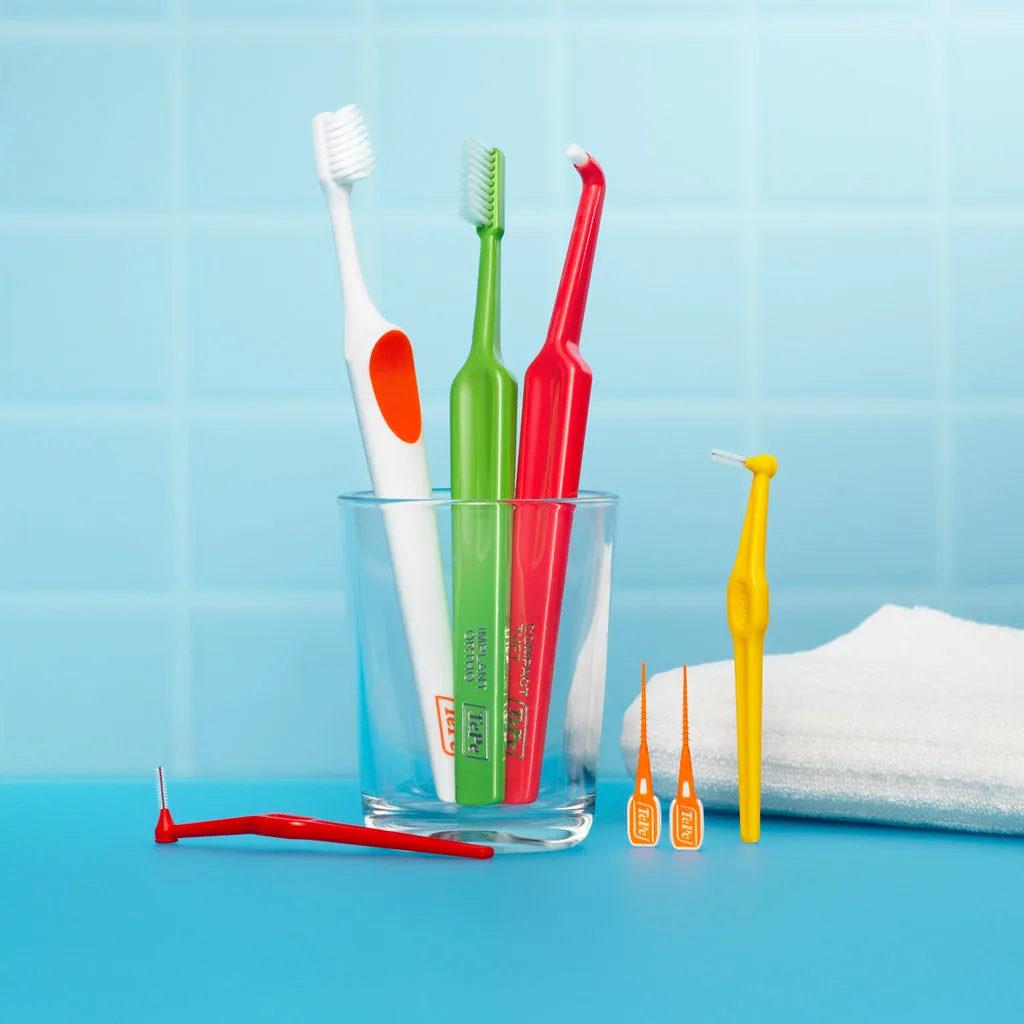
TePe® Ortho Kit
For those with implants or sensitive gums, the TePe Compact TuftTM is a single-tuft brush that can target tight areas. These specialized options ensure that everyone can find a suitable cleaning tool, regardless of their dental condition. Always consider your unique needs when choosing a brush.
- Ortho Kit: includes a special brush for braces and wires.
- Interspace: angled handle for posterior teeth.
- Compact Tuft: single tuft for precision cleaning around implants.
Choosing the right TePe interdental brush size is a simple process once you understand the color code and how to measure your gaps. Use this visual guide as your reference, and don't hesitate to try different sizes to find the perfect fit. For a convenient start, consider the TePe® Interdental Brushes Original Blue - Carton Pack, suitable for medium gaps, or the TePe EasyPickTM (XS/S) for tight spaces. Happy cleaning!