Quick Answer
Choose a TePe interdental brush when the gap between two teeth is narrow and you need to sweep plaque out of a tight space; choose a single tufted brush such as TePe Interspace when the problem is a wider, uneven area — an exposed root surface, a furcation, or the space around a brace — that a straight brush cannot hug. Many people need both: the interdental brush for the contact points and the single tufted brush for the irregular surfaces next to them.
What Each Brush Is Actually Built to Do
A TePe interdental brush is a small cylindrical or tapered brush on a short handle. Its job is to pass through the space between two adjacent teeth and wipe the side walls of both teeth as it goes. The TePe Original range comes in 9 color-coded sizes with a straight brush head and short handle, so you match the brush to the gap rather than forcing one size everywhere. TePe Extra Soft versions use gentler bristles in 6 sizes for the same job when tissue is tender.
A single tufted brush — the category TePe Interspace belongs to — is a small tuft of bristles on a handle, designed to be placed directly onto a surface rather than pushed through a gap. It reaches into concavities, along a gumline that has receded, and around the edges of crowns, bridges, and orthodontic brackets. It does not clean the contact point between two teeth; it cleans the terrain around it.
Where the Two Tools Overlap — and Where They Don't
If you have healthy, tightly contacting teeth, the interdental brush is doing the heavy lifting. Plaque collects at the contact point, and only a brush that physically passes through that space removes it. A single tufted brush cannot squeeze into a closed contact, so it is not a substitute there.
The overlap appears when the gum has receded. Once a root surface is exposed, the space between teeth often becomes wider at the gumline but stays narrow at the contact. A single interdental brush may be too small for the wide part and too large for the narrow part. This is the classic situation where a single tufted brush earns its place: you use the interdental brush at the contact, then use the tufted brush to sweep the exposed root surface and the dip below it.
Sizing and Fit: The Decision That Matters Most
Interdental brushes are sized. TePe Original brushes are available in 9 sizes, and the color on the handle tells you which one you have — for example, the Original Yellow is 0.7 mm (ISO 4) and the Original Green is 0.8 mm (ISO 5). The brush should pass through the gap with slight resistance, not bend or buckle. If it slides through with no contact, it is too small; if it will not pass without force, it is too large.
Single tufted brushes are not sized the same way because they are not measured against a gap. Fit is about access: can the tuft reach the surface you need to clean without the handle blocking your view? For the very back of the mouth or the inside of a lower incisor, a smaller tuft and a slimmer neck matter more than bristle count. The catalog does not list a millimeter size for every specialty brush, so judge fit by whether the tuft sits flat on the surface you are targeting.
A Practical Daily Sequence
Start with your regular toothbrush and fluoride toothpaste, then clean between the teeth. Work around the mouth in a fixed order so you do not skip sites: upper right to upper left, then lower left to lower right. At each contact, insert the interdental brush and make one or two gentle back-and-forth strokes. Do not force it; if the bristles fold over, the brush is too big for that gap.
After the contacts are clean, switch to the single tufted brush for the irregular sites: exposed root surfaces, the gumline where it has dropped, the margins of crowns, and around any fixed retainer or bracket. Place the tuft at the gumline at a slight angle and use small circular or sweeping motions. Rinse both brushes and let them air dry. Replace an interdental brush when the bristles splay or the wire bends — usually well before it looks worn out.
When Extra Soft Bristles Change the Choice
TePe Extra Soft interdental brushes are designed with gentler bristles and are recommended for patients with sensitive teeth, dry mouth, or after oral surgery. If you are in one of those groups, the comparison is not simply Interspace versus Original — it is also Original versus Extra Soft. A softer interdental brush can make daily cleaning tolerable when standard bristles feel abrasive, and the same logic applies to choosing a softer tufted brush for a tender site.
The trade-off is real: softer bristles feel kinder but can be less effective at scrubbing stubborn plaque, so you may need to spend a little more time on each site. If your gums bleed consistently despite gentle technique, that is a reason to see a dental professional, not to switch brushes indefinitely.
Trade-Offs at a Glance
- Interdental brush: Passes through the contact point and cleans the side walls of two adjacent teeth. Sized in millimeters, so it either fits the gap or it doesn't. Best when gaps are narrow and consistent. Choose Extra Soft if bristles feel harsh.
- Single tufted brush: Placed onto a surface rather than through a gap. Cleans exposed root surfaces, receded gumlines, crown margins, and around fixed appliances. Best as a companion to an interdental brush, not a replacement for it at the contact point.
- Doing both: Most people with recession or dental work need the interdental brush at the contact and the tufted brush on the irregular surface next to it. If one tool leaves a site you cannot reach, that site is telling you which second tool to add.
TePe Products in This Comparison
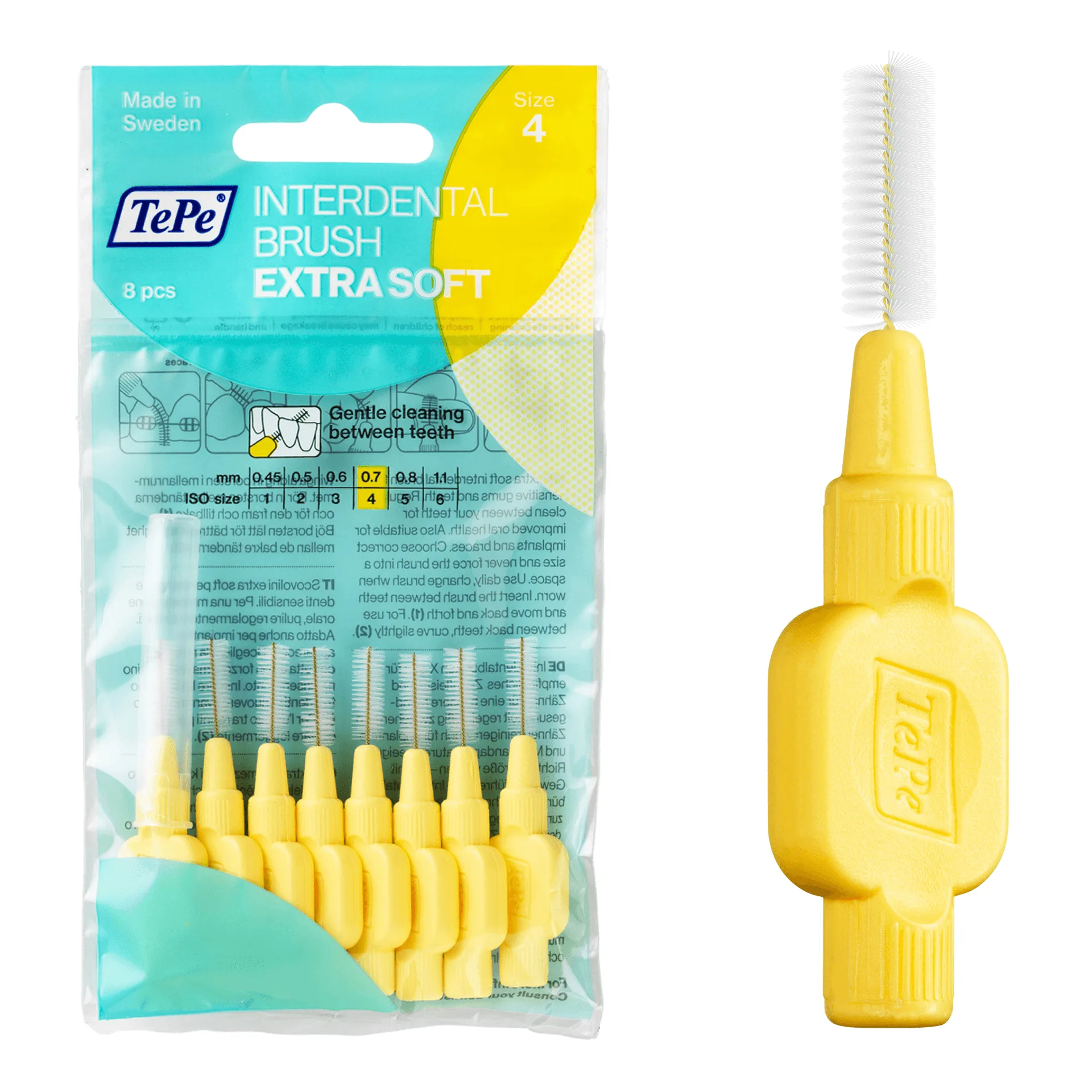
- TePe® Interdental Brushes Extra Soft Yellow - 0.7 mm (ISO 4): TePe Extra Soft Interdental Brushes have Extra Soft bristles and are available in 6 sizes, including Yellow 0.7 mm (ISO 4). The gentler bristle makes this the better starting point if your gums are sore, dry, or healing, while the 0.7 mm size fits narrow contacts.
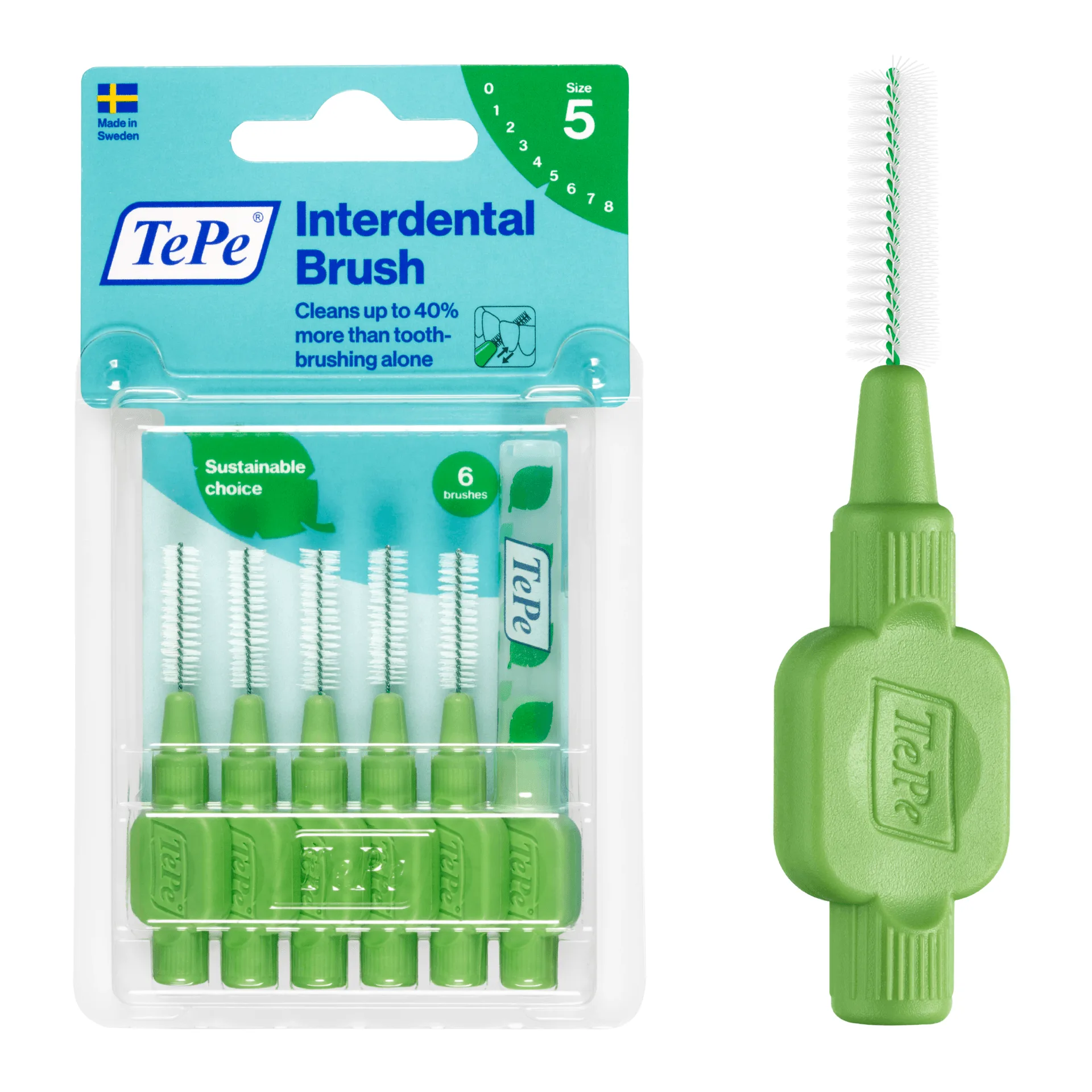
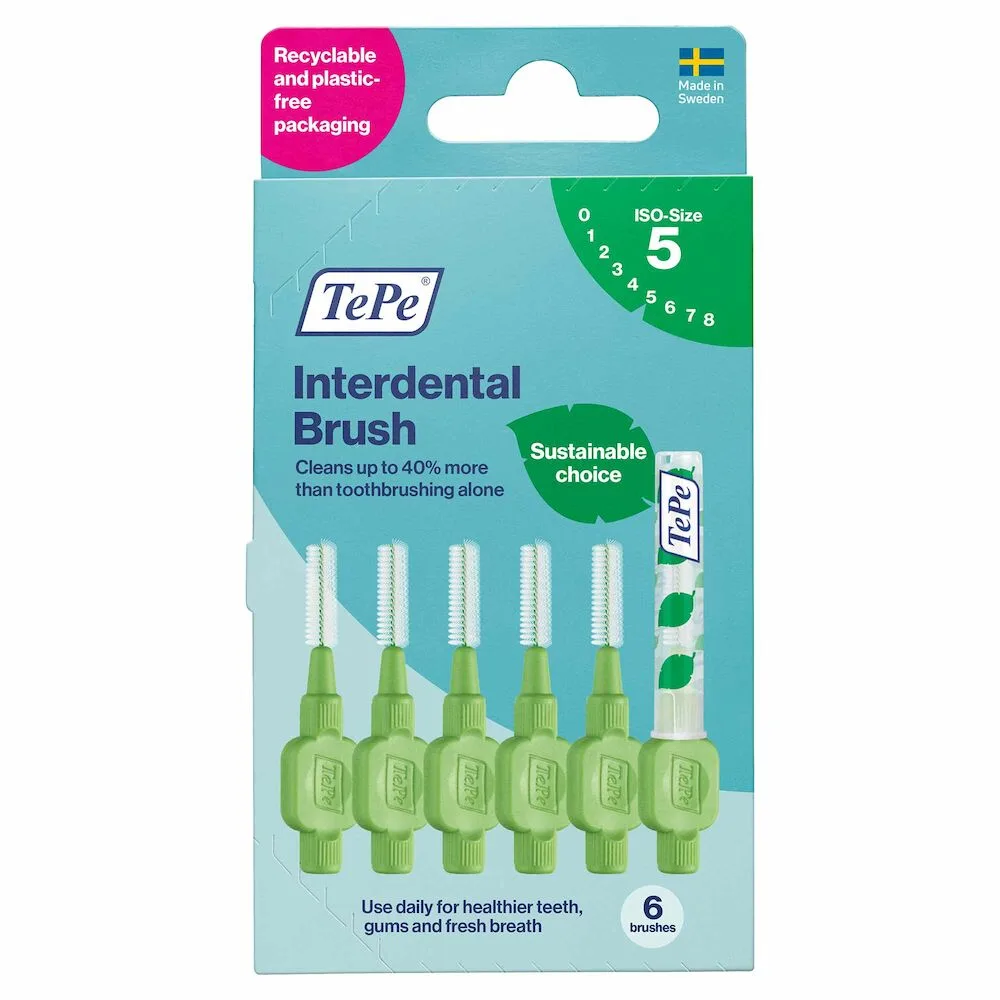
- TePe® Interdental Brushes Original Green - Carton Pack: TePe Original Interdental Brushes come in 9 color-coded sizes with a straight brush head and short handle, and are described as the best-selling brush for removing plaque between the teeth. The wider size range makes it easier to match each gap precisely, and the short handle gives control at the back of the mouth.
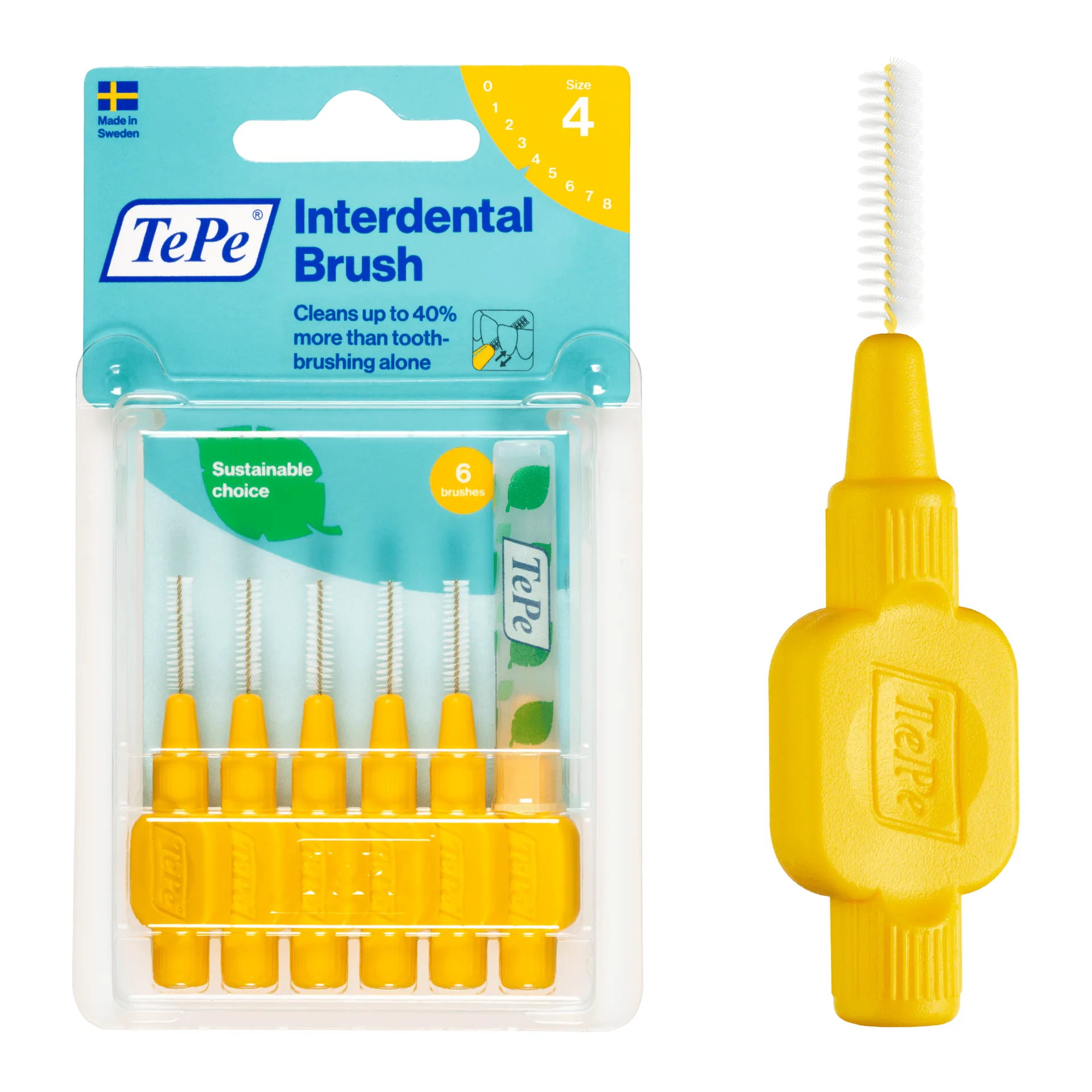
- TePe® Interdental Brushes Original Yellow - 0.7 mm (ISO 4): TePe Original Yellow is 0.7 mm (ISO 4), a straight-head brush in the 9-size Original range. A useful reference size: if this passes through a gap with slight resistance, that gap is handled by an interdental brush rather than a single tufted brush.
- TePe® Interdental Brushes Original Green - 0.8 mm (ISO 5): TePe Original Green is 0.8 mm (ISO 5), one step larger than the Yellow in the same 9-size range. Comparing Yellow and Green is the quickest way to learn how much difference one size makes before you buy a full pack.
Which Should You Choose?
Choose TePe interdental brushes if
- Your teeth contact each other and plaque collects at the contact point
- You want a sized, color-coded system you can match to each gap
- Your gums are sensitive and you need the Extra Soft option
Choose a single tufted brush or TePe Interspace instead if
- You have exposed root surfaces or a receded gumline that a straight brush cannot hug
- You wear braces, a fixed retainer, or a bridge and need to clean around margins
- Your interdental brush passes through the gap without touching anything