Start with a sorting strategy built for 500 pieces
The Terrifier Art Crispies jigsaw puzzle contains 500 pieces, which is a comfortable size for one or two evenings of work. Before you lock in a piece, sort by edge, color, and texture. Terry Wolfinger's illustration mixes the cereal-box motif with Art the Clown, so you'll likely find distinct zones: the bright Art Crispies branding, the clown's face, and darker background areas. Pull out all border pieces first, then group by these visual regions.
A dedicated sorting tray or a few shallow bowls keeps loose pieces from migrating off the table. Work on a surface large enough to hold the finished 18" x 24" size with room to spare for sorted piles.
What you're working with
-
Terrifier - Art Crispies Jigsaw Puzzle: 500-piece jigsaw puzzle featuring Art the Clown, illustrated by Terry Wolfinger. The piece count and artist credit tell you this is a mid-size puzzle with a detailed, stylized image—sorting by color and texture will matter more than with a simple photo puzzle.
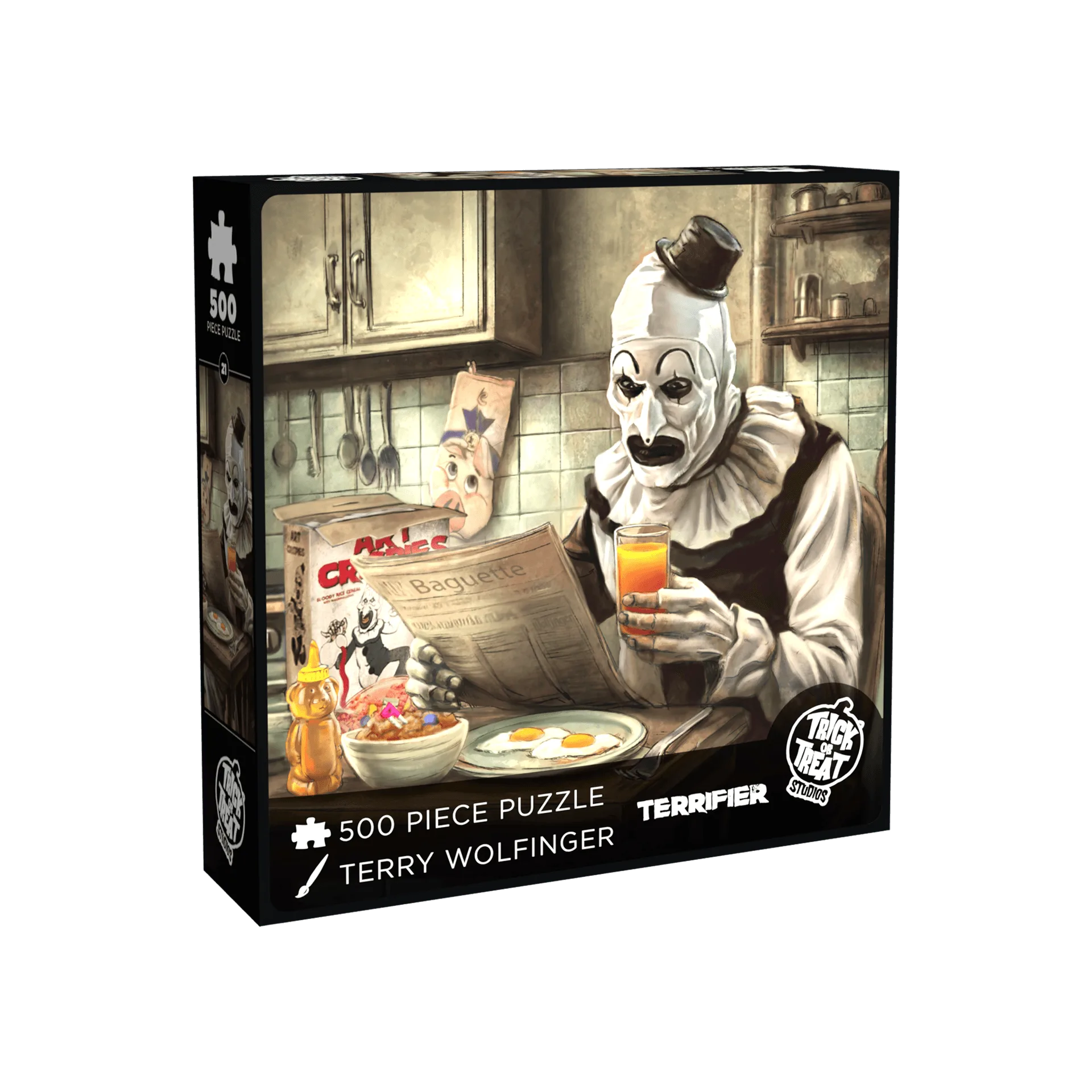
Terrifier - Art Crispies Jigsaw Puzzle
-
Terrifier - Art Crispies Jigsaw Puzzle: Finished size: 18" x 24". Measure your table or board before you start; you'll need at least this footprint plus space for loose pieces.
Assemble in passes, not all at once
- Build the border first: Connect the straight-edge pieces to establish the 18" x 24" frame. This gives you a reference for where interior sections belong.
- Fill high-contrast areas next: The Art Crispies logo and Art's face likely have the strongest color and line contrast. Completing these anchors the image and makes the remaining background pieces easier to place.
- Save low-contrast zones for last: Dark or repetitive background areas are the slowest part. Sort these by piece shape (knobs and holes) and work in small clusters rather than scanning the whole pile.
- Check fit before forcing: If a piece resists, lift it and re-check the surrounding pieces. Forcing a wrong fit can bend cardboard tabs and weaken the finished puzzle.
Framing and display: plan before you glue
The finished puzzle measures 18" x 24", a standard frame size, so you have options. Decide whether you want to keep the puzzle reusable or make it a permanent display piece. If you plan to frame it, use a puzzle glue or adhesive sheet according to its instructions, then mount it on a backing board before framing. Avoid gluing until you're certain of the final layout—glue is one-way.
For a horror collectible display, a simple black frame keeps the focus on Wolfinger's artwork. If you'd rather not commit to glue, place the completed puzzle on a rigid board and cover it with a fitted frame or a clear acrylic sheet; this preserves the pieces for future reassembly. Keep the finished puzzle out of direct sunlight to slow fading, and dust with a soft dry cloth rather than a damp one.
Storage and care between sessions
- Use a puzzle board or mat: If you can't finish in one sitting, a dedicated puzzle board with a cover lets you slide the work-in-progress under a bed or sofa without dismantling it.
- Keep pieces dry: Cardboard puzzle pieces can warp or delaminate if exposed to moisture. Store the box in a dry place and avoid placing drinks on the same surface.
- Bag by section if you disassemble: If you break the puzzle down, bag sorted sections separately so reassembly is faster next time.
A note on missing safety details
The supplied product information for this puzzle does not list an age range, small-parts warning, or care instructions beyond the finished size. If you're buying for a child or planning to display it in a shared space, check the packaging for any age recommendation or choking-hazard warning before use. Treat the puzzle as a collectible display item first and a family activity second until you've confirmed the label.