Why these cards deserve a little extra care
The Streets Playing Cards are not a standard deck you replace without a thought. Each card carries a unique, bespoke design by Mike Skinner, so wear on one card is wear on a small piece of artwork. That makes basic handling and storage habits worth building from day one.
The catalog describes the set as ideal for card games or as a collector's item. Those two uses pull in different directions: play puts stress on edges and surfaces, while collecting rewards keeping the deck as close to its original condition as possible. Decide which matters more to you, because it changes how you store and shuffle.
What the listing confirms
-
The Streets Playing Cards: Complete set pack of playing cards with every card showcasing a unique, bespoke design by Mike Skinner. Because each card is individually designed, a bent corner or scuffed face on any single card is more noticeable than in a uniform deck, so careful handling protects the set as a whole.
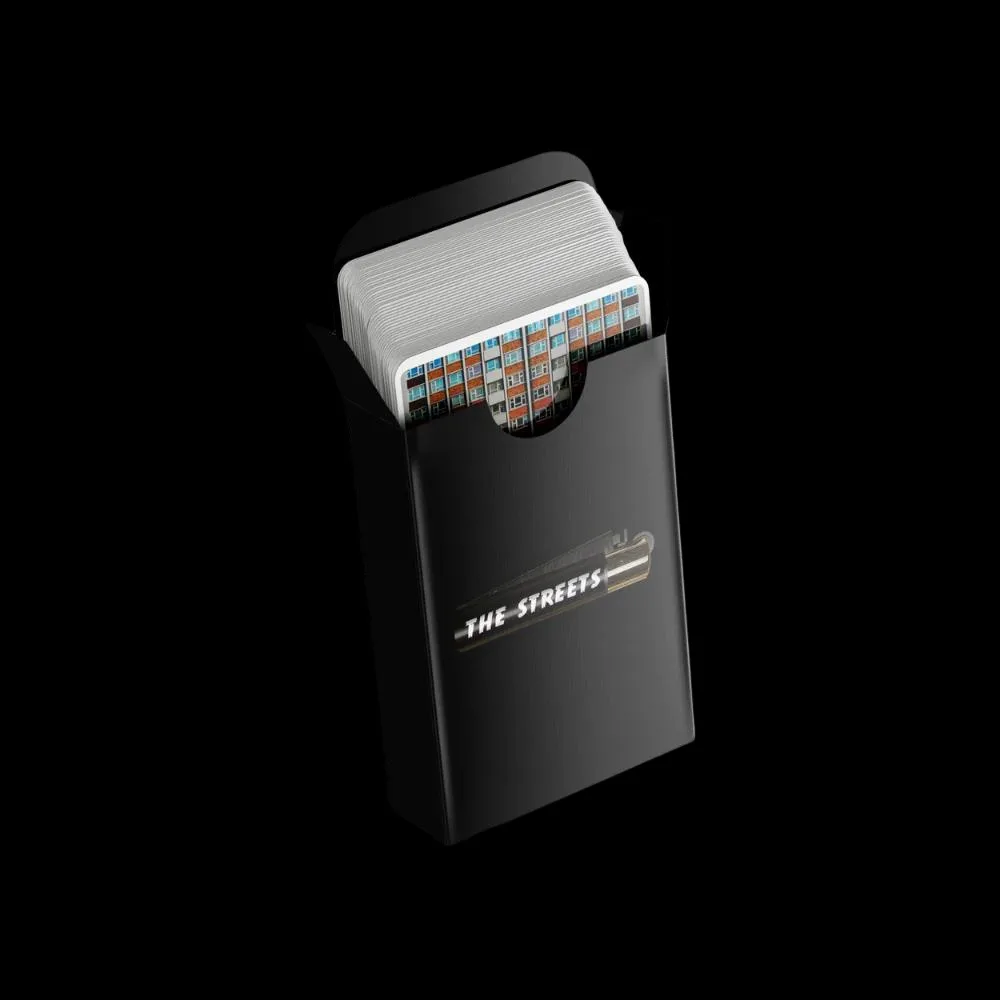
The Streets Playing Cards
-
The Streets Playing Cards: The set is described as ideal for card games or as a collector's item. This tells you the deck is intended for real play, not just display, so your care routine should support regular shuffling rather than sealing the cards away.
Storage habits that prevent bending and edge wear
Most card damage happens between games, not during them. These habits keep the deck flat and protected without much effort.
- Keep the cards in their pack: Return the full set to its pack after each game. A closed pack keeps dust off the faces and stops cards from sliding against each other in a drawer.
- Store the pack flat, not on its edge: Lying the pack flat distributes weight evenly. Standing it on a corner or propping it against something heavy is how decks develop a permanent bow.
- Choose a dry, stable spot: Avoid windowsills, radiators, and damp cupboards. Heat and moisture are the usual causes of warping, and the supplied information does not include any special tolerance for either.
- Keep heavy objects off the deck: A stack of books on top of the pack may seem tidy, but uneven pressure over time can press a curve into the cards.
How to clean the cards without harming the artwork
The supplied product information does not include a manufacturer cleaning method, so treat the following as conservative, low-risk practice rather than an official instruction. Test on one card first and stop if the surface or print looks affected.
- Wipe with a dry, soft cloth: For everyday smudges, a dry microfiber or soft cotton cloth is the safest starting point. Wipe gently across the face rather than scrubbing the printed design.
- Use a barely damp cloth only when needed: For sticky marks, dampen a corner of the cloth very slightly and work on the affected spot, then dry the card immediately. Do not soak the card or the deck.
- Dry fully before returning to the pack: Even a little moisture trapped inside the pack can warp cards. Let any wiped card air-dry completely before stacking it back with the rest.
- Skip household cleaners and solvents: The supplied information gives no guidance on chemical cleaners, and the bespoke printed designs are the very thing you are trying to protect. Plain water on a cloth is the cautious choice.
Handling and shuffling to protect the edges
Frayed edges usually come from repeated rough shuffling and from picking cards up off a hard table. Small changes in technique make a real difference over months of game nights.
- Shuffle over a soft surface: A tablecloth, felt mat, or even a towel under the deck cushions the card edges during riffles and spreads.
- Prefer gentler shuffle styles: Overhand and pile shuffles put far less stress on edges than repeated hard riffles. If you riffle, keep it loose rather than snapping the halves together.
- Lift cards rather than sliding them: Sliding a card across a rough tabletop wears the edge. Lift it cleanly when dealing and collecting.
- Keep hands clean and dry: Oily or damp fingers transfer straight onto the printed faces. A quick wipe of hands before play is the simplest protection for the artwork.
What the listing does not confirm
The supplied information does not state a card finish, paper stock, coating, or whether the deck is intended for washable or heavy-duty use. It also gives no manufacturer cleaning or care instructions and no guidance on replacing individual cards.
That means you should treat the deck as a printed paper product and act accordingly: keep it dry, keep it flat, and avoid anything abrasive. If a card becomes badly bent or marked, the listing does not confirm that a single replacement card is available, so prevention is the practical strategy.
A collector's approach versus a player's approach
If you bought The Streets Playing Cards primarily as a collector's item, consider a second deck for actual play. The catalog presents the set as suitable for both uses, but keeping one deck untouched preserves the bespoke designs exactly as supplied, while a playing deck can be shuffled without worry.
If you plan to play with this deck, accept that some edge softening is normal over time and focus on the habits above: shuffle on a soft surface, store the pack flat, and keep hands and table clean. That balance keeps the deck usable and the artwork presentable without turning game night into a handling drill.