Quick answer
Choose the TheraTouch DX2 shortwave diathermy when your priority is controlled deep-tissue heating over a broad treatment area; choose the TheraTouch LX2 laser device when you need targeted Class IIIb photobiomodulation with a 9-diode cluster. They are complementary modalities, not substitutes, so the right pick depends on the tissue depth and precision your caseload demands.
Deep tissue heating vs targeted photobiomodulation
The DX2 uses shortwave diathermy to produce controlled deep-tissue heating, which suits conditions where warming a larger volume of tissue is the goal. The LX2 delivers Class IIIb low-level laser therapy through a 9-diode cluster applicator, focusing energy on targeted areas for photobiomodulation rather than bulk heating.
This difference in mechanism means the two devices address different clinical problems. Diathermy is about thermal dose over an area; laser therapy is about light dose at specific points. Neither is inherently better—they answer different questions.
Dosage control and tuning: what each system offers
The DX2 includes Scientific Dosage Control (SDC), which adds two intermediate dosage settings between standard levels, and automated tuning technology for consistent system performance. That granularity helps when you want to fine-tune thermal dose without jumping between coarse steps.
The LX2's catalog facts do not specify comparable dosage increments or tuning features, so if stepwise dose control is central to your protocol, verify those details before purchase. The cluster applicator itself is the key practical difference: it spreads laser output across nine diodes, which can speed coverage of a target area compared with a single-diode probe.
Clinical setting and operator considerations
Both devices are designed for clinical environments—physical therapy clinics, chiropractic offices, sports medicine practices, and athletic training rooms are named for the LX2, and the DX2 is described for clinical deep-tissue heating. The DX2's automated tuning reduces setup fiddling, while the LX2's cluster applicator may require careful placement to keep all diodes in contact with the treatment area.
Class IIIb lasers carry eye-safety obligations that diathermy does not; plan for appropriate eyewear and controlled access if you choose the LX2. Shortwave diathermy, in turn, requires attention to electrode placement and nearby metal or electronic devices. Neither device's catalog entry lists contraindications, so confirm those against your clinical guidelines.
Key trade-offs to weigh
- Heating depth vs precision: The DX2 heats a larger tissue volume; the LX2 targets specific points with light. If your cases need broad deep warmth, DX2 fits; if you need focal photobiomodulation, LX2 fits. List your top three conditions and note whether each calls for area heating or focal light.
- Dosage granularity: The DX2 offers SDC with two intermediate levels and automated tuning. The LX2's catalog entry does not state comparable dose steps, so ask for the dose settings if fine control matters. Request a dose-setting comparison from the supplier before committing.
- Safety and workflow burden: Class IIIb laser use requires eye protection and controlled access; diathermy requires electrode placement checks and awareness of metal implants or nearby electronics. Choose the workflow your staff can consistently follow. Audit your treatment rooms for laser-safe access or diathermy-friendly layout before buying.
Product facts
-
TheraTouch® DX2 Shortwave Diathermy: Shortwave diathermy system with Scientific Dosage Control (SDC) adding two intermediate dosage settings. SDC lets you step thermal dose more gradually, which is useful when patients respond differently to standard settings.
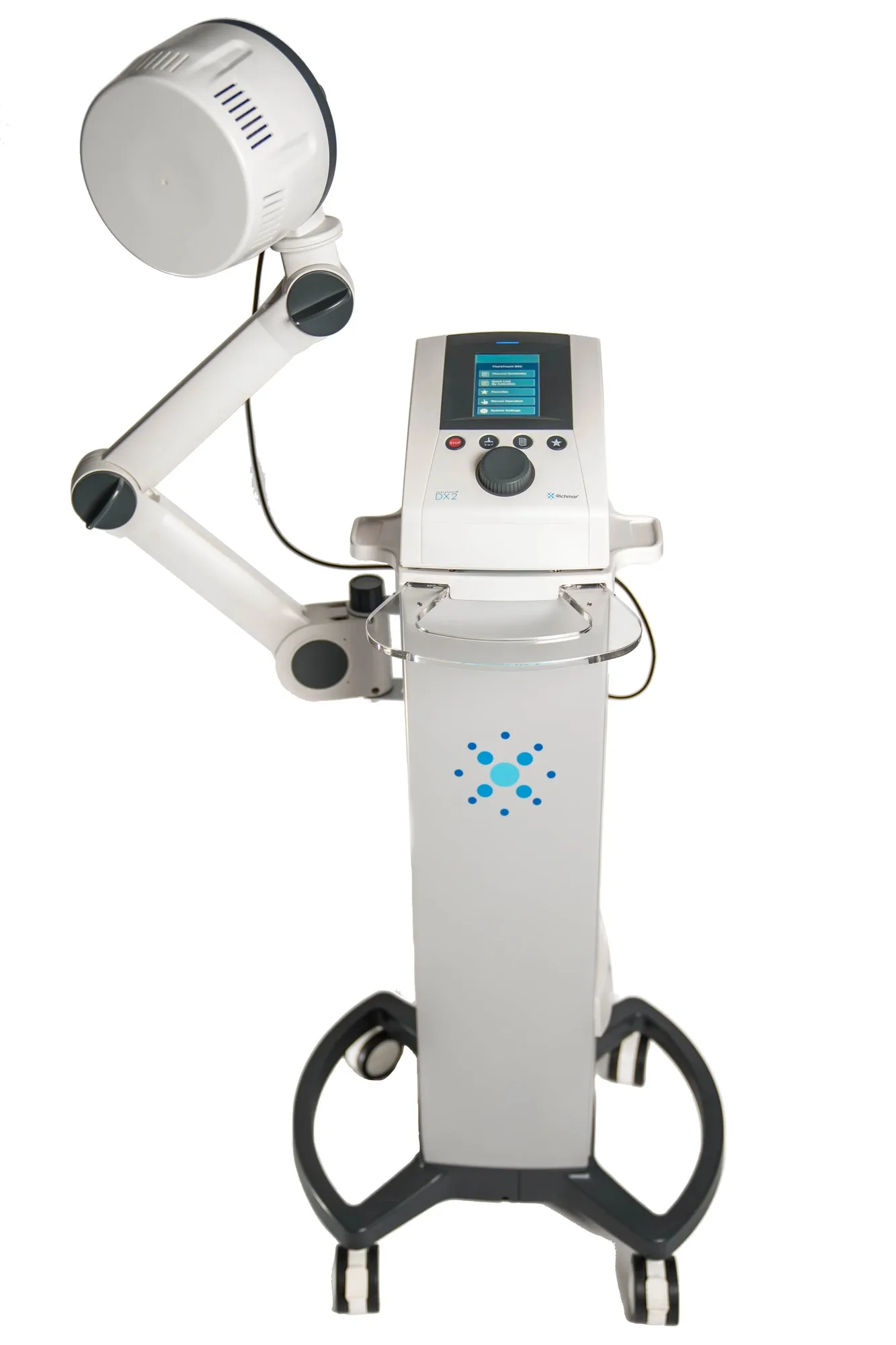
TheraTouch® DX2 Shortwave Diathermy
-
TheraTouch LX2 Laser Light Device with Cluster | Class IIIb LLLT: Class IIIb low-level laser therapy device with a 9-diode cluster applicator. The cluster covers more area per application than a single diode, which can shorten treatment time on broader targets.
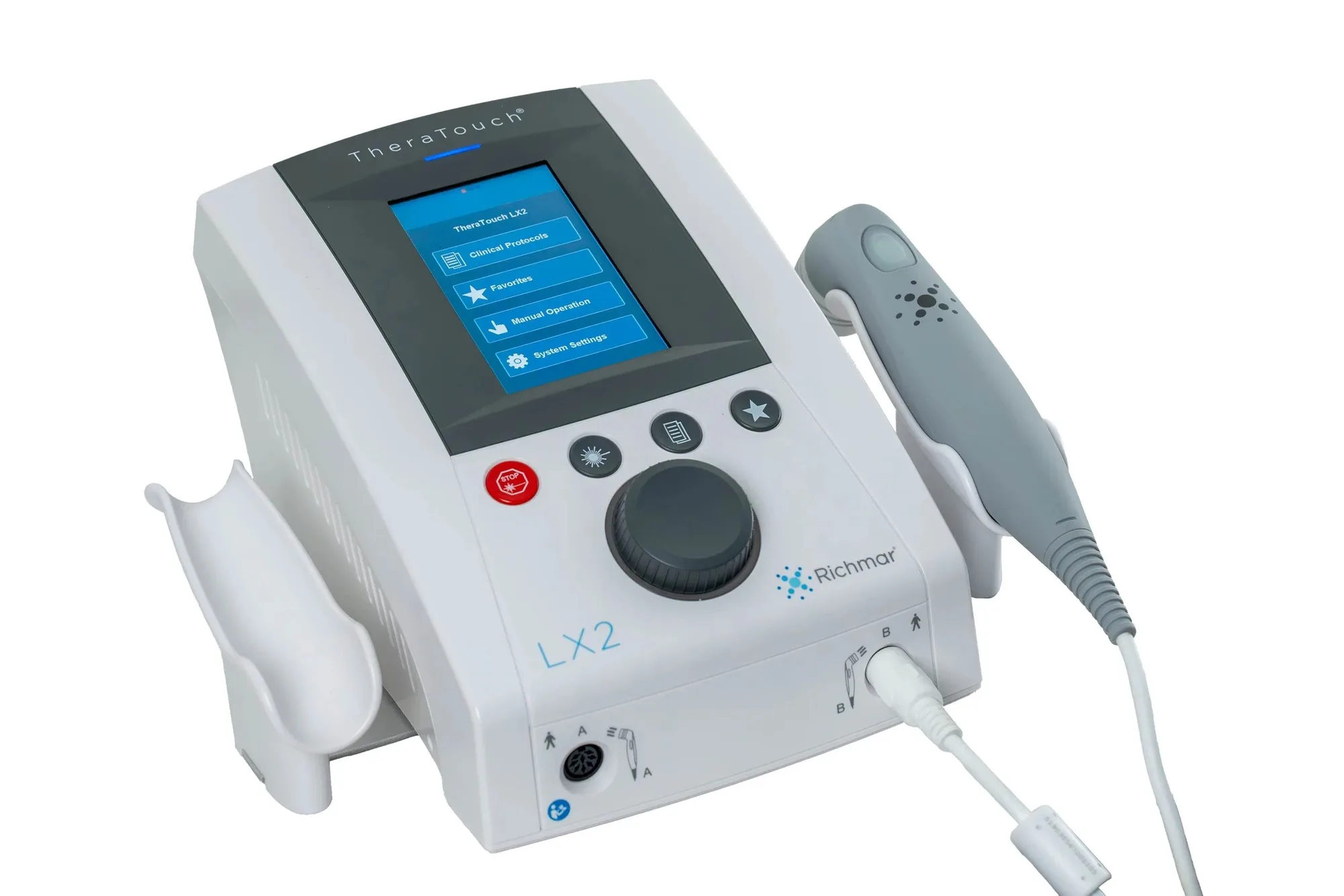
TheraTouch LX2 Laser Light Device with Cluster | Class IIIb LLLT
Which device fits your practice?
Best for
- Clinics that need controlled deep-tissue heating over larger areas and want incremental dosage control
- Practices already set up for shortwave diathermy who want automated tuning to simplify setup
Not for
- Clinics seeking targeted photobiomodulation rather than thermal effects—choose the LX2 instead
- Settings without space or protocols for electrode-based deep heating