Quick answer
Write your new home card message in three parts: a warm opening that names the move, one specific detail about their new place or the journey, and a forward-looking wish for their life there. Keep it to three or four sentences so it feels heartfelt, not like a form letter.
Why a moving card needs a different tone than a housewarming gift tag
A new home card arrives during a messy, transitional moment—boxes everywhere, address changes pending, and often a mix of excitement and exhaustion. Your message should acknowledge the effort of moving, not just the milestone of ownership or a new lease. That means skipping grand phrases like 'congratulations on your new castle' if they rented, and avoiding assumptions about whether the move was voluntary or difficult.
The most useful messages are specific enough to prove you know the person, but short enough to read in ten seconds while standing in a half-unpacked kitchen. Save longer stories for a phone call or a visit after they've settled.
When a blank card is better than a printed message
A blank interior gives you room to adjust the tone for a close friend, a colleague, or a family member you don't see often. If the card has a printed sentiment, you're locked into someone else's words—fine for a quick note, but limiting when you want to reference a specific detail like a new commute or a first garden.
The trade-off is that a blank card requires you to actually write something, which is where a simple three-part structure helps. If you're short on time, a single sincere sentence plus your signature is still better than a generic 'best wishes' that could apply to anyone.
How to write your new home card message, step by step
- Start with a specific opening line: Name the move directly: 'Congratulations on the new place' or 'Thinking of you as you settle into the new house.' Avoid 'I heard you moved'—it sounds distant and makes the card feel like an afterthought. Check that your first sentence mentions the home, not just the person.
- Add one personal detail about the home or the move: Mention something you know: the extra bedroom they've been wanting, the shorter commute, the garden, or even the fact that they finally have space for a proper bookshelf. If you don't know the details, keep it general but warm: 'I hope the new place already feels like yours.' If you can't name a detail, use a general line about comfort rather than inventing specifics.
- Close with a forward-looking wish: End with a wish for their life in the home, not just the home itself: 'Wishing you many happy mornings at the new kitchen table' or 'Here's to good neighbors and easy unpacking.' This shifts the message from real estate to real life. Avoid 'good luck' as your final line—it can sound like they'll need it.
- Sign with your name and a brief personal note if appropriate: For close friends, add a short line like 'Can't wait to see it' or 'Let me know when you're ready for visitors.' For acquaintances, keep the signature simple—your name is enough. Don't add a request or a question that demands a reply during a busy move. Skip the question mark unless you genuinely want an answer soon.
Card details that support your message
-
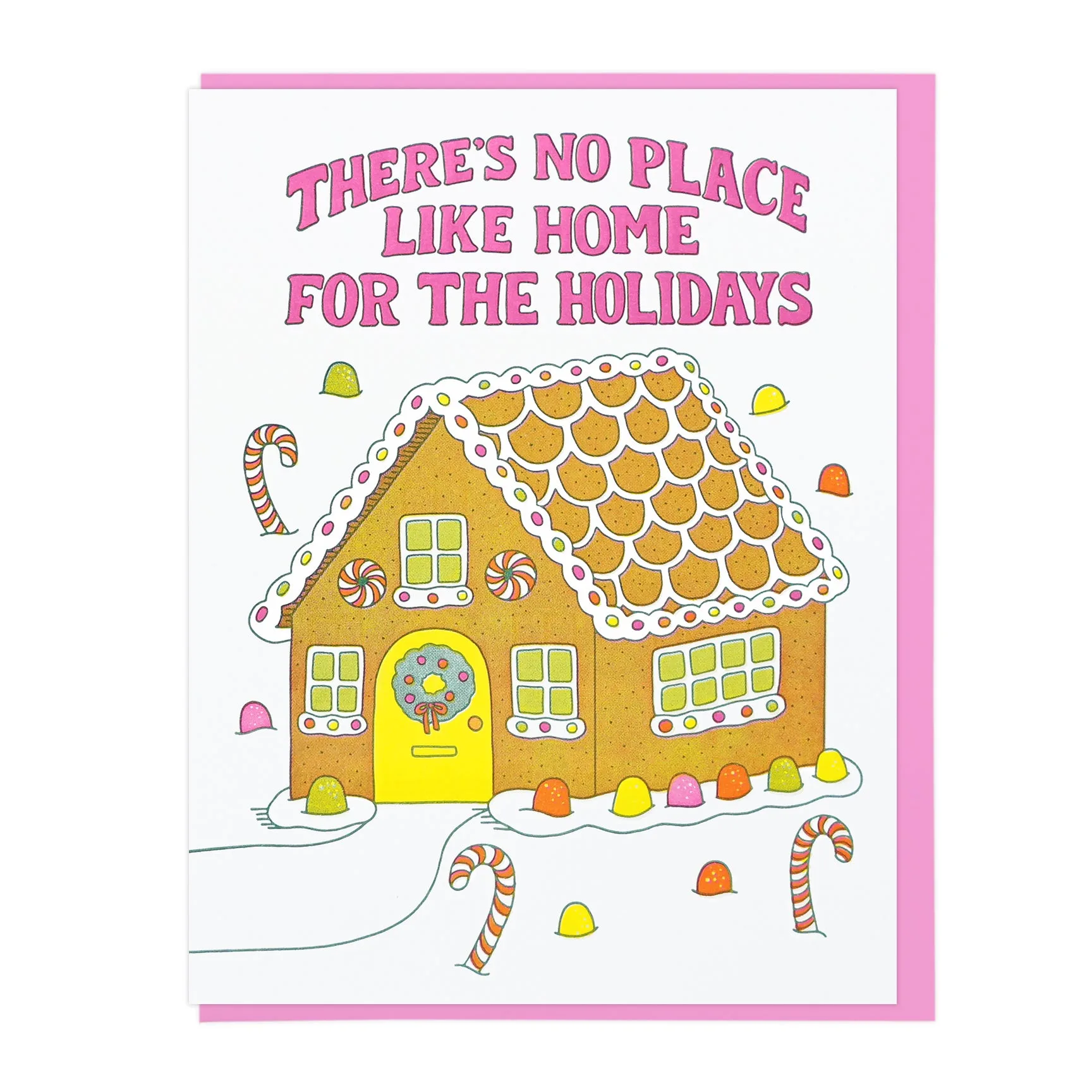
There's No Place Like Home: The card is letterpress-printed on 100 lb. recycled paper with a blank interior and a matching envelope. The blank inside lets you use the three-part message structure below without working around a printed sentiment, and the textured paper makes a short handwritten note feel more considered.
There's No Place Like Home