Why Weight and Packability Matter on the Trail
Every ounce and cubic inch counts when you're carrying your shelter system for miles. The Thermodown 15 Down Quilt is designed to deliver warmth without the bulk of a traditional sleeping bag, making it a strong candidate for three-season backpacking where space in your pack is tight.
Thermodown 15 Down Quilt: Weight and Packed Size
-
Thermodown 15 Down Quilt: The quilt comes in at only 33 oz. (35 oz. for Long version) and packs down to just 9 x 6 inches. At just over two pounds, this quilt saves significant weight compared to a mummy bag of similar warmth. The 9x6-inch packed size means it can fit inside a small stuff sack or even a pack's main compartment without crowding out other gear.
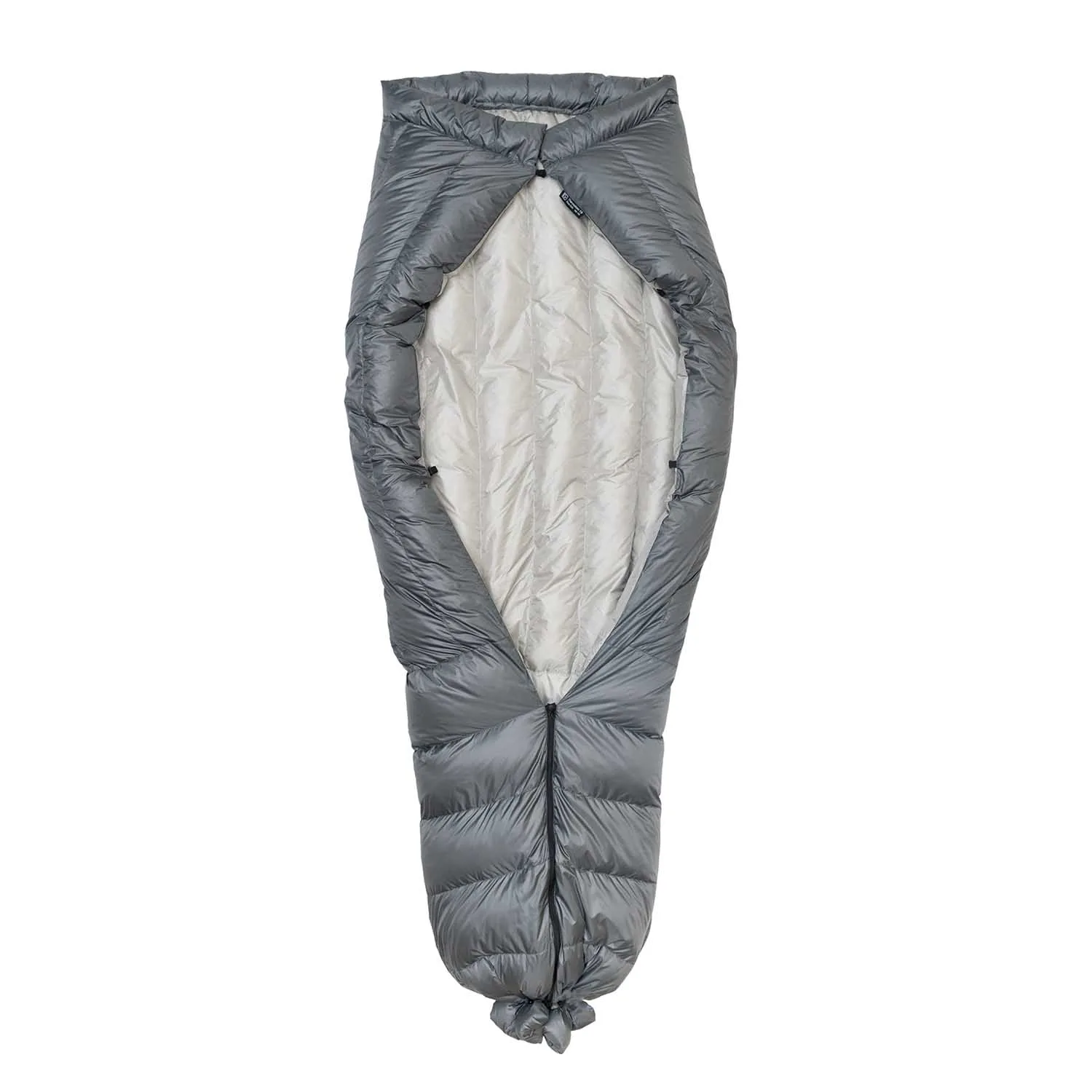
Thermodown 15 Down Quilt
How the Design Saves Weight and Volume
The Thermodown 15 uses a 20D ripstop nylon shell and lining with a PFC-Free DWR treatment, which is both lightweight and durable enough for backcountry use. The 800 fill-power RDS-certified duck down provides excellent loft per ounce, meaning less down is needed to achieve the same warmth as lower-fill-power insulation. The result is a quilt that is 10 percent lighter and more packable than the previous version.
A split baffle pattern prevents down from migrating to one side, so the insulation stays evenly distributed. This helps maintain consistent warmth without adding extra material or weight.
Packing the Thermodown 15 for Maximum Compression
The included compression sack lets you shrink the quilt to its smallest possible size for travel. Here's how to pack it efficiently without damaging the down.
- Fluff the quilt before packing: Shake the quilt out to redistribute the down evenly. This prevents clumps that can reduce loft and create cold spots.
- Roll or stuff into the compression sack: Either rolling tightly or stuffing loosely into the sack works. For maximum compression, roll the quilt from the foot end toward the draft collar, squeezing out air as you go.
- Compress gradually: Tighten the compression straps evenly, a little at a time, until the quilt reaches the desired size. Avoid over-cranking the straps, which can stress the baffles.
- Store uncompressed between trips: Use the included mesh storage bag for long-term storage. Keeping the down uncompressed preserves its loft and extends the life of the insulation.
Adjusting the Quilt on Trail for Changing Conditions
One of the advantages of a quilt is its versatility. On a cold night, you can cinch up the foot box and use the draft collars to seal in warmth, creating a fit similar to a mummy bag. When the temperature rises, simply open the quilt and use it as a blanket. The sleeping pad strap system keeps the quilt secured to your pad, preventing drafts while allowing you to move freely.