Start with what the label actually says
Before we get into the specific questions, it helps to separate what's confirmed about this product from what parents often assume. The catalog record for Thinkbaby Clear Zinc Sunscreen describes a mineral formula built on non-nano zinc oxide, labeled SPF 30 in the product name, with aloe and vitamin E. It's described as water-resistant for up to 80 minutes and as a clear formula without a white cast.
One thing to flag up front: the product name says SPF 30, but some of the descriptive copy in the same listing refers to SPF 50. That's a real inconsistency in the supplied information, not something we can resolve here. If SPF number is the deciding factor for you, check the physical label on the bottle you receive rather than relying on either number in the listing.
White cast, finish, and skin feel
Does Thinkbaby Clear Zinc Sunscreen leave a white cast?
The supplied product description says the formula provides protection without a white cast, and the product name itself uses the word clear. That's the brand's claim, not an independent test result. Mineral zinc formulas can still look different depending on skin tone and how much you apply, so the honest answer is that the formula is designed to minimize cast, but your own results may vary.
Is it oily or greasy?
The listing describes a non-oily feel and easy absorption. Those are the brand's words. If your child has reacted badly to heavy mineral lotions before, this is one of the claims worth testing on a small area first.
What ingredients are highlighted?
The record names non-nano zinc oxide as the UV filter, plus aloe described as cooling and vitamin E described as conditioning. It also states the formula is free of chemical UV filters and free of harmful chemicals, mineral based, biodegradable, and reef safe. Those are supplied claims, not verified third-party certifications.
Water, sweat, and reapplication
How water-resistant is it?
The record states water resistance for up to 80 minutes. That's the only duration given in the supplied information, so treat 80 minutes as the outer limit the brand claims, not a target to stretch.
How often should I reapply?
The supplied information does not include a reapplication schedule, so we can't give you a manufacturer instruction here. What we can say is that the 80-minute water-resistance claim is the relevant anchor: after swimming or heavy sweating, the clock on that claim has run. For a general interval, follow the directions printed on your bottle.
Can I use it on a baby's face?
The record describes the product as intended for a baby's delicate skin and notes pediatric-dermatologist testing, but it does not give face-specific application instructions. Apply carefully around the eyes and follow the label's directions for the face.
How much to apply, and how to apply it
How much sunscreen should I apply to a baby?
The supplied product information does not specify an amount, so we won't invent a measurement. The practical guidance is to apply enough to cover all exposed skin evenly and to check the bottle's own directions. If you're unsure, ask your pediatrician for guidance specific to your child.
Does it need to be rubbed in?
The record describes easy absorption and a non-oily feel, which suggests it's meant to be worked into the skin rather than left sitting on top. Apply in small amounts and spread evenly.
Is it safe for year-round use?
The listing says you can enjoy the sun with your baby year-round with gentle, effective protection. That's the brand's positioning. It doesn't address cold-weather use, snow reflection, or any other specific scenario, so use your judgment and the label directions.
What the catalog confirms about this sunscreen
-
Thinkbaby Clear Zinc Sunscreen SPF 30 (3oz): Non-nano zinc oxide mineral formula with aloe and vitamin E Explains the ingredient base behind the clear-finish and skin-feel claims.
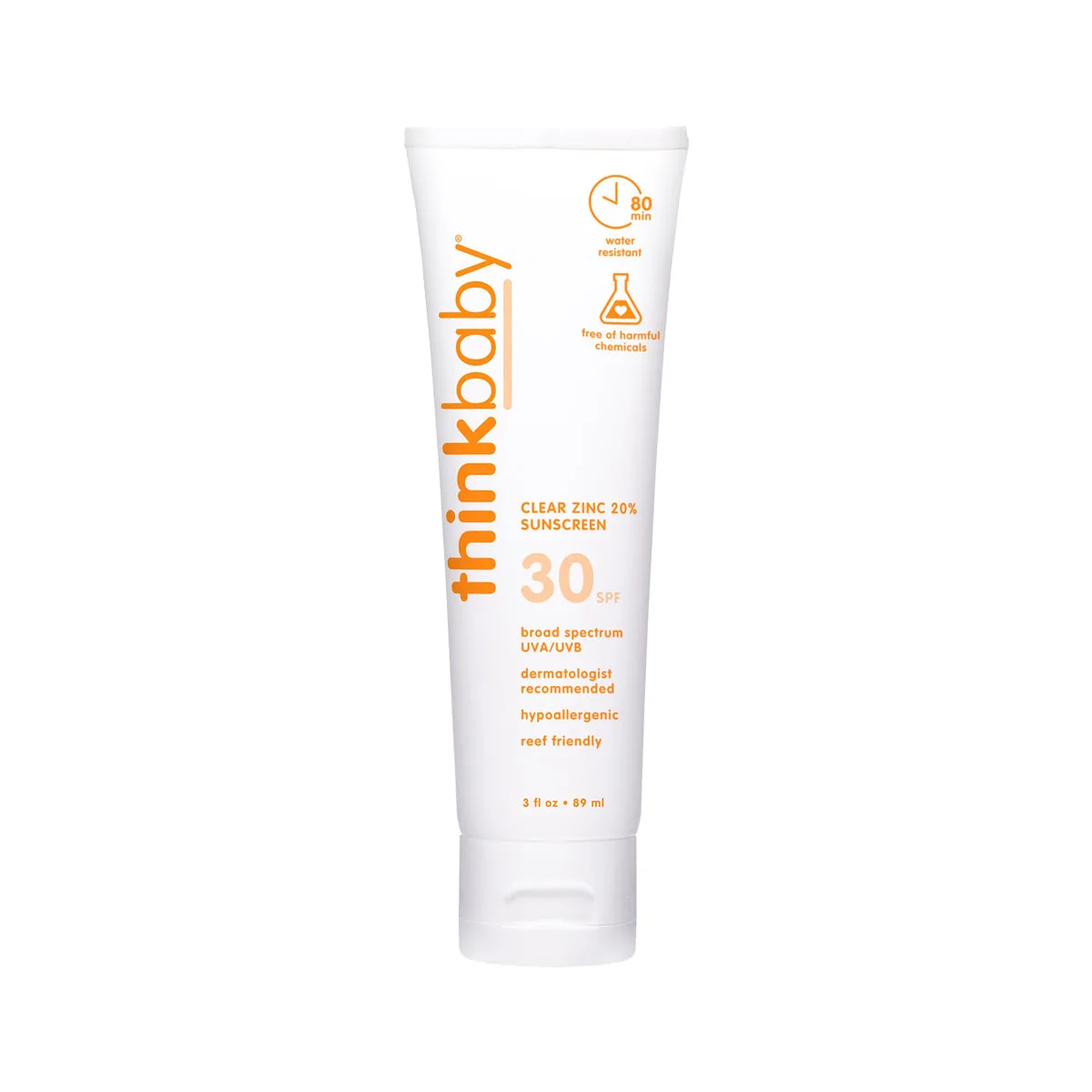
Thinkbaby Clear Zinc Sunscreen SPF 30 (3oz)
-
Thinkbaby Clear Zinc Sunscreen SPF 30 (3oz): Water resistant for up to 80 minutes The only reapplication-related duration in the supplied record, so it's the number to plan around.
-
Thinkbaby Clear Zinc Sunscreen SPF 30 (3oz): Available in 3oz and 6oz sizes The 3oz is easier to keep in a diaper bag; the 6oz suits a family that goes through sunscreen quickly.
-
Thinkbaby Clear Zinc Sunscreen SPF 30 (3oz): Described as BPA free, biodegradable, reef safe, and made in the USA These are the brand's stated attributes, useful for comparing against other mineral sunscreens.
Buying and sizing questions
Which size should I buy?
The product comes in 3oz and 6oz. The 3oz is the more portable choice for a diaper bag or stroller; the 6oz makes more sense if this will be your main sunscreen at home. The record doesn't give a fill weight per application, so we can't calculate how long a bottle lasts.
Is it only for babies?
The product name and description focus on babies, and the listing says it covers you and your baby. The supplied information doesn't give age limits or adult-specific directions, so treat it as a family product where the label allows.
What isn't confirmed in the supplied information?
There's no patch-test guidance, no stated reapplication interval, no application amount, and no face-specific instructions in the record. The SPF number also appears inconsistently as 30 and 50. Those gaps are worth knowing before you buy, and the bottle label is the place to resolve them.