Two wooden toys, two different kinds of focus
Threading Beads and Pounding Bench are both wooden toys that ask a child to use their hands with purpose, but they pull in opposite directions. Threading Beads is quiet, precise, and sequential: a child picks up a bead, lines up the hole, and pulls the string through. Pounding Bench is active and repetitive: a child swings a mallet, drives a peg through the platform, then flips the bench over to start again.
That difference matters when you are choosing a fine motor toy for a toddler. One rewards patience and planning; the other gives pent-up energy a physical outlet. Neither is the better toy in general — the better fit depends on the child in front of you and the kind of play you want to encourage right now.
How the two toys compare on the things that matter
- Play style: Threading Beads is focused and quiet, with a clear sequence from bead to string. Pounding Bench is active and rhythmic, built around hammering and resetting.
- What the child does: With Threading Beads, a child threads colorful wooden beads onto one of three strings. With Pounding Bench, a child uses the wooden mallet to pound three pegs through the platform, then flips the bench over to begin again.
- Skills the catalog highlights: Threading Beads is described as refining fine motor skills, hand-eye coordination, and wrist control, and as supporting concentration, planning, and sequencing. Pounding Bench is described as helping develop hand-eye coordination, dexterity, and physical strength.
- What comes in the set: Threading Beads includes 3 strings and 60 beads (12 each in yellow, dark blue, light blue, green, and red) plus a container for storage. Pounding Bench includes 1 platform, 3 pegs, and a wooden mallet.
- Materials: Threading Beads is made in Thailand using chemical-free rubberwood, non-toxic glue, and water-based dyes. Pounding Bench is made in Thailand using chemical-free rubberwood, formaldehyde-free glue, organic pigments, and water-based dyes.
When Threading Beads is the better choice
Choose Threading Beads if you want a toy that builds toward writing and self-care tasks. The catalog describes threading as refining fine motor skills, hand-eye coordination, and wrist control — foundations it links to writing, pencil grip, and self-care tasks. The set also supports color recognition and pattern formation, so it can grow from simple threading into sorting and pattern play.
It suits a child who will sit with a task and work through it, and it gives you a compact activity you can store in its own container. The 60 beads in five colors give plenty of room for open-ended play, but they are small pieces — the supplied information does not include an age rating or safety instructions, so check the product record for any age guidance before buying for a child who still mouths objects.
Threading Beads: what the catalog confirms
-
Threading Beads: Set includes 3 strings and 60 beads (12 each in yellow, dark blue, light blue, green, and red), with a container for easy organization and to prevent loss of pieces. The bead count and storage container tell you how much play value and cleanup you are signing up for.
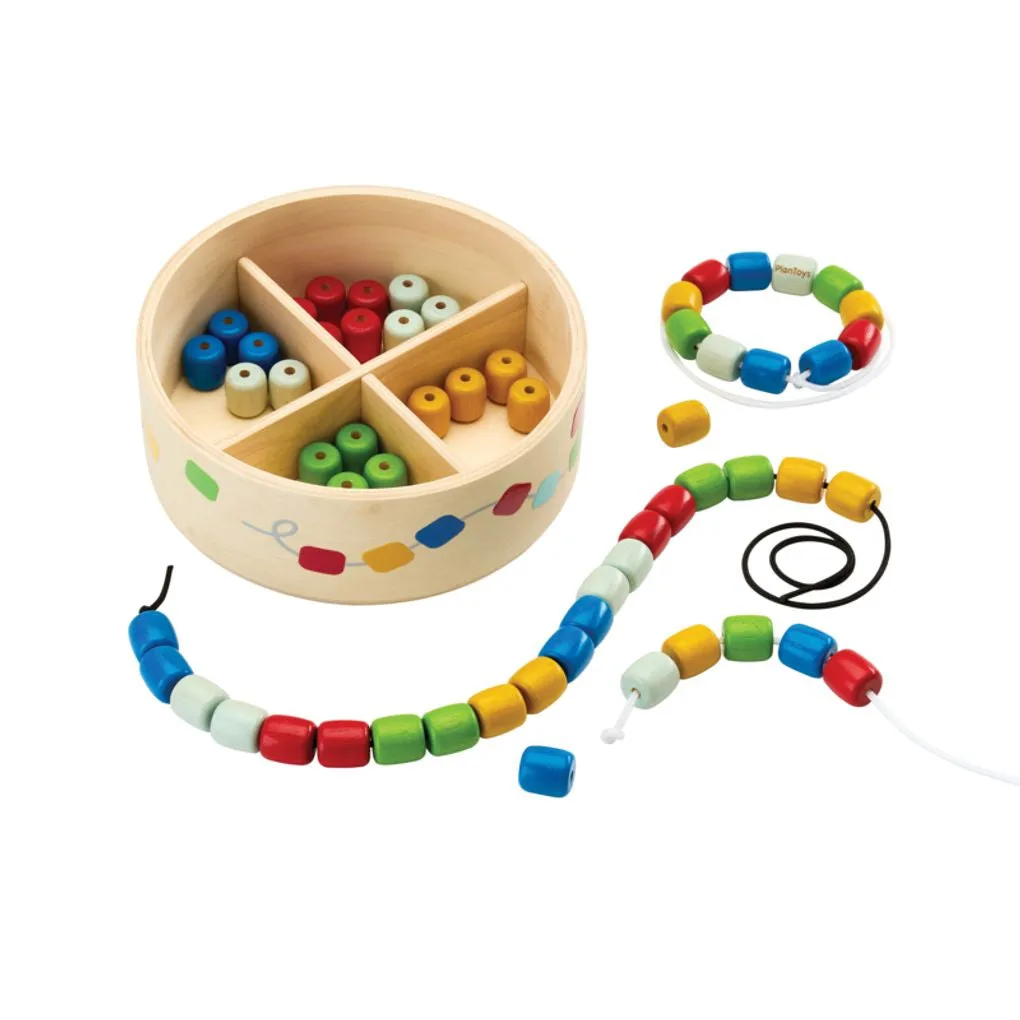
Threading Beads
-
Threading Beads: The activity is described as refining fine motor skills, hand-eye coordination, and wrist control, and as supporting concentration, perseverance, and creativity. These are the specific developmental aims the toy is designed around, so you can judge whether they match your child's needs.
When Pounding Bench is the better choice
Choose Pounding Bench if your child needs a physical outlet and responds better to action than to tabletop concentration. The catalog describes it as giving children an outlet for pent-up energy while strengthening fine motor skills and hand-eye coordination. The mallet-and-peg action is simple enough to repeat without instruction, and flipping the bench over resets the play without adult help.
It is also a good first tool toy: one platform, three pegs, and a mallet keep the parts count low, so there is less to set up and less to lose. The trade-off is noise and motion — this is not a quiet activity, and the hammering is the point. The supplied information does not include an age rating, so confirm suitability for your child's stage before buying.
Pounding Bench: what the catalog confirms
-
Pounding Bench: Features 1 platform, 3 pegs, and a wooden mallet for play. The simple part count makes this an easy toy to set up and keep track of.
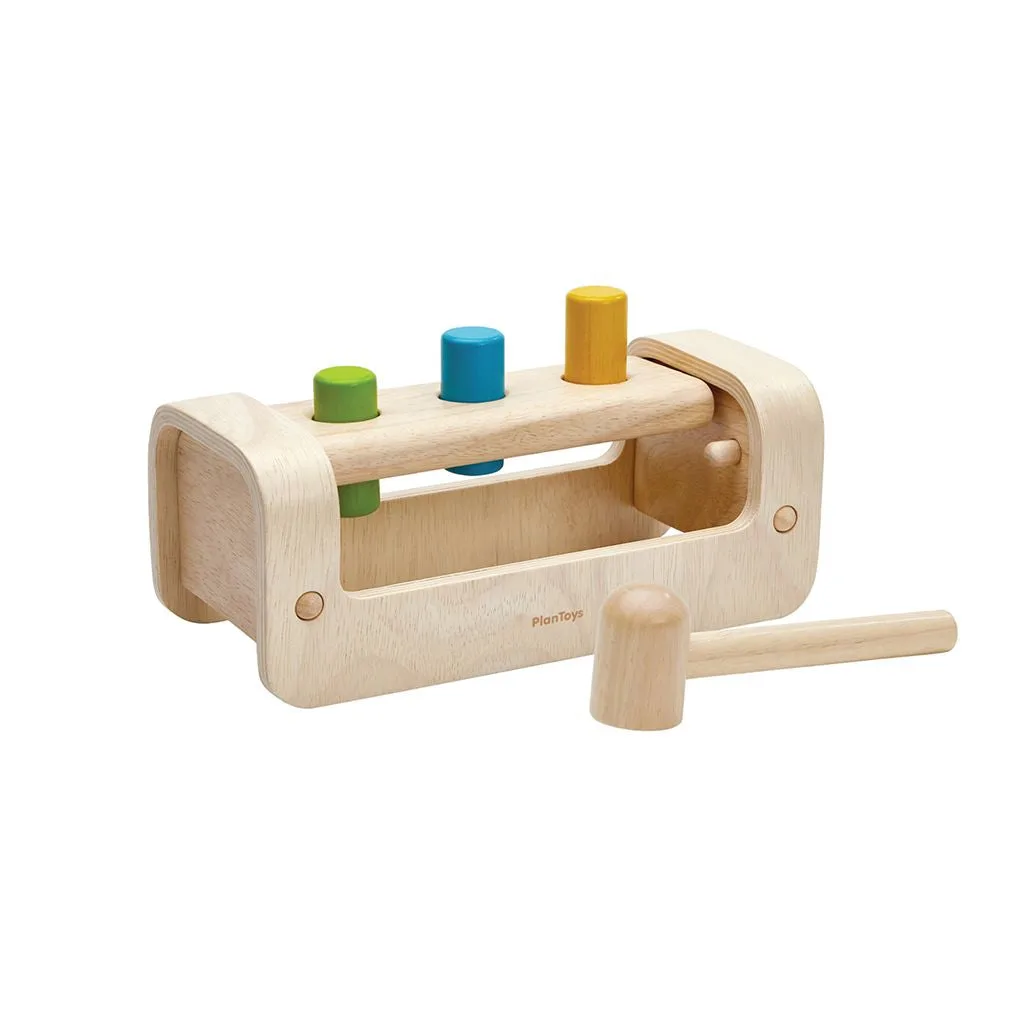
Pounding Bench
-
Pounding Bench: After a child has finished pounding the pegs, all they need to do is turn the bench over to start the fun again. The flip-to-reset design means the toy is self-contained and repeatable without adult intervention.
A simple way to decide
If you are still torn, use these questions to narrow it down.
- Does your child need to move or to sit?: Pounding Bench channels physical energy; Threading Beads asks for seated focus. Match the toy to the child's current temperament.
- Are you targeting writing readiness?: Threading Beads is explicitly linked in the catalog to wrist control and foundations for writing and pencil grip. Pounding Bench focuses on hand-eye coordination, dexterity, and strength.
- How much cleanup can you handle?: Threading Beads comes with 60 small beads and a storage container; Pounding Bench has three pegs and a mallet. Both are manageable, but the bead set has more pieces to gather.
- Do you want quiet or active play?: Threading Beads is a quiet, tactile activity. Pounding Bench is intentionally noisy and physical.
What the catalog does not tell you
The supplied product records for both toys do not include age ratings, safety warnings, or care instructions. That is a gap in the information provided, not a confirmed absence of those details in the full manufacturer documentation. Before buying either toy for a toddler, check the product page or packaging for the recommended age range and any small-parts warnings, especially for Threading Beads given the 60 small beads.
Both toys are made in Thailand with chemical-free rubberwood and water-based dyes, and both are described as sustainably made. If material sourcing matters to you, that shared strength makes the decision rest on play style rather than on construction.