Why an ND Filter Matters for Outdoor Video
Shooting video outdoors in bright sunlight often forces a trade-off: you can stop down the aperture for proper exposure, but that deepens depth-of-field and may blur the background less than you want. A neutral density filter, like the Tiffen 72mm Neutral Density 0.6 Lens Filter, reduces light entering the lens without changing color, letting you keep a wider aperture or slower shutter speed for cinematic motion blur.
This guide explains what the Tiffen 72mm ND 0.6 filter does, when it helps outdoor video, and how to decide if it fits your lens kit.
What the Tiffen 72mm ND 0.6 Filter Is Specified to Do
-
Tiffen 72mm Neutral Density 0.6 Lens Filter: These filters reduce the amount of light passing through the camera lens without changing the color of the scene. Color neutrality is critical for video; you can grade footage without fighting a color cast.
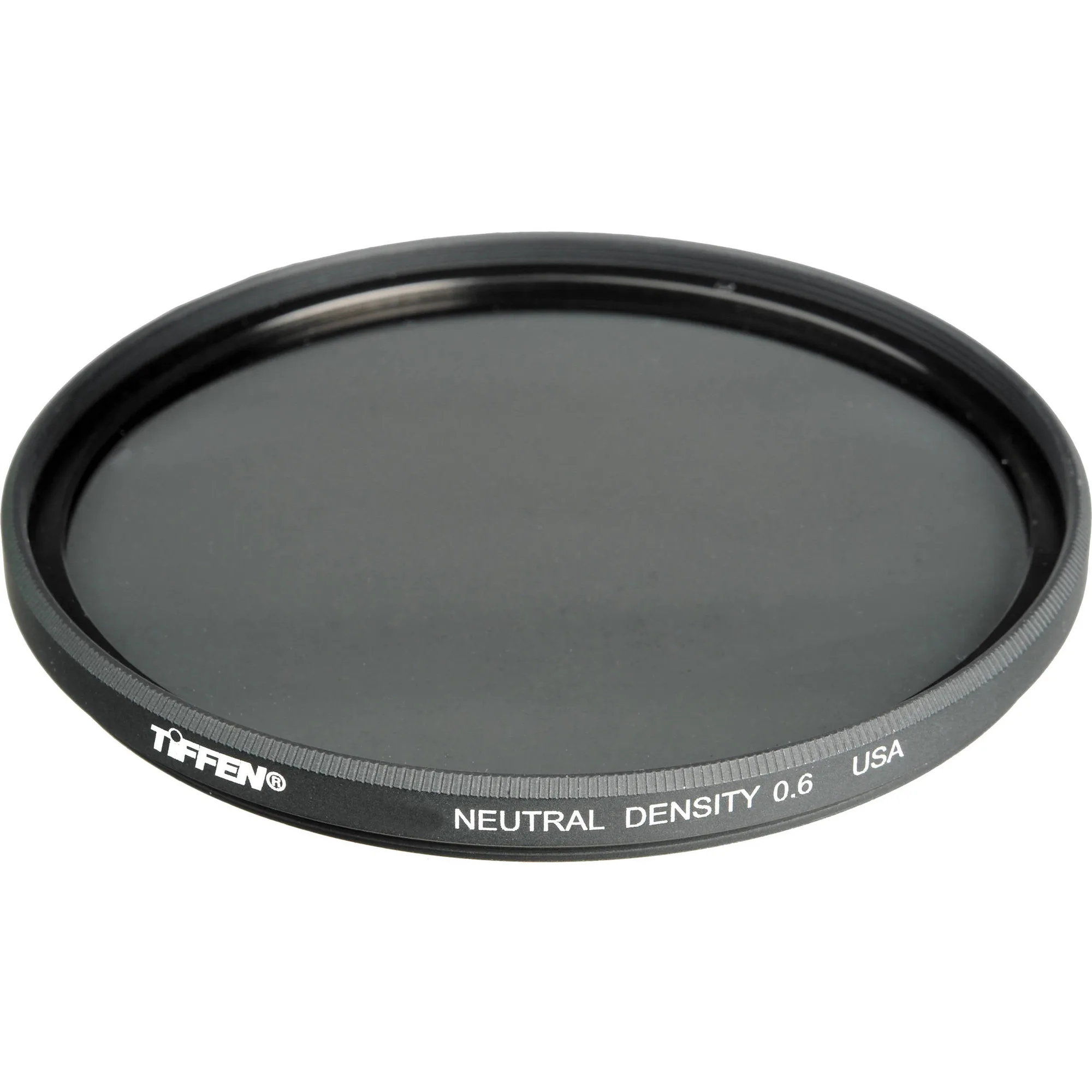
Tiffen 72mm Neutral Density 0.6 Lens Filter
-
Tiffen 72mm Neutral Density 0.6 Lens Filter: Eliminates overly bright, washed-out images. In bright outdoor scenes, an ND filter prevents clipped highlights and retains detail in skies or white surfaces.
-
Tiffen 72mm Neutral Density 0.6 Lens Filter: Allows slower shutter speeds to produce blurred motion effects. That smooth motion blur (often called cinematic look) requires a shutter speed around 1/48 or 1/50 at 24 fps—impossible in bright sun without an ND filter.
-
Tiffen 72mm Neutral Density 0.6 Lens Filter: Controls depth-of-field to highlight a key subject by making foreground or background out of focus. With less light reaching the sensor, you can open the aperture wider, creating shallow depth-of-field even in midday sun.
Key Considerations Before You Buy
The Tiffen 72mm ND 0.6 filter has a filter thread size of 72mm. Before purchasing, confirm your lens front thread diameter—it's printed on the lens barrel or cap (look for "⌀72" or "72mm"). If your lens uses a different size, you'll need a step-up ring or a filter in the correct diameter.
ND 0.6 reduces light by 2 stops. That's enough to shoot at a wider aperture in bright sun, but not as dense as ND 0.9 (3 stops) or variable ND filters. For typical outdoor video (sunny day, f/2.8–f/4), 2 stops is a practical starting point. If you often shoot in very bright conditions (beach, snow, midday desert), you might want a stronger ND or a set.
The supplied information does not confirm whether the filter is multi-coated, how it affects flare resistance, or its exact optical construction. For critical work, test the filter on your lens before a paid shoot.
How to Use a 72mm ND Filter for Outdoor Video
Follow these steps to get the most from the Tiffen 72mm ND 0.6 filter in outdoor video.
- Attach the filter securely: Screw the 72mm filter onto the lens front threads until finger-tight. Check for any wobble or cross-threading.
- Set your camera to manual exposure: Switch to manual mode (or manual video mode) so the camera doesn't automatically compensate for the reduced light.
- Choose your target aperture and shutter speed: For shallow depth-of-field, open the aperture wide (e.g., f/2.8). For motion blur, set shutter speed to 1/48 or 1/50 at 24 fps.
- Adjust ISO to match exposure: With the filter on, the scene will be darker. Raise ISO until the exposure meter reads correctly. If you run out of ISO headroom, you may need a stronger ND filter or a slower shutter.
- Review footage for color and sharpness: Check a test clip on a monitor. The filter should not introduce a color cast. If you see softness or flare, try a different filter position or remove it and compare.
What the Supplied Information Does Not Settle
The product record does not specify whether the Tiffen 72mm ND 0.6 filter includes a protective case, a cleaning cloth, or multi-coating details. It also does not confirm compatibility with specific camera brands or lens models beyond the 72mm thread size. For the most accurate fit, measure your lens thread or consult your lens manual.
If you need a variable ND for changing light conditions or a stronger ND for extreme brightness, the supplied evidence does not cover those options. Consider your typical shooting environment before committing to a fixed 2-stop filter.