The real difference is release speed, not the dose
Both Puritan's Pride Vitamin C-500 mg with Rose Hips Time Release products deliver 500 mg of vitamin C per caplet, plus 25 mg of citrus bioflavonoid complex and 16 mg of wild rose hips. The label difference is how the vitamin C is released: the time release formula is described as providing a gradual release over a prolonged period, while the regular version is not described that way.
That makes this a comparison of format and daily routine, not a contest between two different strengths. The serving size for both is one caplet, and the directions for both say adults should take one caplet two times daily, preferably with meals.
Label facts for the time release 250-caplet bottle
-
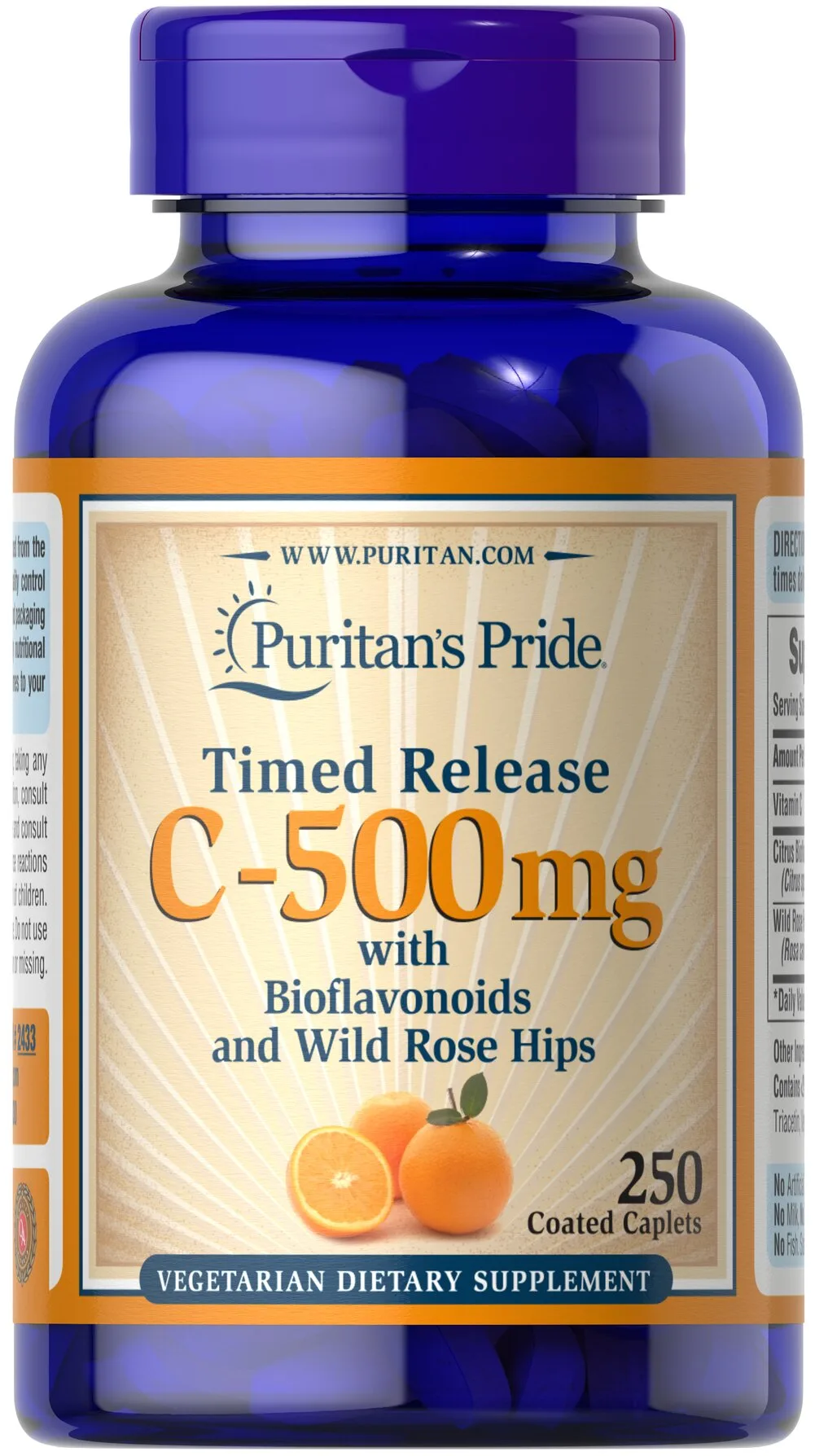
Vitamin C-500 mg with Rose Hips Time Release: Vitamin C-500 mg with Rose Hips Time Release is described as specially formulated to provide a gradual release of vitamin C over a prolonged period of time. This is the core feature that separates it from the regular version, and it is the reason someone might choose this format.
Vitamin C-500 mg with Rose Hips Time Release
-
Vitamin C-500 mg with Rose Hips Time Release: The label directions say adults take one caplet two times daily, preferably with meals. The time release format still uses a twice-daily schedule, so it does not reduce the number of servings you need to remember.
-
Vitamin C-500 mg with Rose Hips Time Release: Each caplet provides 500 mg vitamin C, 25 mg citrus bioflavonoid complex, and 16 mg wild rose hips. The added bioflavonoids and rose hips are part of the formula, but the label does not state a separate health benefit for them.
Label facts for the regular 100-caplet bottle
-
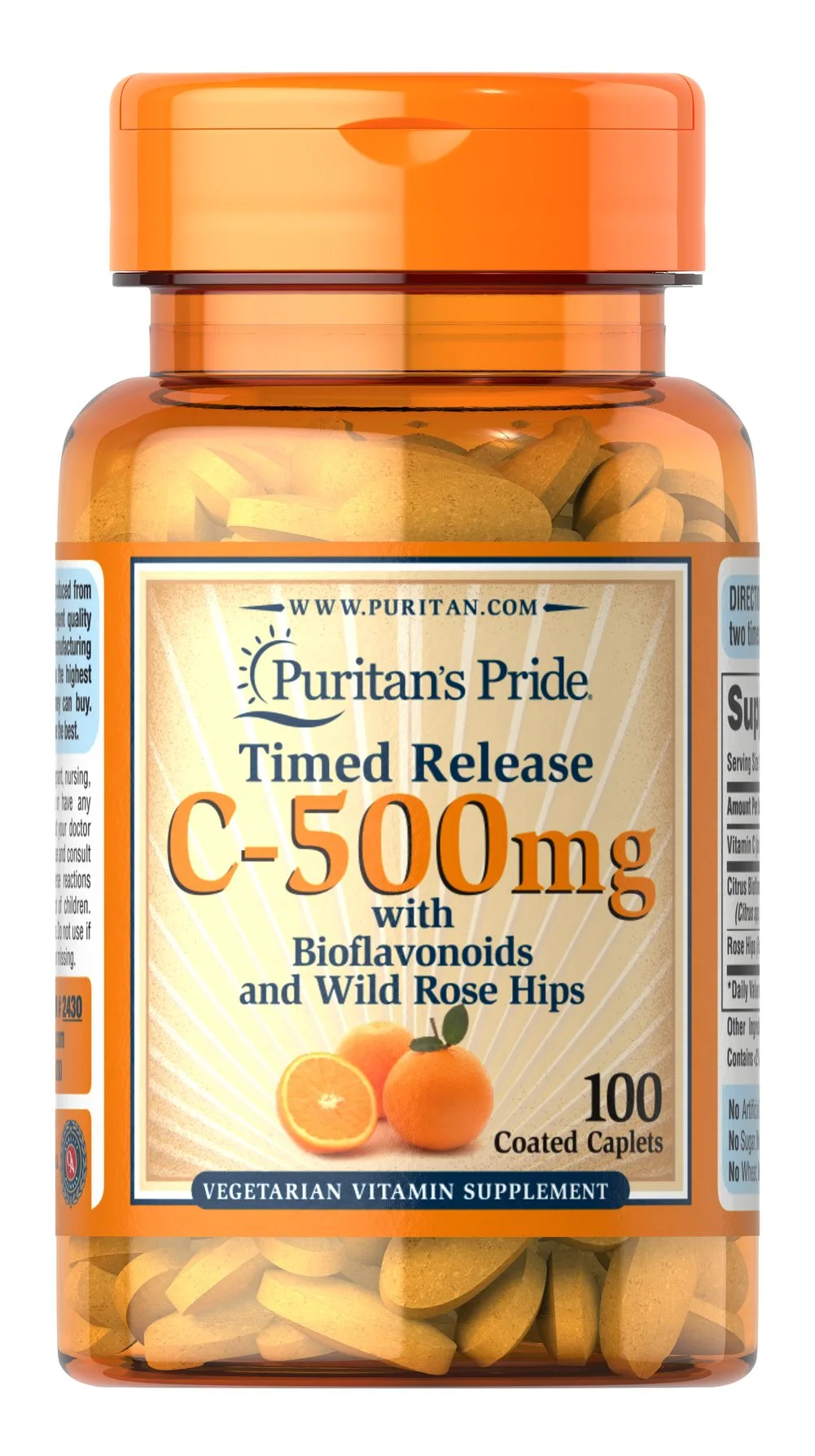
Vitamin C-500 mg with Rose Hips Time Release: Vitamin C-500 mg with Rose Hips Time Release 100 caplets is described as providing a gradual release of vitamin C over a prolonged period of time. The 100-caplet bottle uses the same time release description as the larger bottle, so the choice between them is mainly about quantity.
Vitamin C-500 mg with Rose Hips Time Release
-
Vitamin C-500 mg with Rose Hips Time Release: The label directions say adults take one caplet two times daily, preferably with meals. The serving schedule is identical to the 250-caplet version, so the smaller bottle does not change how often you take it.
-
Vitamin C-500 mg with Rose Hips Time Release: Each caplet provides 500 mg vitamin C, 25 mg citrus bioflavonoid complex, and 16 mg wild rose hips. The per-caplet amounts match the larger bottle, so the comparison is about bottle size and convenience, not dose.
What the two bottle sizes change for your routine
The 250-caplet bottle and the 100-caplet bottle carry the same time release description and the same directions. The practical difference is how long a bottle lasts at two caplets per day: 125 days for the 250-caplet bottle and 50 days for the 100-caplet bottle. That math assumes you follow the label directions exactly.
- 250-caplet bottle: Product ID 448580. At two caplets daily, the bottle covers about four months. A larger bottle means fewer reorders, but it also means a longer commitment to one format.
- 100-caplet bottle: Product ID 448575. At two caplets daily, the bottle covers about seven weeks. A smaller bottle lets you try the time release format without buying a long supply.
Timed release vitamin C absorption: what the label does not tell you
The label says the time release formula provides a gradual release over a prolonged period, but it does not give a release duration, a blood-level curve, or a comparison to regular vitamin C. Those details are not confirmed by the supplied information.
That matters for the time release vitamin C vs regular decision. The label gives you a clear description of the intended release behavior, but it does not let you calculate how much vitamin C is available at any given hour. If you need that level of detail, ask your doctor or pharmacist.
When the time release format makes sense
Choose the time release bottle if you want a formula explicitly described as gradual release and you are comfortable with the label's twice-daily schedule. The 250-caplet bottle suits someone who has already decided to use this format and wants fewer reorders. The 100-caplet bottle suits someone who wants to try it first.
Neither bottle is a substitute for medical advice. The label warns that if you are pregnant, nursing, taking any medications, or have any medical condition, you should consult your doctor before use. It also says to discontinue use and consult your doctor if any adverse reactions occur.
Label details worth checking before you buy
- Serving size: One caplet for both products. The label directions call for one caplet two times daily, preferably with meals.
- Vitamin C amount: 500 mg per caplet, listed as 556% of the Daily Value.
- Added ingredients: Citrus bioflavonoid complex 25 mg and wild rose hips 16 mg per caplet. The label does not establish a Daily Value for either.
- Other ingredients: Vegetable cellulose and dicalcium phosphate.
- Allergen and additive claims: No artificial color, flavor, or sweetener; no preservatives, sugar, starch, milk, lactose, soy, gluten, wheat, yeast, or fish; sodium free.
- Storage: Store at room temperature and keep out of reach of children.
- Seal: Do not use if the seal under the cap is broken or missing.
The bottom line on choosing between these bottles
If you have already decided on a time release vitamin C 500 mg with rose hips, the choice between the 250-caplet and 100-caplet bottles is mostly about supply length. Both carry the same gradual release description, the same per-caplet amounts, and the same twice-daily directions. Start with the smaller bottle if you are unsure about the format; choose the larger bottle if you want to stay with it for several months.
What the labels do not answer is how the gradual release compares with regular vitamin C in your body, or whether one format is better for a specific health goal. Those are questions for your doctor, especially if you take medications or have a medical condition.