What each product is designed to do
Foundation is primarily a cosmetic product: it evens out skin tone, covers blemishes, and provides a base for other makeup. Coverage can range from sheer to full, but sun protection is not its main job unless it carries a labeled SPF.
Tinted sunscreen, like Neutrogena Purescreen+ Mineral UV Tint Face Liquid Sunscreen, is first a sunscreen. It uses mineral actives to create a physical barrier against UVA/UVB rays, while a sheer tint helps blur imperfections and add a natural glow. The coverage is lighter than most foundations, but the sun protection is built in.
Coverage: what you can expect
If you need to conceal dark spots, acne scars, or uneven texture, a foundation with medium to full coverage will do that more effectively. Tinted sunscreen offers a more natural, "your skin but better" finish. The Neutrogena Purescreen+ formula is described as a sheer tint that blurs imperfections and adds a radiant-looking glow without a white cast.
For everyday wear when you want sun protection and a hint of color, tinted sunscreen can replace foundation entirely. For events or when you want more coverage, you can layer foundation over tinted sunscreen.
Sun protection: a key difference
Many foundations do not carry an SPF label, and those that do often contain chemical filters that may not offer broad-spectrum protection at the level you need. Tinted sunscreen is designed specifically for sun protection. The Neutrogena Purescreen+ Mineral UV Tint SPF 30 provides broad-spectrum protection and is water-resistant for up to 80 minutes.
If you rely on foundation with SPF for daily sun protection, you may not be applying enough product to reach the labeled SPF. Tinted sunscreen encourages generous application because it is a sun care product first.
Product facts: Neutrogena Purescreen+ Mineral UV Tint
-
Neutrogena Purescreen+ Mineral UV Tint Face Liquid Tinted Sunscreen - with 100% Mineral Actives & Vitamin E, Enhances Natural Tone, Water Resistant, Broad Spectrum SPF 30, 1.1 fl oz: Combines 100% mineral protection with a sheer tint that blurs imperfections and adds a radiant-looking glow without a white cast. This shows you get both sun protection and a subtle coverage boost in one step, ideal for simplifying your morning routine.
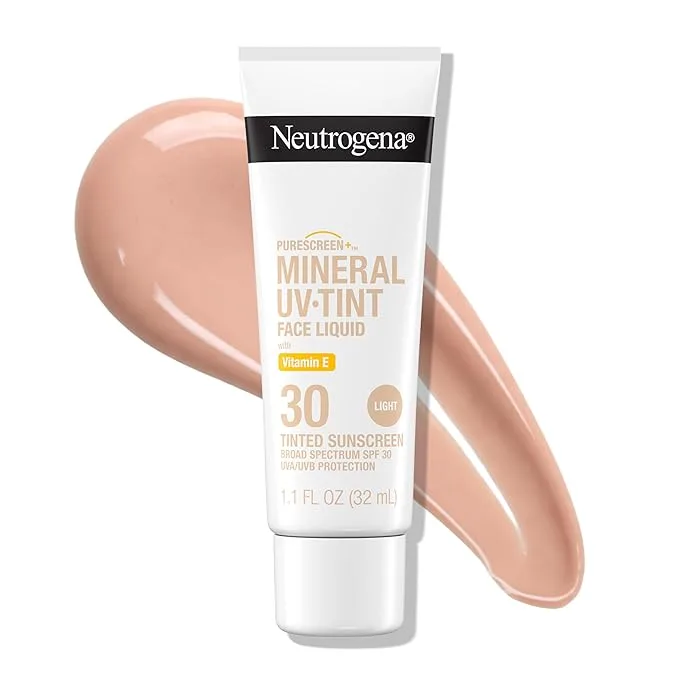
Neutrogena Purescreen+ Mineral UV Tint Face Liquid Tinted Sunscreen - with 100% Mineral Actives & Vitamin E, Enhances Natural Tone, Water Resistant, Broad Spectrum SPF 30, 1.1 fl oz
-
Neutrogena Purescreen+ Mineral UV Tint Face Liquid Tinted Sunscreen - with 100% Mineral Actives & Vitamin E, Enhances Natural Tone, Water Resistant, Broad Spectrum SPF 30, 1.1 fl oz: Formulated with mineral actives and nourishing vitamin E, this SPF 30 mineral sunscreen creates a physical barrier against UVA/UVB rays. Mineral sunscreen sits on top of the skin and reflects UV rays, making it a good option for sensitive skin and immediate protection upon application.
-
Neutrogena Purescreen+ Mineral UV Tint Face Liquid Tinted Sunscreen - with 100% Mineral Actives & Vitamin E, Enhances Natural Tone, Water Resistant, Broad Spectrum SPF 30, 1.1 fl oz: Available in 4 flexible shades with neutral undertones to blend smoothly and complement most skin tones. The shade range makes it easier to find a match for your skin tone, though it is not as extensive as a foundation line.
-
Neutrogena Purescreen+ Mineral UV Tint Face Liquid Tinted Sunscreen - with 100% Mineral Actives & Vitamin E, Enhances Natural Tone, Water Resistant, Broad Spectrum SPF 30, 1.1 fl oz: Lightweight, water-resistant formula gives up to 80 minutes of protection during swimming or sweating. This makes it suitable for active days, unlike many foundations that may not hold up to sweat or water.
-
Neutrogena Purescreen+ Mineral UV Tint Face Liquid Tinted Sunscreen - with 100% Mineral Actives & Vitamin E, Enhances Natural Tone, Water Resistant, Broad Spectrum SPF 30, 1.1 fl oz: Free of fragrance, parabens, and oxybenzone; gentle enough for all skin types including sensitive skin. If you have sensitive or reactive skin, this tinted sunscreen avoids common irritants often found in foundations.
Tinted sunscreen vs. foundation: key trade-offs
- Coverage level: Foundation offers more coverage options (sheer to full). Tinted sunscreen provides sheer, natural-looking coverage that evens out skin tone but won't fully conceal heavy discoloration.
- Sun protection: Tinted sunscreen is designed for reliable SPF 30 broad-spectrum protection. Foundation with SPF may not deliver the same level of protection unless applied heavily.
- Routine simplicity: Tinted sunscreen combines SPF and light coverage in one step. Foundation requires a separate sunscreen underneath, adding time and layers.
- Skin feel and finish: Tinted sunscreen feels lightweight and breathable. Foundation can feel heavier, especially if layered over sunscreen.
- Shade range: Foundations typically offer a wide range of shades and undertones. Tinted sunscreens have fewer options; Neutrogena offers 4 neutral shades.
- Water resistance: Tinted sunscreen is often water-resistant (Neutrogena: 80 min). Most foundations are not water-resistant and may wear off with sweat or water.
Which should you choose?
Choose tinted sunscreen if you want a simple, protective daily option with a natural finish and are comfortable with sheer coverage. It is ideal for casual wear, outdoor activities, or as a base under minimal makeup.
Choose foundation if you need more coverage for special occasions, want to conceal specific skin concerns, or prefer a matte or full-coverage finish. You can still apply a separate sunscreen underneath for protection.
Many people use both: tinted sunscreen on low-makeup days and foundation over sunscreen when they want more coverage. The choice depends on your priority between sun protection and cosmetic coverage.