Quick answer
For babies just starting solids, the Tiny Bowl is the better first dish if you want to serve purees, yogurt, or baby cereal without chasing a sliding bowl. Choose the Tiny Plate if you plan to offer baby-led strips of food and want to encourage self-feeding and early utensil use. Both are sized for the tiniest highchair trays, including the Stokke Tripp Trapp, so the real decision comes down to what you plan to put on the dish.
What actually differs between the Tiny Bowl and Tiny Plate
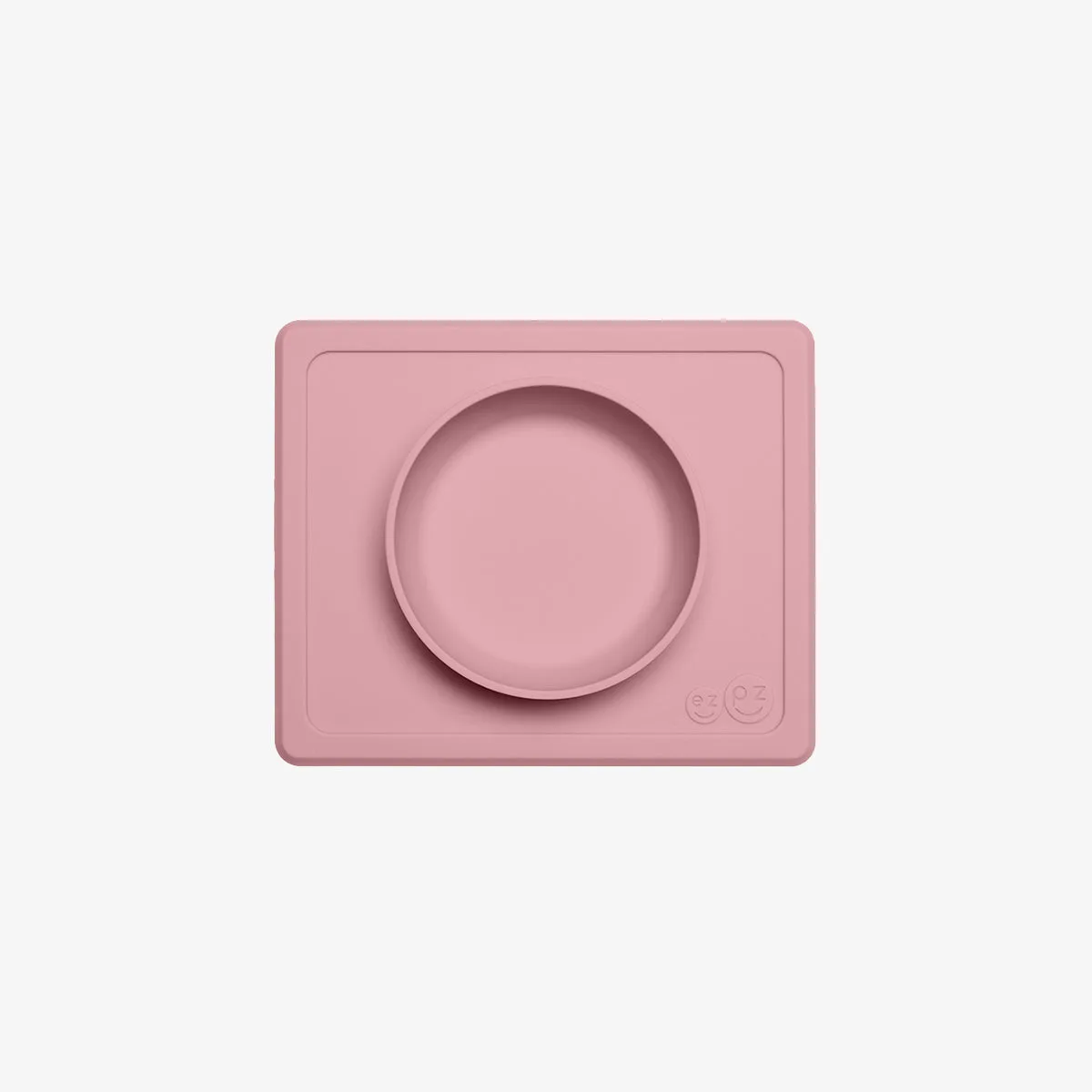
The Tiny Bowl and Tiny Plate share the same compact footprint, but their shapes serve different feeding methods. The Tiny Bowl has walls that hold runny first foods in one place, which helps when you are spoon-feeding purees or letting a baby practice scooping. The Tiny Plate is an open plate designed to promote self-feeding and utensil use, and it works for both traditional puree feeding and baby-led strips of food.
Because both are designed for the tiniest highchair trays, neither takes up much room. That matters if you have a smaller highchair or a tray with a narrow usable surface. If your tray is already crowded with a cup or a bib, the bowl's contained shape may be easier to manage, while the plate's open surface gives a baby more room to arrange and pick up pieces.
How to decide based on your baby's current feeding stage
If your baby is between 0 and 6 months and still mostly on milk, you may not need either dish yet. Once your baby shows readiness signs and you begin first foods, start with the dish that matches how you plan to feed. Spoon-feeding purees? The Tiny Bowl keeps thin textures together. Planning to place soft strips on the tray for baby to grab? The Tiny Plate gives you a defined surface for those pieces.
You do not have to choose only one forever. Many families use the bowl for yogurt and cereal in the morning, then switch to the plate for lunch or dinner when offering finger foods. The two dishes are complementary rather than competing, so the question is which one to buy first if you are starting with a single piece of dishware.
What to check before you buy either dish
Measure your highchair tray before ordering. Both products are designed to fit the tiniest trays, including the Stokke Tripp Trapp, but tray shapes vary. A quick measurement of the flat usable area will tell you whether a bowl or plate leaves room for a cup or a second dish. Also consider how your baby eats: a baby who grabs and mouths everything may do better with the open plate, while a baby who is still learning to swallow thin textures may do better with the bowl's containment.
Color options are available for both, so you can match your existing mealtime setup or assign a color to each child. Neither product includes a lid or storage cover in the supplied catalog information, so if you plan to store leftovers, you will need separate storage containers.
Trade-offs to weigh before you choose
- Containment vs. open surface: The Tiny Bowl keeps purees, yogurt, and cereal in one place, which means less sliding and fewer puddles on the tray. The Tiny Plate's open design gives more room for finger foods and utensil practice, but runny foods can spread. Choose the bowl for thin textures; choose the plate for pieces and self-feeding practice.
- Single dish vs. staged feeding: Starting with one dish keeps the tray simple and your routine easy. But if you plan to offer both purees and finger foods in the same week, having both the Tiny Bowl and Tiny Plate means you are not improvising with adult dishes. If budget allows, the pair covers more feeding stages than either dish alone.
- Dishware vs. pre-feeding tools: The Tiny Bowl and Tiny Plate assume your baby is ready to sit and eat from a dish. If your baby is still practicing chewing and munching safely, the Baby-Led Gumline Feeder is a pre-feeding step that comes before either dish. Match the tool to the skill, not to the age on the calendar.
Product facts at a glance
- Tiny Bowl: The Tiny Bowl is designed to fit on the tiniest of highchair trays, including the Stokke Tripp Trapp, and is perfect for first foods such as purees, yogurt, and baby cereal. It also supports the baby-led weaning method of feeding. If your highchair tray is small or you are starting with runny first foods, the bowl's contained shape reduces mess and fits where larger dishware will not.
- Tiny Plate: The Tiny Plate provides an open plate design to promote self-feeding and utensil use. It supports both the traditional method of feeding (purees) and the baby-led weaning method (baby-led strips of food). If you want your baby to practice picking up pieces and using a spoon or fork, the open surface gives more room for that practice than a deep bowl.
- Baby-Led™ Gumline Feeder: The Baby-Led Gumline Feeder helps babies practice feeding, munching, and chewing skills safely. Soft and moist strips of fruits, vegetables, meats, and carbohydrates go into the silicone pouch for safe, independent exploration of tastes, textures, temperatures, and colors. It is designed to pair with the Ice Tray. If your baby is not ready for pieces on a plate, the Gumline Feeder offers a safe way to explore new foods before transitioning to the Tiny Plate or Tiny Bowl.
Which one should you buy first?
Best for
- Babies starting with purees, yogurt, or baby cereal who need a contained dish
- Families with a very small highchair tray, including the Stokke Tripp Trapp
- Parents who want one compact dish for early spoon-feeding
Not for
- Babies who are not yet showing signs of readiness for solids
- Families who need a lid or storage cover included with the dish
- Children over 5 who need larger portions and a bigger plate