Start with what the Tiny Plate is designed to do
The Tiny Plate is an open plate made to encourage self-feeding and utensil use. That open surface matters for toddlers: it lets them see the food, reach it easily, and practice scooping or picking up pieces without fighting compartments or high walls.
The plate also supports both traditional spoon-feeding with purées and baby-led weaning with strips of food. If your toddler is moving between those styles, the same plate can stay on the table as the meal changes.
Tiny Plate details that shape mealtime
-
Tiny Plate: Open plate design to promote self-feeding and utensil use. An open surface gives toddlers room to practice scooping and picking up food, which is the core job of this plate.
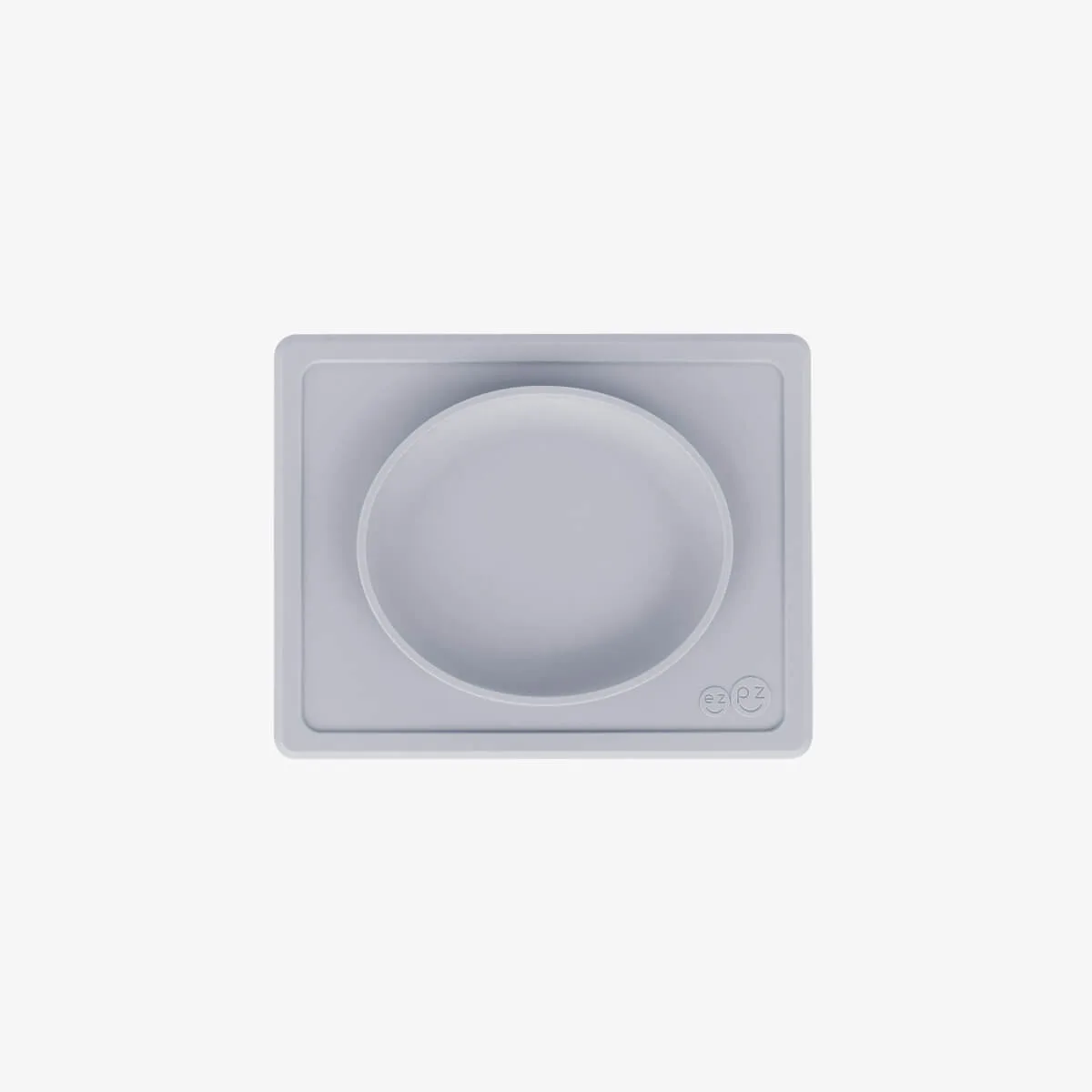
Tiny Plate
-
Tiny Plate: Supports both traditional purée feeding and baby-led weaning with strips of food. You can keep using the same plate as your toddler's feeding style shifts from purées to finger foods.
-
Tiny Plate: Available in Pewter, Sage, Blush, and Indigo. Color is a preference, not a portion or safety feature; choose what fits your table and let the open design do the work.
How to build a toddler portion on the Tiny Plate
The Tiny Plate does not come with portion sizes or a divided layout, so you set the serving yourself. Keep the first serving small and let your toddler ask for more.
- Keep the first serving modest: Place a small amount of food on the open plate rather than filling it. A toddler can always get a second serving, and a sparse plate is less overwhelming.
- Put one familiar food within reach: Use the open space to separate a trusted food from a new one. Your toddler can touch, pick up, or ignore each without compartments forcing a mix.
- Leave room for utensil practice: Do not crowd the plate. Open space lets your toddler try a spoon or fork without pushing food off the edge.
- Add strips or purées as your toddler's skills change: The plate is designed for both purées and baby-led strips, so you can adjust the texture on the same plate as feeding skills progress.
Why an open plate can help with toddler portions
Divided plates can be useful, but they are not the only tool. A divided toddler plate tips article would focus on compartments; the Tiny Plate takes the opposite approach. Its open design gives you one clear surface to portion food and one clear surface for your toddler to explore.
That simplicity supports a practical mealtime routine: serve a small amount, keep the plate in front of your toddler, and refill as needed. The plate does not dictate portions, so you stay in charge of what and how much goes on it.
Tiny Plate feeding tips for a calmer table
- Use the plate as a practice surface, not a portion guide: The Tiny Plate has no marked sections or serving sizes. Treat it as the stage for self-feeding and utensil practice, and decide portions based on your toddler's appetite and your feeding plan.
- Pair purées with finger foods when you are transitioning: Because the plate supports both traditional purée feeding and baby-led weaning strips, you can offer a little of each without switching dishes mid-meal.
- Let color be a small win: Pewter, Sage, Blush, and Indigo give you options, but color does not change how the plate works. Pick a color your toddler likes and keep the focus on the food.
- Check the supplied information before relying on care claims: The supplied product record does not list care, safety, or compatibility instructions for the Tiny Plate. Check the packaging or manufacturer guidance for those details rather than assuming dishwasher, microwave, or suction behavior.
What the Tiny Plate does not settle for you
The supplied information does not include age ranges, exact dimensions, material composition, suction features, or cleaning instructions for the Tiny Plate. That means you should not treat this article as a care or safety manual. Use the product record for what it does confirm: an open plate design for self-feeding and utensil use, support for purées and baby-led strips, and four color options.
For toddler plate portions, the plate gives you a clear open surface, but the amount of food is still your call. Start small, keep the meal flexible, and let your toddler's cues guide the refills.