Why This Book Works for First-Day Feelings
Tiny T. Rex and the First-Day Oopsies follows a small dinosaur who heads to school with a giant backpack and a lucky bowtie, sure he's ready for anything. Then the oopsies happen. The story doesn't fix them or pretend they didn't happen. Instead, Tiny learns alongside his best friend Pointy that school isn't about being perfect. It's about trying, making mistakes, and growing.
That message lands well with preschool and early-reader kids because it mirrors their own experience. The board book format means it survives repeated readings and small hands, and the dinosaur character gives the topic a playful distance that makes the lesson easier to absorb.
Read-Aloud Tips for This Dinosaur Board Book
These steps help you turn a simple story time into a conversation about feelings and resilience. Adjust the pace based on your child's age and mood.
- Start with the cover and the backpack: Before you open the book, point to Tiny's giant backpack and ask what your child would pack for their first day. This connects the story to their own experience and builds anticipation.
- Pause at each oopsie: When Tiny makes a mistake, stop and ask, "What do you think Tiny feels right now?" Naming emotions during the story helps kids build emotional vocabulary without pressure.
- Emphasize Pointy's role: Pointy is Tiny's best friend who stays by his side through the oopsies. Highlighting that friendship shows kids that they don't have to handle first-day jitters alone.
- Finish with a growth-moment recap: After the last page, ask what Tiny learned. The answer is in the story: school isn't about being perfect, but about trying, learning, and growing. Reinforce that message by connecting it to something your child did recently.
What's Inside the Book
-
Chronicle Books - Tiny T. Rex and the First-Day Oopsies: Age Range: Kids / Early readers The book is designed for preschool and early elementary children, matching the age group that typically experiences first-day-of-school nerves.
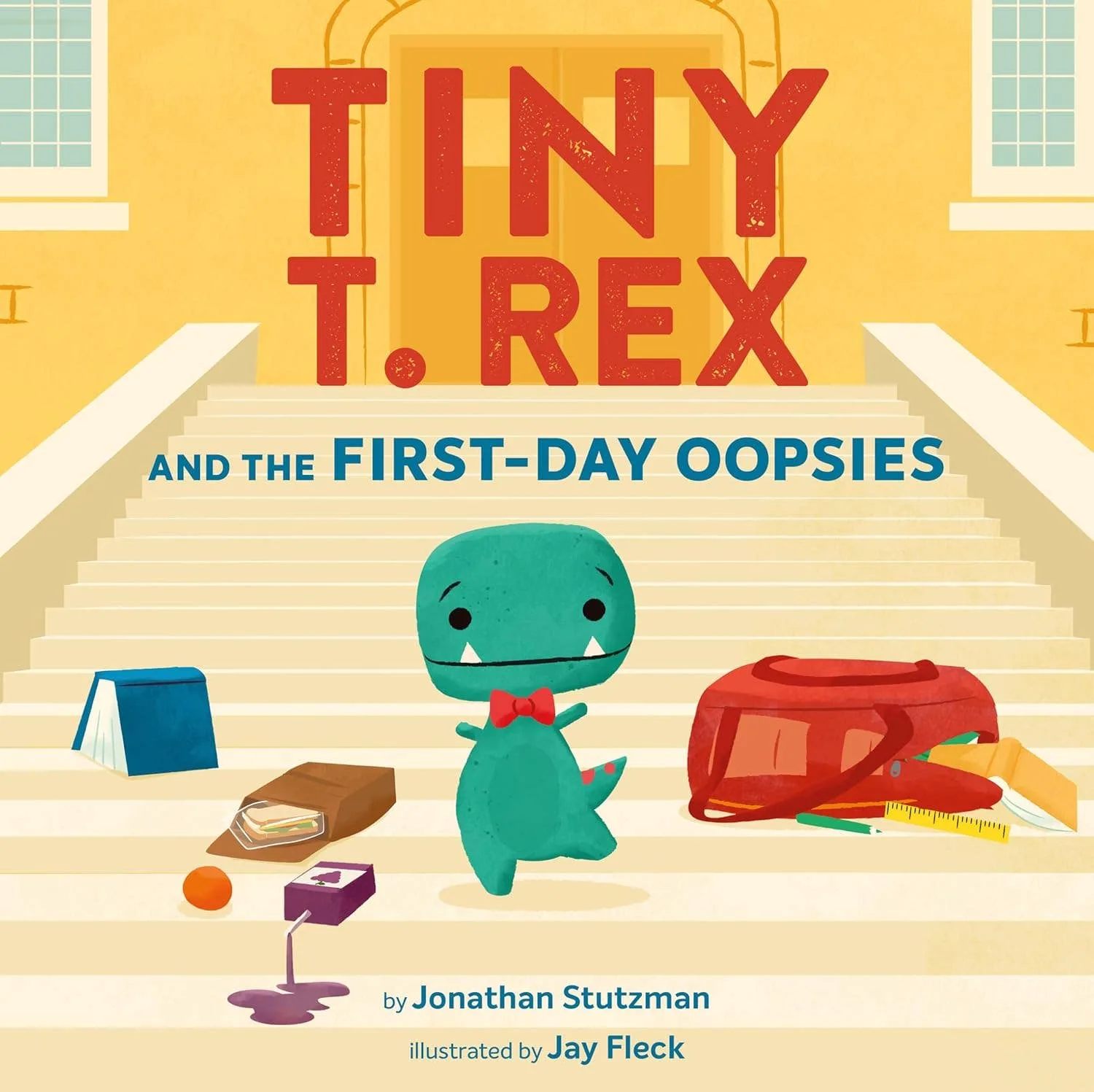
Chronicle Books - Tiny T. Rex and the First-Day Oopsies
-
Chronicle Books - Tiny T. Rex and the First-Day Oopsies: Theme: School, confidence, friendship These themes directly support the read-aloud goal of helping children process new experiences and understand that mistakes are part of learning.
-
Chronicle Books - Tiny T. Rex and the First-Day Oopsies: Format: Children's book (board book) A board book is sturdy enough for repeated handling by young children and for taking along in a backpack or diaper bag.
When to Read It
The book fits naturally into the back-to-school season, but it works just as well any time a child faces a new situation: a new class, a new activity, or even a playdate with unfamiliar kids. Because the story focuses on the process of trying rather than the specific event of the first day, it stays relevant beyond September.
If your child is already comfortable with school routines, you can still use the book to talk about perfectionism and the value of effort. The oopsies are universal enough that most kids will recognize themselves in Tiny's struggles.
What the Book Doesn't Cover (and That's Okay)
The story doesn't include explicit social scenarios like sharing, taking turns, or following classroom rules. It focuses squarely on the emotional experience of making mistakes and persisting. If you need a book that also covers classroom routines, you may want to pair this one with a more procedural first-day story.
Similarly, the book doesn't offer strategies for parents or teachers. It's a child-facing story, not a parenting guide. The read-aloud tips above fill that gap by giving you conversation starters that build on the story's natural strengths.