Quick answer
Titanium wins when you want less weight against your body and a finish that keeps its look through daily handling, while stainless steel wins when you want a familiar, heavier feel and a lower entry price. For a tag, lighter or knife scales you touch every day, titanium is usually the better long-term carry. For a beater tool that lives in a bag and rarely shows, stainless steel does the job without the premium.
What actually changes when you switch from steel to titanium
The practical difference is not a single spec but how the piece behaves in your pocket. Titanium is notably lighter for the same size, which matters most on items that hang from a keychain or sit against your chest all day. Stainless steel brings more heft, which some people prefer for a tool that should feel planted in the hand. Neither is automatically tougher in every direction; the right choice depends on where the piece lives and how often you handle it.
Finish also separates them. Titanium can take a laser-etched or anodized look that holds up to daily contact, while stainless steel tends to show scuffs and fingerprints more openly unless it is coated. That is a visual trade-off, not a durability failure, but it changes how the piece looks after a year of carry.
Titanium in practice: a dog tag and a capsule lighter
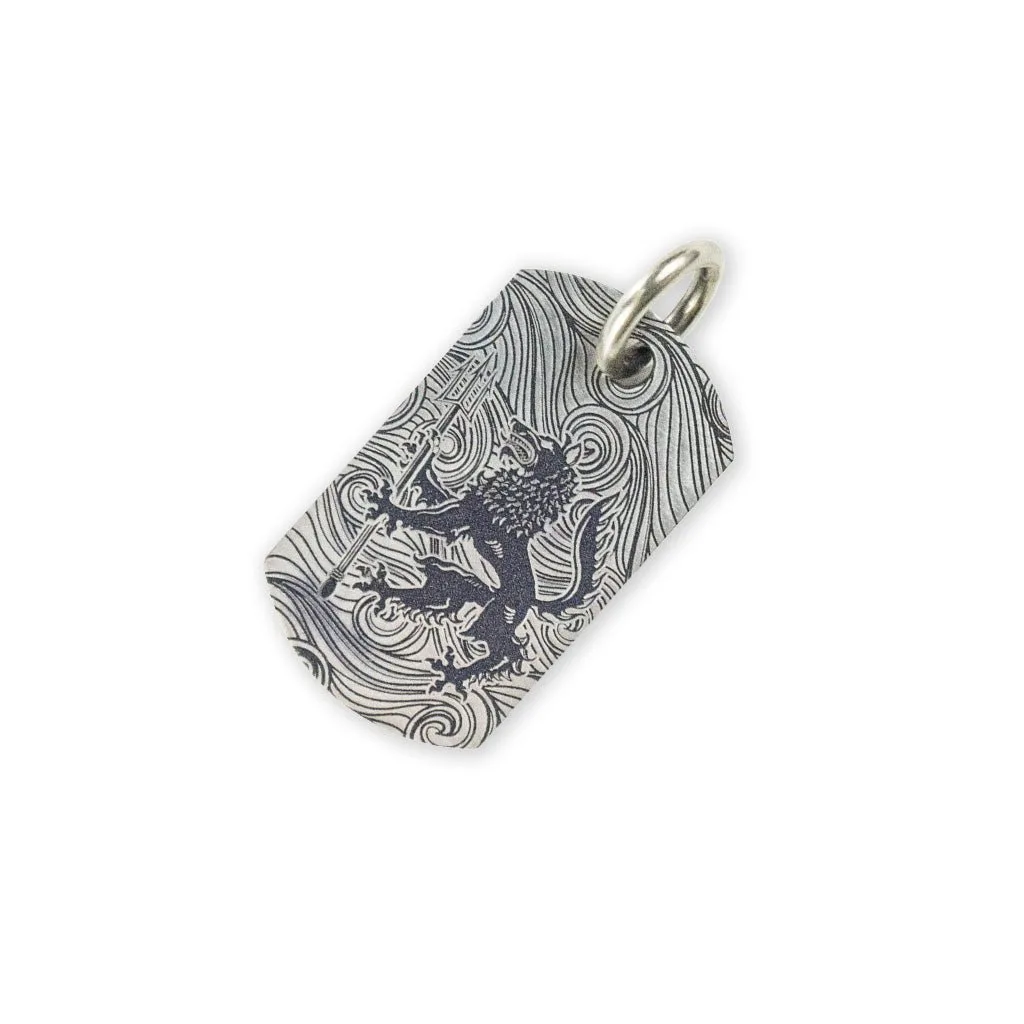
The Steel Flame Titanium Dog Tag shows why titanium earns its place on a neck cord. It carries two graphics, Sea Wolf on one side and All Terrain on the flip side, in a one-time limited edition. The titanium body keeps the tag light enough to forget you are wearing it, which is the main reason people choose titanium jewelry for everyday carry over steel. The trade-off is price and availability: a limited run will not be restocked, so you buy it when you see it.
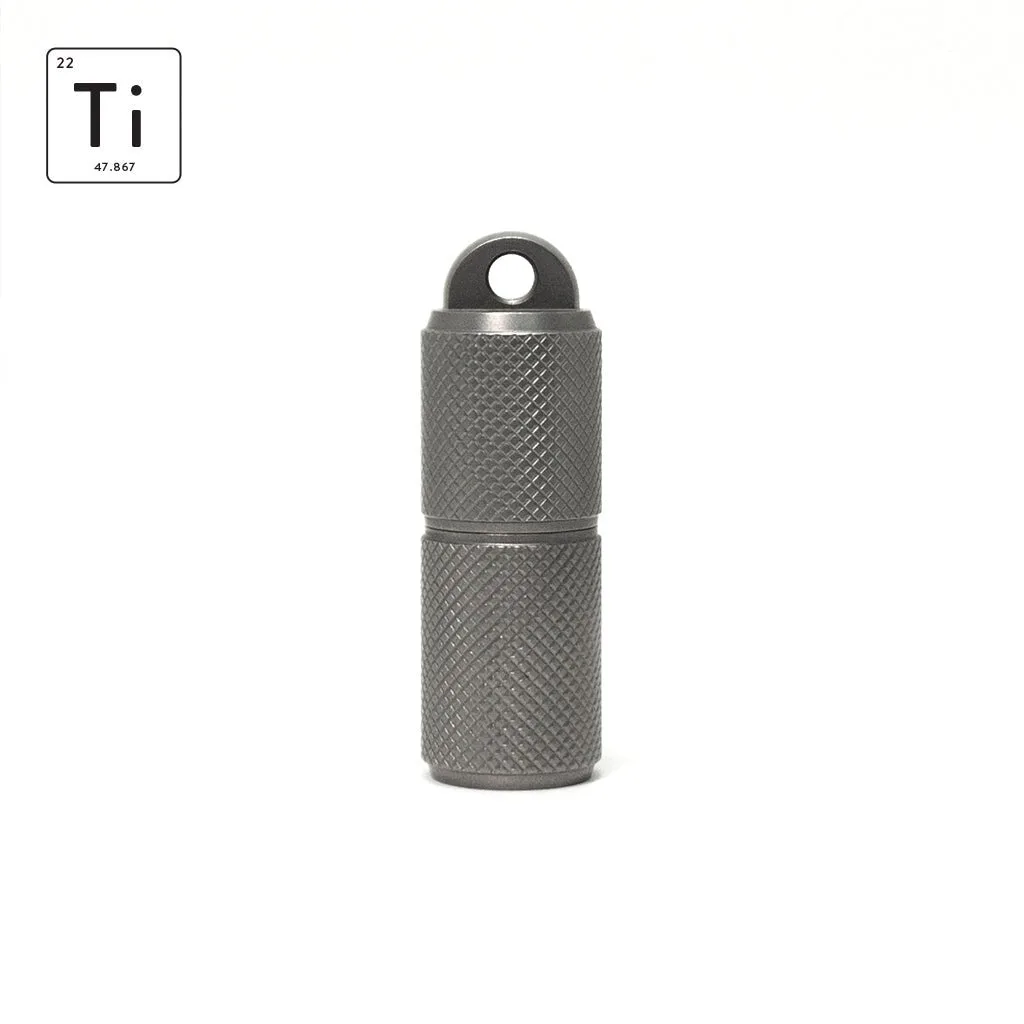
The Ti-FS Survival Lighter takes a different angle. It is precision milled from 6AL-4V titanium billet and built as a compact, refillable capsule lighter for campfires. The knurled finish gives grip when wet, and the package includes spare parts. Here titanium is doing structural work, not just saving weight. If you want a fire starter that lives on a keychain or in a survival kit, the titanium casing is the reason it can take knocks without adding bulk.
Stainless steel and coated steel: where they still make sense
Stainless steel remains the default for tools where weight is not a problem and cost matters. A steel-bodied multi-tool or a steel clip on a bag will do its job for years. The honest trade-off is that steel is heavier and often shows wear more visibly, so a polished steel piece will look used faster than a matte titanium one.
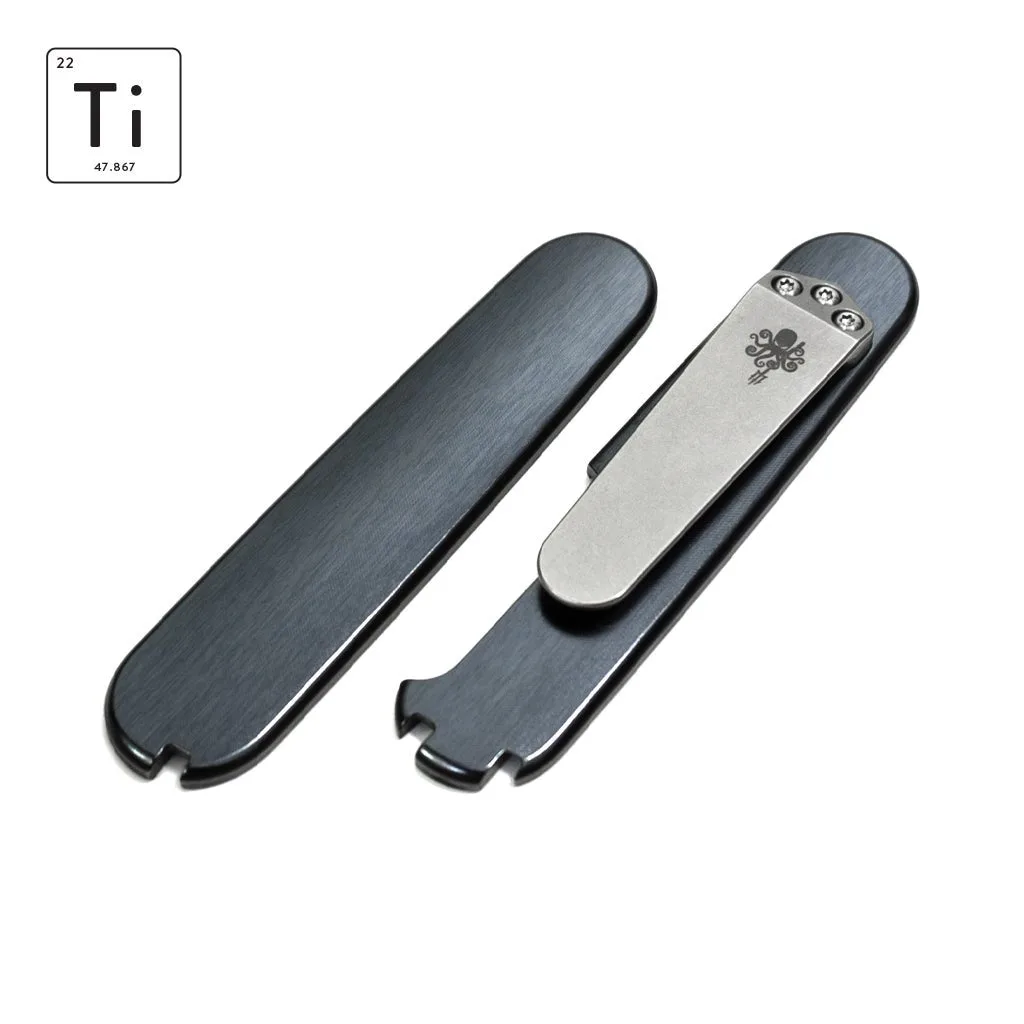
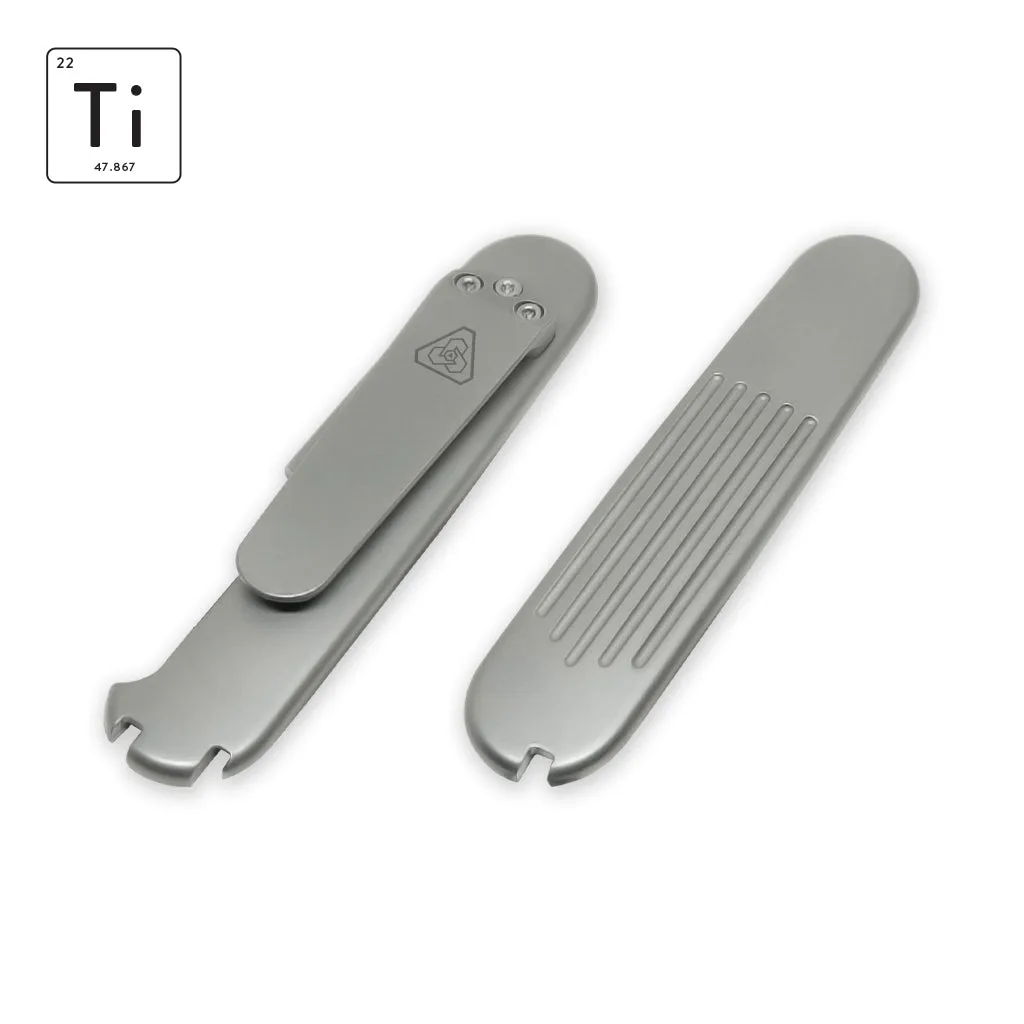
The SPD Ti-SAK Scales show a middle path: titanium as an upgrade rather than a whole new tool. These are precision machined titanium replacement scales for the standard 91mm Swiss Army Knife, with a laser-etched Raven Black finish and a press-fit permanent installation. You keep the steel tools you already trust and change only the handle, which is often the part you see and touch most. The trade-off is that the swap is permanent, so commit only if you are sure about the knife.
Ti-SAK Scales
How to judge weight, wear, and cost before buying
Start with where the item will live. Neck and keychain carry favor titanium because every gram is felt. Pouch and pack carry can absorb steel's extra weight without complaint. Next, decide how much visible wear bothers you. If you like a piece that looks new, a coated or etched titanium finish hides handling marks better. If you like a patina of use, bare steel is honest about it.
Finally, separate collectible from workhorse. Limited editions and hand-finished pieces are worth the premium only if you will actually carry them. For a tool that gets abused, a lower-cost steel version leaves more budget for the rest of your kit.
Trade-offs to weigh before you choose
- Weight against the body: Titanium is lighter for the same size, which matters most on neck cords and keychains. Stainless steel adds heft that some users prefer in the hand. If you wear it all day, titanium usually wins. If it lives in a pouch, steel's weight is a non-issue.
- Visible wear and finish: Laser-etched and coated titanium finishes hide daily handling marks better. Bare stainless steel shows scuffs and fingerprints more readily. Choose titanium if you want the piece to keep its look. Choose steel if you do not mind honest wear.
- Cost and commitment: Titanium pieces carry a premium, and limited editions may not return. A titanium scale swap is permanent, while a steel tool can be replaced cheaply. Buy titanium for the piece you will keep and carry. Buy steel for the tool you will use hard and replace without regret.
Product facts that shape the comparison
- Steel Flame Titanium Dog Tag - Sea Wolf / All Terrain with Jump Ring: Steel Flame titanium dog tag with Sea Wolf and All Terrain graphics, released as a one-time limited edition with a jump ring. Titanium keeps a neck-worn tag light, and the limited run means availability, not just price, is part of the decision.
- Ti-FS Survival Lighter: Ti-FS Survival Lighter is precision milled from 6AL-4V titanium billet, refillable, with a knurled finish and spare parts included. The titanium casing and knurling make a compact fire starter that grips when wet and survives keychain or kit duty.
- SPD Ti-SAK Scales - Raven Black: SPD Ti-SAK Scales are machined titanium replacement scales for standard 91mm Swiss Army Knives with a laser-etched Raven Black finish and press-fit installation. You can upgrade the handle of a steel-tool knife to titanium without replacing the tools, but the press fit is permanent.
Which should you carry?
Titanium is best for
- Daily neck or keychain carry where weight is felt
- Buyers who want a finish that holds its look through handling
- Upgrading the handle of a trusted 91mm Swiss Army Knife
Stainless steel is better for
- Buyers who want the lowest entry price
- Tools that live in a pack and rarely show wear
- Anyone who prefers a heavier, planted feel in the hand