Quick answer
Look for toddler boots made of waterproof natural rubber with a slip-resistant sole and a wide toe box. These features keep feet dry, provide traction in mud, and support natural foot development.
Why waterproof natural rubber matters
Rain and mud mean constant exposure to moisture. Waterproof natural rubber is the gold standard for toddler rain boots because it keeps water out without adding heavy weight. Synthetic materials may claim water resistance but often fail at the seams or become stiff in cold weather. Natural rubber stays flexible, making it easier for toddlers to walk and run.
A boot that is not fully waterproof will leave socks soaked within minutes, leading to discomfort and potential blisters. For serious puddle jumping and muddy trails, choose boots explicitly labeled as waterproof and made from natural rubber.
Traction and sole design for muddy terrain
Mud is slippery, and toddlers are still mastering balance. A slip-resistant sole with deep treads provides the grip needed to stay upright on wet grass, slick pavement, and soft mud. Look for soles with visible lugs or a patterned tread rather than a flat bottom.
Zero-drop heels are another feature to consider. They keep the foot level with the ground, which helps toddlers maintain a natural walking posture and reduces the risk of tripping. A wide toe box also allows toes to spread, improving stability on uneven surfaces.
Ease of putting on and taking off
Toddlers rarely sit still, so boots that are difficult to put on become a daily struggle. Elastic side gores and a pull-on loop at the back make slipping boots on and off much easier. These features also help achieve a snug fit without laces or buckles that can come undone.
If your child is still learning to dress themselves, look for boots with wide openings and stretchy panels. This encourages independence and reduces frustration for both of you.
How to choose toddler boots for rain and mud
- Check the material: Choose 100% waterproof natural rubber. Avoid boots labeled only as water-resistant, as they will not hold up to puddles and mud.
- Examine the sole: Look for a slip-resistant sole with visible tread and a zero-drop heel. This combination provides traction on slick surfaces and encourages natural walking.
- Verify the fit: A wide toe box allows toes to spread for balance and comfort. The boot should be snug at the heel but roomy enough for thick socks. Elastic side gores help achieve a secure fit. Check fit with the socks your child will actually wear. If you can pinch fabric at the heel, the boot is too loose.
- Consider warmth needs: For cold, wet weather, choose boots with a soft lining like sherpa. For mild rain, an unlined rubber boot is sufficient and more breathable.
Product features at a glance
-
Voyageur Boot - River: Made from waterproof natural rubber with a wide toe box, slip-resistant sole, and zero-drop heel. Keeps feet dry in puddles and rain while supporting natural movement and steady footing on wet surfaces.
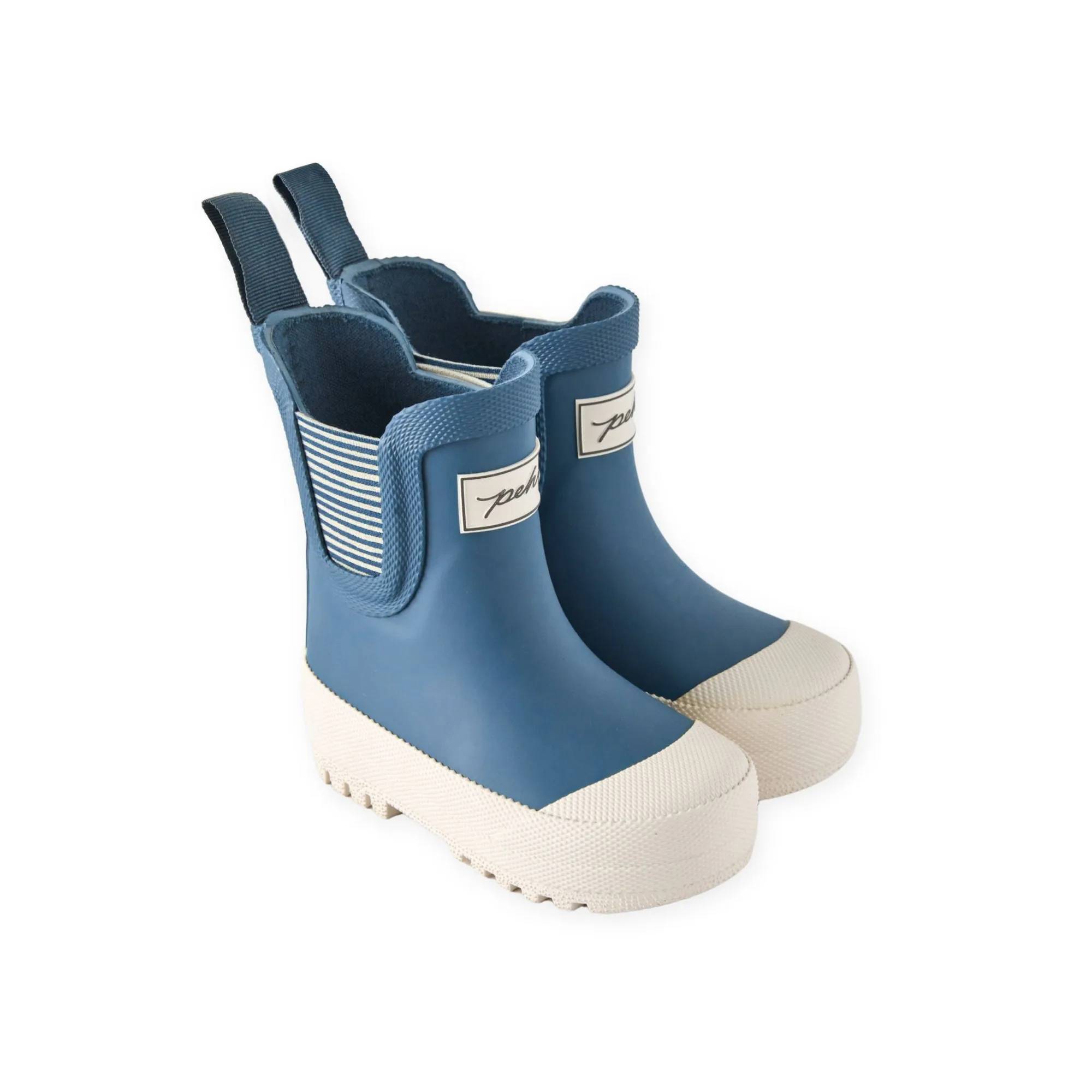
Voyageur Boot - River
-
Pathfinder Boot - Ink: Crafted from durable 100% natural rubber and lined with soft polyester sherpa for warmth in cold, wet conditions. Provides cozy insulation for chilly rainy days without sacrificing waterproof protection or flexibility.
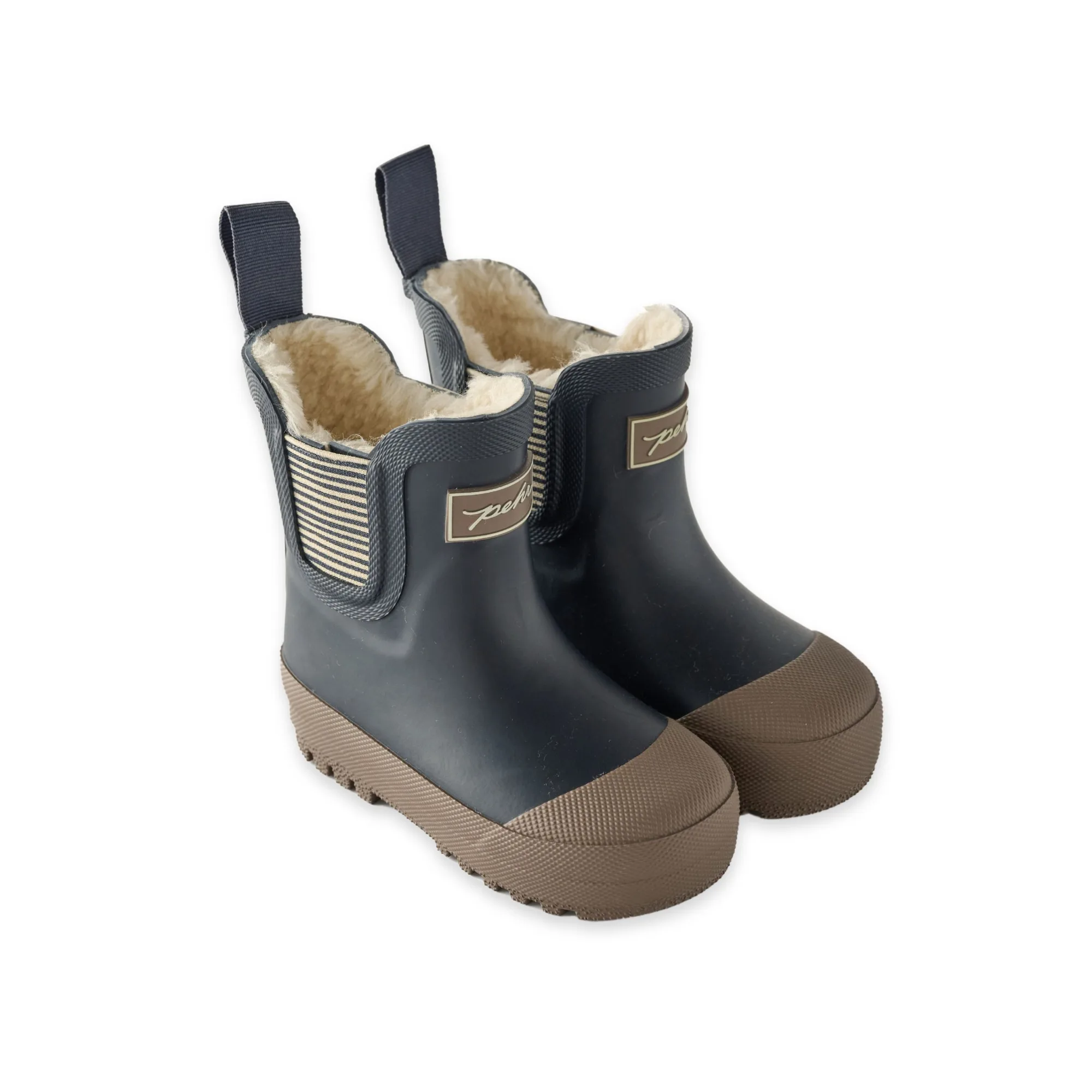
Pathfinder Boot - Ink
Which boot style fits your needs?
Best for
- Active toddlers who play in puddles, mud, and wet grass daily
- Parents who want a lightweight, flexible boot that supports natural foot development
Not ideal for
- Very cold snowy conditions where insulated winter boots are needed
- Formal occasions or indoor-only use where a softer sole shoe would be more appropriate