Hard water stains in the toilet bowl are one of the most stubborn bathroom nuisances. That unsightly ring of rust-colored mineral deposits can make even the cleanest bathroom look grimy. While there are countless toilet bowl cleaner options on the market, they generally fall into three categories: tablets, liquids, and powders. Each type has its strengths and weaknesses, especially when it comes to tackling hard water buildup.
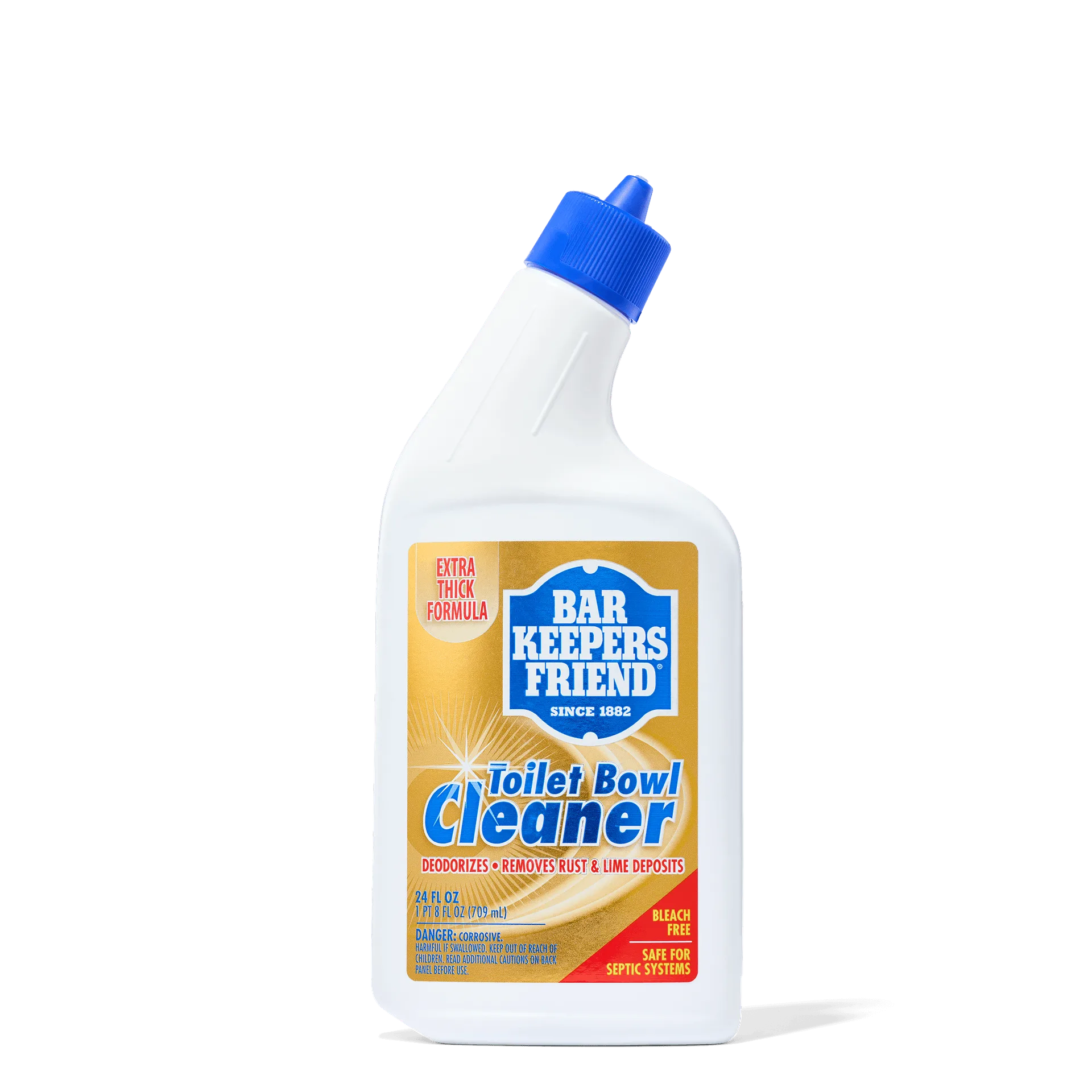
toilet bowl cleaner
In this showdown, we’ll break down how tablets, liquids, and powders perform against hard water stains, what they’re best for, and how to choose the best toilet cleaner for your needs. Plus, we’ll share how Bar Keeper’s Friend products—like our versatile Cleanser and Soft Cleanser—can complement your toilet cleaning routine for a sparkling, stain-free bowl.
Toilet Cleaning Tablets: Convenience vs. Effectiveness
Toilet cleaning tablets are a popular choice for their ease of use. You simply drop one into the tank or bowl, and it slowly dissolves to release cleaning agents with every flush. They are great for maintaining a fresh smell and preventing light stains between deep cleans. Many homeowners appreciate the “set it and forget it” approach.
However, when it comes to hard water stains, tablets often fall short. The diluted cleaning solution may not be strong enough to dissolve thick mineral rings or rust deposits. Additionally, some tablets can damage toilet components over time. For tough hard water stains, tablets are best used as a maintenance tool rather than a primary cleaner.
- Best for: Light maintenance and odor control between deep cleans.
- Watch out: May not remove established hard water rings; check compatibility with your toilet model.
Liquid Toilet Bowl Cleaners: Power and Precision
Liquid toilet bowl cleaners are the most common type found in stores. They come in squeeze bottles with angled nozzles that allow you to apply the cleaner directly under the rim and around the bowl. Most liquids contain bleach or other strong chemicals that can break down organic stains and sanitize the surface.
For hard water stains, liquid cleaners can be effective if you let them sit for several minutes before scrubbing. However, they often struggle with thick, crusty mineral deposits. You may need to scrub vigorously or repeat the process multiple times. Liquids are a good middle ground—more powerful than tablets but less abrasive than powders.
- Tip: For best results, apply liquid cleaner, let it sit for 10 minutes, then scrub with a toilet brush.
Powder Toilet Cleaners: The Heavy Hitter Against Hard Water
Powder toilet cleaners are the most aggressive option for hard water stains. They typically contain abrasive particles that physically scrub away mineral buildup when you brush. Many powders also include bleaching agents or acids that chemically dissolve deposits. If you’ve tried tablets and liquids without success, a powder cleaner may be your answer.
The trade-off is that powders require a bit more effort—you need to sprinkle them into the bowl, add a little water, scrub, and flush. They are less convenient than tablets but far more effective for stubborn rings. For the toughest hard water stains, consider using a powder like Bar Keeper’s Friend Cleanser, which is a versatile option for cleaning porcelain, stainless steel, and more.
- Best for: Heavy-duty stain removal and periodic deep cleaning.
- Caution: Avoid using abrasive powders on delicate toilet surfaces or if you have a septic system (check label).
How to Choose the Best Toilet Cleaner for Hard Water
The best toilet cleaner for hard water depends on the severity of your stains and how much time you want to spend cleaning. If you have light to moderate stains and prefer low-maintenance care, start with a liquid cleaner and brush regularly. For persistent mineral rings, a powder cleaner is your best bet.
You can also combine methods: use tablets for ongoing freshness and a powder for weekly deep cleaning. Another smart strategy is to prevent hard water stains by using a water softener or a cleaning product that contains citric acid. For bathroom fixtures beyond the toilet, Bar Keeper’s Friend Soft Cleanser is an excellent choice for sinks, tubs, and shower doors without scratching.
- Quick guide: Tablets = maintenance; Liquids = everyday cleaning; Powders = deep stain removal.
Pro Tips for Removing Tough Hard Water Stains
Before you reach for a heavy-duty chemical, try these effective techniques. First, pour a cup of white vinegar into the toilet bowl and let it sit overnight. The acidity helps dissolve mineral deposits. In the morning, scrub with a toilet brush and flush. For extra stubborn stains, make a paste of baking soda and vinegar, apply it to the stain, and scrub after 15 minutes.
If home remedies don’t work, a specialized powder cleaner can make quick work of the job. Bar Keeper’s Friend Cleanser is a household favorite for its ability to tackle rust and hard water stains on porcelain and ceramic surfaces. It’s gentle enough for regular use but tough enough to restore a like-new shine.
- Pro tip: Always wear gloves and ensure good ventilation when using any toilet cleaner.
Choosing the right toilet bowl cleaner for hard water stains doesn’t have to be a guessing game. Tablets offer convenience for daily freshness, liquids provide a solid middle ground, and powders deliver the heavy-duty power needed to conquer stubborn mineral rings. For the toughest stains, a quality powder like Bar Keeper’s Friend Cleanser can make all the difference. Explore our full range of cleaning solutions to find the perfect match for every surface in your home.