Slicing a ripe tomato without crushing it is one of the truest tests of a good kitchen knife. If you have ever ended up with a squashed, leaking mess instead of neat slices, you have likely wondered whether a dedicated tomato knife set or a standard serrated knife is the better tool. Both can handle the job, but they approach it differently, and the right choice depends on how you cook and what you value in a blade.
In this comparison, we will look at the design philosophy behind each option, how they perform on tomatoes and other foods, and what trade-offs you should consider before adding one to your kitchen drawer.
Design Differences: Serrated Edge vs. Small Straight Blade
A classic serrated knife, often called a bread knife, features a long blade with scalloped teeth that grip and saw through tough skins without crushing soft interiors. The serrations catch the tomato skin first, allowing the blade to slice through with minimal downward pressure. This makes it an excellent all-rounder for bread, citrus, and large tomatoes.
A tomato knife set typically includes one or two small, narrow blades with either fine serrations or a straight, ultra-thin edge. These knives are designed specifically for precision work on smaller produce. The blade is usually shorter (around 4 to 5 inches), which gives you more control when slicing cherry tomatoes, Roma tomatoes, or garnishes. Some sets also include a forked tip for lifting slices.
- Serrated knives work best on large, firm tomatoes and crusty bread.
- Tomato knife sets excel at precision work with small or delicate tomatoes.
Performance on Tomatoes: Which One Slices Cleaner?
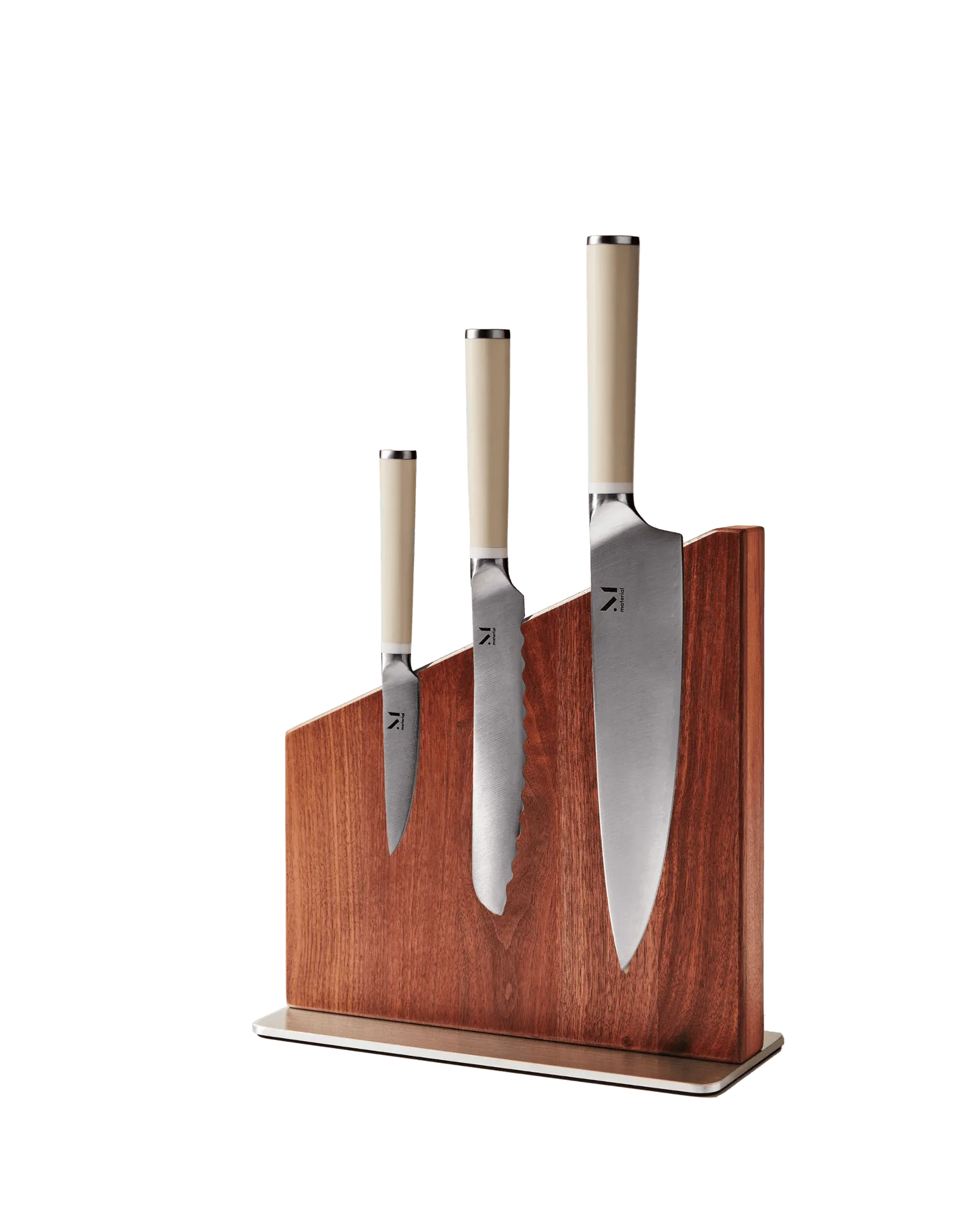
For a standard beefsteak tomato, a quality serrated knife like The Table Knives from Material can produce clean, even slices. The key is using a gentle sawing motion rather than pressing straight down. The serrations grab the skin and ease through the flesh, leaving less juice on the board. However, if the serrations are too aggressive, they can tear the skin slightly.
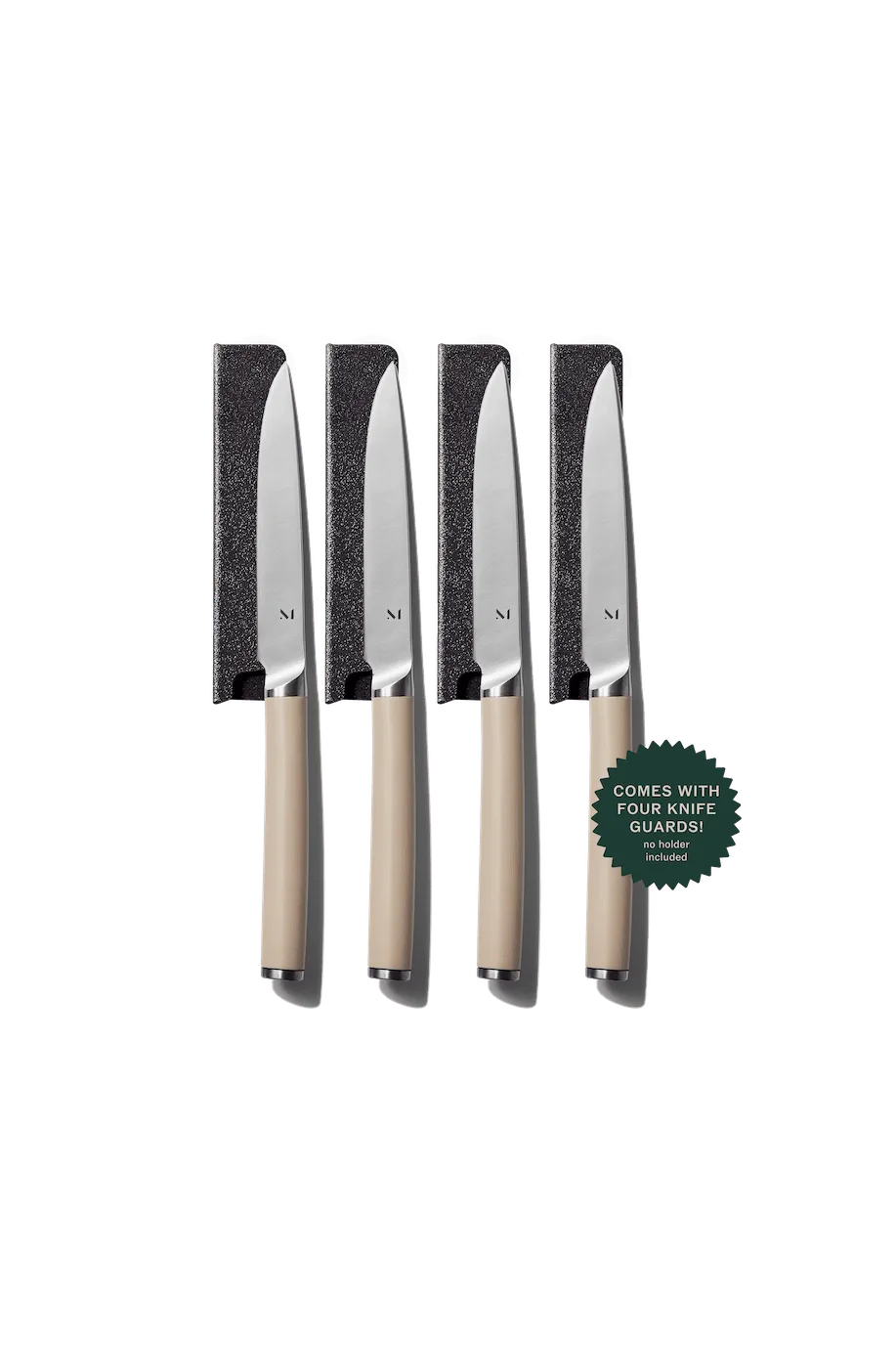
The Table Knives
A dedicated tomato knife, such as those found in The Good Prep Set, uses a thinner, sharper blade that glides through with less sawing. Because the blade is narrow, it reduces friction and drag. This often results in a cleaner cut, especially for very ripe or heirloom tomatoes. The trade-off is that the smaller blade requires more passes for larger fruit, and it is less versatile for other kitchen tasks.
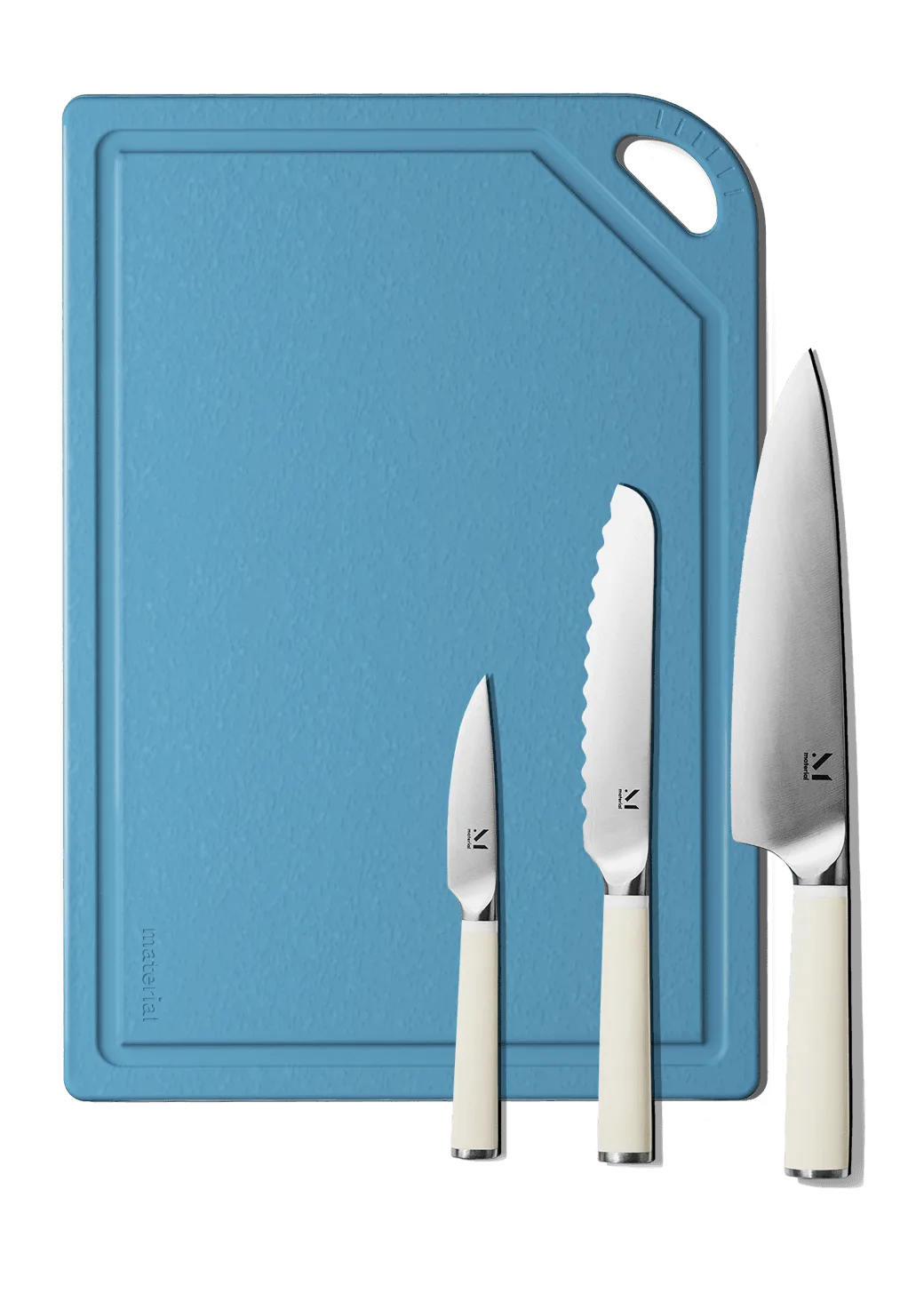
The Good Prep Set
- For occasional tomato slicing, a serrated knife offers more versatility.
- For daily tomato prep, a tomato knife set minimizes crushed slices and wasted juice.
Versatility Beyond Tomatoes
A serrated knife is a multitool in the kitchen. It handles bread, bagels, melons, and even cake layers with ease. If you have limited knife storage, a single serrated blade can replace several specialty tools. This makes it a practical choice for minimalist kitchens or for cooks who want one knife that does many jobs reasonably well.
A tomato knife set is more specialized. While it can also slice soft fruits like peaches or plums, it struggles with crusty bread and large squashes. You will likely need another knife for those tasks. However, if you frequently prepare salads, sandwiches, or appetizers with uniform tomato slices, the precision of a tomato knife set can speed up your prep and reduce waste.
- Serrated knife: one tool for bread, tomatoes, and melons.
- Tomato knife set: best for cooks who slice tomatoes daily and value precision over range.
Care and Longevity
Serrated knives are notoriously difficult to sharpen at home. Most home sharpeners cannot reach the scalloped valleys, so you may need professional sharpening or eventually replace the knife. High-quality serrated knives, however, hold their edge for years with proper use.
Tomato knife sets often have straight or micro-serrated edges that are easier to maintain with a honing rod or fine stone. The blades are thin and can bend if misused, but they are also inexpensive to replace. If you prefer to keep your knives razor-sharp without sending them out, a tomato knife set may be more convenient.
- Serrated knives require professional sharpening; tomato knives are easier to maintain at home.
- Thin tomato knife blades are more prone to bending—avoid twisting them in dense produce.
Which Should You Choose?
If you want one knife that can handle tomatoes, bread, and a variety of other foods, a serrated knife is the smarter investment. Pair it with a chef’s knife for most other tasks, and you have a versatile duo that covers nearly all slicing needs. For example, The Table Knives from Material offer a balanced serrated option that feels at home in many kitchens.
If you cook with tomatoes often and value the cleanest, most precise slices, a tomato knife set is worth the dedicated drawer space. Sets like The Good Prep Set include a small serrated prep knife that works beautifully on tomatoes and other delicate produce, giving you the best of both worlds in a compact form.
- Choose a serrated knife for versatility and fewer tools.
- Choose a tomato knife set for precision and ease of sharpening.
Both a tomato knife set and a serrated knife can deliver perfect tomato slices, but the best choice depends on your cooking habits. For all-around utility, a quality serrated knife is hard to beat. For dedicated tomato prep and effortless sharpening, a tomato knife set offers unmatched precision. Consider how often you slice tomatoes and what other tasks your knife needs to perform, then pick the tool that fits your kitchen rhythm.