Quick answer
If your toric lenses blur or rotate, check the cylinder and axis on your prescription first, then confirm the lens is seated and not inside out. If the numbers match and the lens still spins, stop wearing it and ask your eye care professional about a refit or custom toric contacts.
Why cylinder and axis matter more than your sphere
On a toric prescription, the sphere corrects nearsightedness or farsightedness, the cylinder corrects the astigmatism itself, and the axis tells the lens where that correction must sit. A small axis error can make vision feel unstable even when the sphere is perfect.
Toric lenses also need to stay in one orientation on the eye. If the lens rotates away from the prescribed axis, the cylinder correction lands in the wrong place and vision blurs. That is why a lens that feels comfortable can still perform poorly.
When the problem is the prescription, not the lens
A prescription that is expired, written for glasses only, or missing the axis cannot be used to order toric lenses safely. Glasses prescriptions include a back vertex distance and frame details that do not transfer to contact lenses.
If your axis is marked as a range or your cylinder is very low, your eye care professional may decide toric lenses are not necessary or may need to fine-tune the axis after a trial. Do not round or guess these numbers yourself.
What a real rotation problem looks like
Rotation is not the same as a lens that slides slightly when you blink. A true rotation problem shows up as consistently blurry vision that clears when you nudge the lens, or a lens that settles in a different position each time you insert it.
Some rotation is normal in the first minutes as the lens settles. Persistent rotation across several wears, especially with the same blur pattern, is the signal to stop troubleshooting on your own.
Diagnose your toric lens problem
- Symptom: vision is blurry right after insertion and stays blurry: Check the lens is not inside out and is centered on the cornea. If it still blurs, compare the cylinder and axis on your prescription with the lens packaging. A mismatch means the lens is not your prescription. If the numbers match and vision is still blurry, stop wearing the lens and book an eye exam.
- Symptom: vision clears when you press or nudge the lens: This points to rotation. Note whether the lens rotates in the same direction each time. A lens that settles consistently off-axis may need a different axis or a lens designed for your eye's rotation. Do not keep nudging the lens all day; repeated manual repositioning can irritate the eye.
- Symptom: the lens feels fine but vision is unstable only at certain times: Dryness, allergies, or a lens that is too loose can cause intermittent rotation. Try lubricating drops recommended for contact lens wear and avoid wearing the lens longer than advised. If instability continues for more than a few days, treat it as a fitting issue rather than a lens defect.
- Symptom: your prescription has no axis or says 'glasses only': Stop here. You cannot safely order toric lenses from a glasses prescription or a missing axis. Ask your eye care professional for a contact lens prescription with cylinder and axis values. A valid contact lens prescription is the only starting point for toric lenses.
- Symptom: rotation persists with the correct prescription: This is the point to stop self-adjusting. Ask about a refit, a different toric design, or custom toric contacts. Custom lenses can be made for unusual axis values or eyes that rotate consistently. Persistent rotation is a clinical fitting question, not a product-return issue.
Product facts
-
Ann365 JUST Choco (Toric for Astigmatism) (1 PAIR): Ann365 JUST Choco (Toric for Astigmatism) is sold as 1 pair (2 toric lenses) with a soft gradient, 1-tone style and a discreet limbal ring. A daily-wear toric option with a natural look, but the pair format means you should confirm your axis and cylinder before ordering multiple pairs.
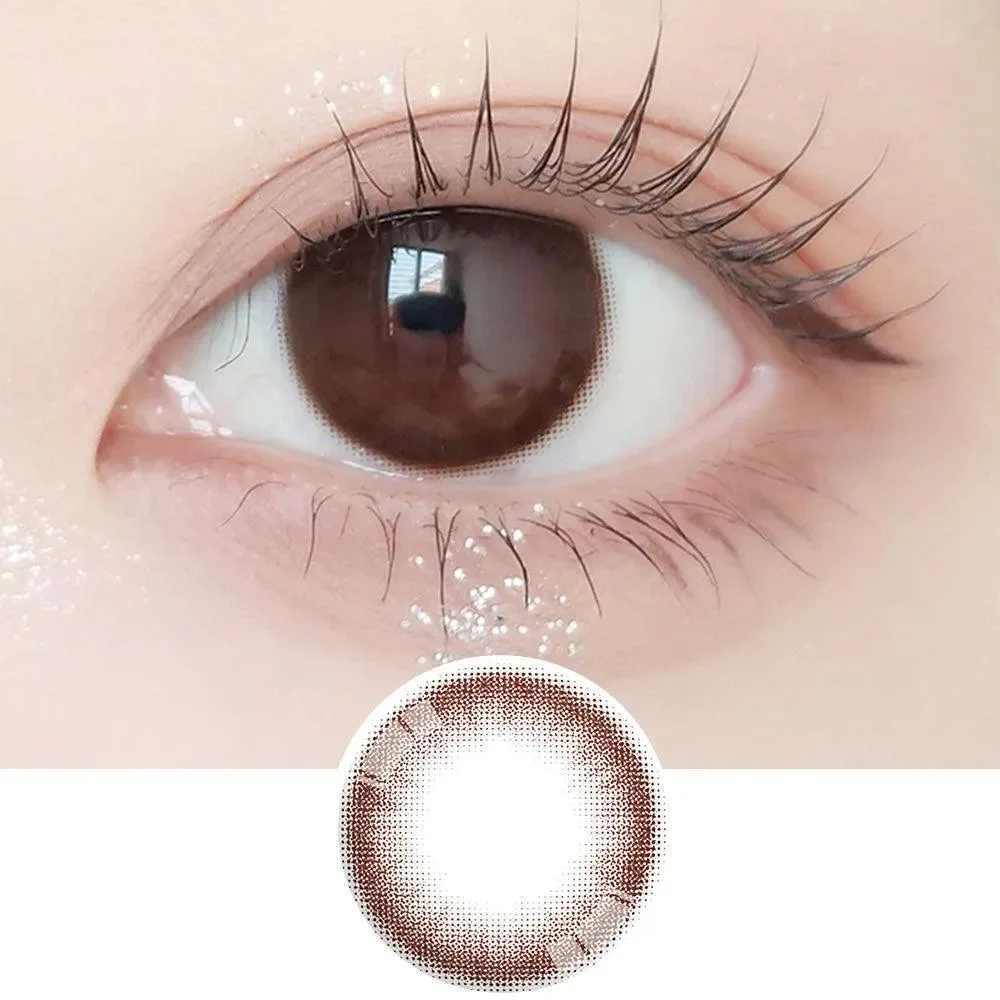
Ann365 JUST Choco (Toric for Astigmatism) (1 PAIR)