Where the holder should live before you mount it
A tourniquet holder kit only helps if you can reach it under pressure. The Tourniquet Holder Kit from Archangel Tactical Gear bundles a Kydex holder, a tourniquet, trauma shears, and a mini marker. The holder itself has dual MOLLE straps, so you can mount it on a belt, vest, or pack. The real decision is not which strap to use; it is which location gives you the fastest, most reliable access for the way you carry gear.
Belt and pack mounting solve different problems. A belt-mounted carrier keeps the kit on your body at all times, but it competes with other belt gear. A pack-mounted carrier frees your waistline, but it only works if the pack stays with you. Use the checkpoints below to match the mount to your actual loadout.
What the kit gives you to mount with
-
Tourniquet Holder Kit - Archangel Tactical Gear: Kydex Tourniquet Holder with dual MOLLE straps for easy mounting. The dual MOLLE straps are the mounting interface for both belt and pack setups, so you do not need separate hardware to try either location.
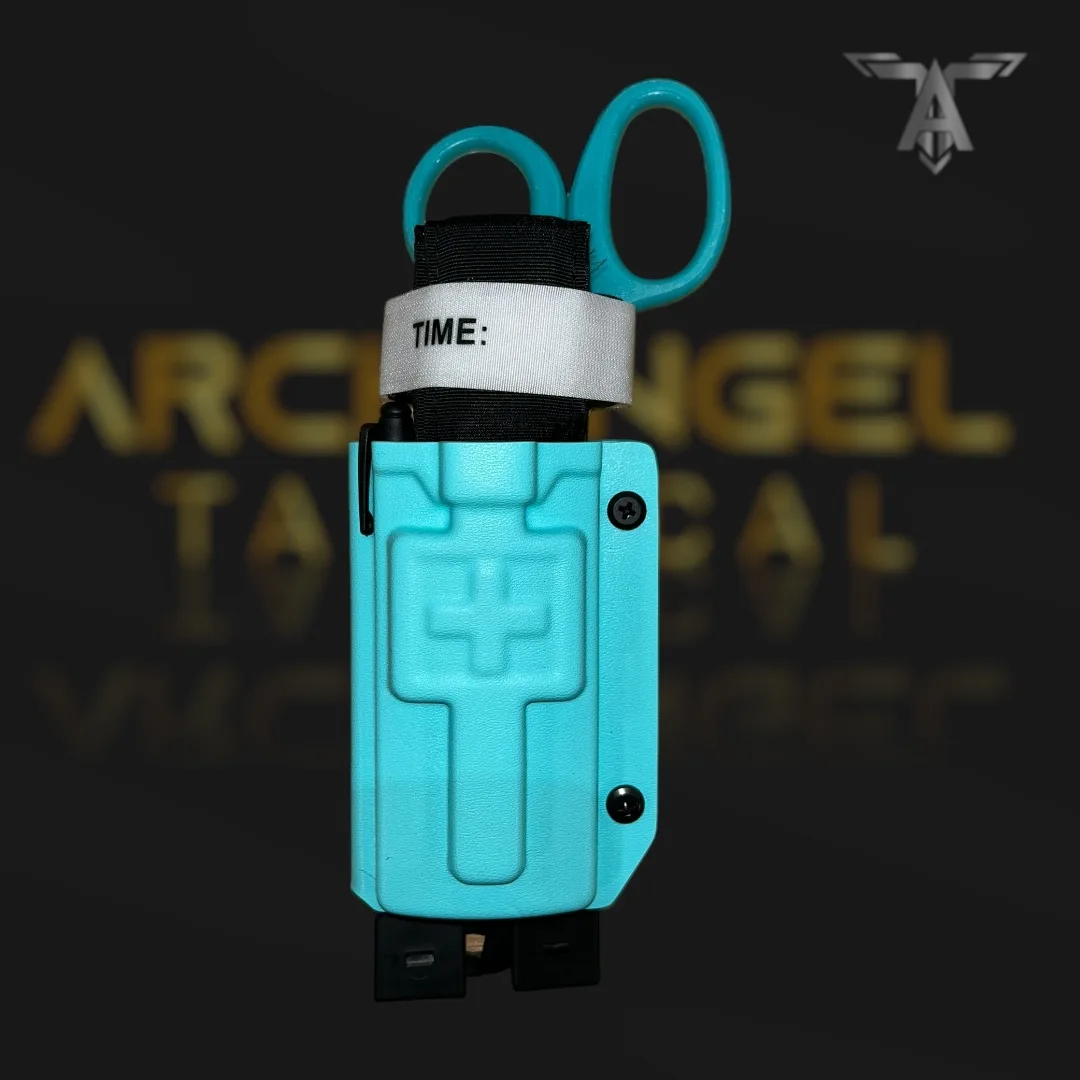
Tourniquet Holder Kit - Archangel Tactical Gear
-
Tourniquet Holder Kit - Archangel Tactical Gear: Kit includes a tourniquet, trauma shears, and a mini marker for recording application times. These items define the kit's footprint. Plan the mount so the holder and its contents sit clear of other gear you need to reach.
-
Tourniquet Holder Kit - Archangel Tactical Gear: Compact and lightweight without sacrificing performance. A compact holder is easier to place on a crowded belt or a small pack without adding bulk that discourages you from carrying it.
Belt mount vs. pack mount: the trade-offs
Neither location is universally better. The right choice depends on whether you keep your pack on and whether your belt already has limited space.
- Belt mount: Keeps the tourniquet carrier on your body even if you set your pack down. Good for daily carry or duty belts where the kit must stay with you. Trade-off: it uses belt space and can conflict with holsters, mag pouches, or other belt-mounted gear.
- Pack mount: Frees your belt and puts the kit on a range bag, assault pack, or vest. Good when your pack stays on your back during the activity. Trade-off: if you remove the pack, the tourniquet goes with it, so access depends on keeping the pack nearby.
How to mount the holder on a belt
Use the dual MOLLE straps to secure the Kydex holder to a compatible belt. The steps below focus on placement and clearance, since the kit's supplied information does not include belt width limits or torque specifications.
- Clear a section of belt: Choose a spot that does not collide with your holster, mag pouches, or anything else you draw regularly. The holder should sit where your hand naturally falls.
- Thread the MOLLE straps: Route the dual MOLLE straps through the belt or compatible belt platform and secure them. The straps are the supplied mounting method for this holder.
- Check draw clearance: With the tourniquet in the holder, confirm you can pull it without catching on adjacent gear. Adjust the belt position until the holder clears your other pouches.
- Test with your full loadout: Put on the belt with all your usual gear. Sit, crouch, and reach across your body to confirm the holder stays put and remains reachable.
How to mount the holder on a range bag or pack
The same dual MOLLE straps let you attach the holder to MOLLE-compatible webbing on a pack. Placement matters more than strap tension here, because a pack-mounted tourniquet must be reachable without taking the pack off.
- Pick a reachable panel: Mount the holder on a part of the pack you can reach with one hand while wearing it, such as a side or lower front panel. Avoid the very top or back panel if you cannot reach it without help.
- Weave the straps through MOLLE webbing: Thread the dual MOLLE straps through the pack's webbing and secure them. Confirm the holder sits flat against the pack rather than hanging loose.
- Check one-handed access: With the pack on, reach for the tourniquet. If you cannot grip and pull it cleanly, move the holder to a more accessible panel.
- Confirm the pack stays with you: A pack-mounted tourniquet holder only works if the pack stays on your body during the activity. If you routinely set your bag down, consider a belt mount instead.
Placement checkpoints before you commit
Run through these checks after mounting, whether on belt or pack. They focus on access and stability, which are the factors the supplied kit information supports.
- Can you reach it with either hand?: Try reaching the holder with your dominant and non-dominant hand. A mount that only works from one side may fail if that side is blocked.
- Does it stay put when you move?: Walk, crouch, and reach overhead. The holder should not shift or rotate loosely on its straps.
- Is the tourniquet clear of other gear?: The tourniquet should pull free without snagging on shears, markers, or adjacent pouches. Reposition the holder if anything blocks the draw.
- Can you see the mini marker?: The kit includes a mini marker for recording application times. Keep it accessible alongside the tourniquet rather than buried in another pocket.
What the supplied information does not settle
The catalog describes the Kydex holder and dual MOLLE straps but does not list belt width limits, strap length, or a specific mounting torque. It also does not provide care instructions for the Kydex or the tourniquet. Treat those as open questions and check the holder's fit on your specific belt or pack before relying on it.
For a belt setup, confirm the straps fit your belt width. For a pack setup, confirm the MOLLE webbing spacing matches the holder's straps. If either fit is unclear from the product information, test the mount with an empty holder first.