Quick Answer
Choose a tower fan if you need to cool a whole room and want to save floor space; choose a desktop fan if you only need airflow on one person at a desk or nightstand. For a bedroom, a quiet oscillating tower fan usually works better because it moves air across the bed rather than at a single point. For a small home office, a portable desk fan is often enough and costs less.
How the Two Fans Move Air Differently
A tower fan pushes a broad, vertical curtain of air across the room. That makes it the better choice for a living room or an open bedroom where several people share the space. A desktop fan concentrates airflow into a narrow stream aimed at one person, so it feels stronger up close but fades quickly across a room.
The practical difference shows up in where you place each fan. A tower fan belongs on the floor near a wall or corner, angled slightly toward the seating area. A desktop fan needs to sit within a few feet of the person using it, which limits it to a desk, nightstand, or kitchen counter.
Footprint and Placement Trade-Offs
Floor space is the clearest trade-off. A tower fan takes up a small floor footprint but stands tall, so it can block a low window or sit awkwardly in a narrow hallway. A desktop fan takes up almost no floor space but occupies valuable surface area that you might need for work or a lamp.
If your room is tight, measure both the floor spot and the tabletop spot before deciding. In many small bedrooms, a tower fan in the corner frees the nightstand for a lamp and phone, while a desktop fan on the nightstand leaves the floor clear but crowds the surface.
Noise, Controls, and Everyday Use
Noise matters most at night. Tower fans generally run quieter at low speeds because the blades sit inside a taller housing that muffles sound, but the motor can hum at the highest setting. Desktop fans are often louder up close because the blades are smaller and spin faster to move the same air.
Remote controls and timers change how you actually live with a fan. A tower fan with a remote lets you change speed from bed without getting up, which is a real advantage for a bedroom. A desktop fan with a simple dial is fine on a desk where your hand is already nearby.
When a Different Cooling Appliance Makes More Sense
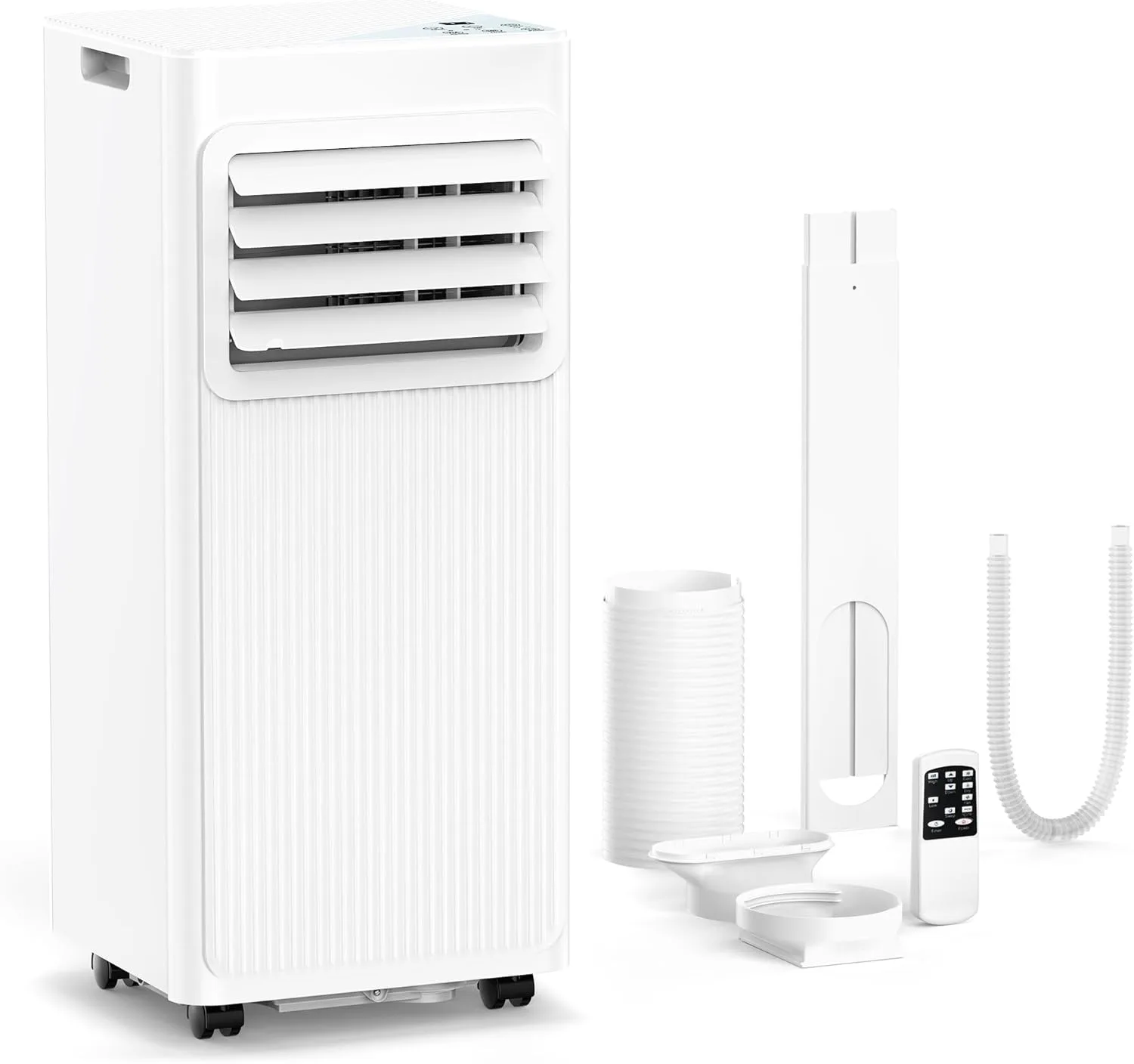
Fans move air; they do not lower room temperature. If your room stays hot even with a fan running, a portable air conditioner removes heat and humidity instead of just circulating them. That is a different job and a different budget.
For a bedroom or living room that needs real cooling, a portable air conditioner is the next step up from a fan. For a dry, open space where you want a gentle breeze without a compressor, an evaporative air cooler can work, but it adds moisture and needs a water reservoir refill.
Trade-Offs at a Glance
- Room coverage vs. personal airflow: A tower fan spreads air across a room; a desktop fan concentrates it on one person. Neither is wrong, but they solve different problems. Pick tower for shared spaces, desktop for one seat.
- Floor space vs. surface space: A tower fan claims a small floor spot; a desktop fan claims a tabletop spot. In a small room, decide which space you can spare. Measure both spots before buying.
- Quiet sleep vs. close-up power: Tower fans tend to be quieter at low speed for sleep; desktop fans feel stronger up close but can be noisier at the same distance. For a bedroom, prioritize low-speed noise.
- Fan vs. actual cooling: Fans circulate air but do not lower temperature. If the room stays hot, a portable air conditioner removes heat and humidity instead. Choose a fan for airflow, an AC for temperature.
Products That Match Each Fan Type
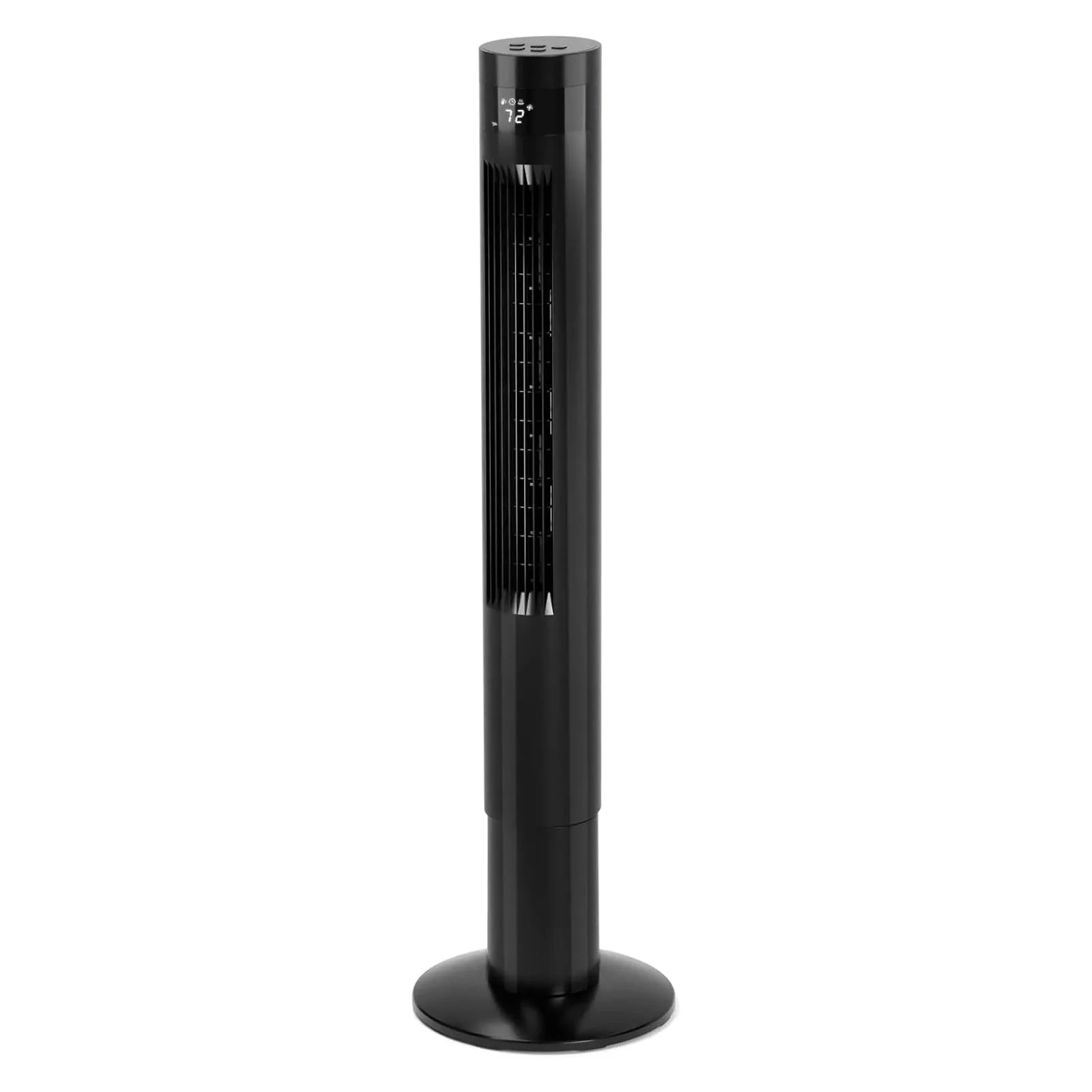
- Antarctic Star Tower Fan Portable Electric Oscillating Fan-43 inch: Antarctic Star Tower Fan Portable Electric Oscillating Fan, 43 inch, with 3 speeds, wind modes, timer, and remote control. The remote and timer make it easy to adjust from bed or across the room, which suits a bedroom or living room where you do not want to get up.
- Antarctic Star Portable Air Conditioner, 10000BTU for Bedroom & Living room with remote control A4216B: Antarctic Star Portable Air Conditioner, 10000 BTU, with three operating modes and three wind speeds, 45 dB noise level, and remote control. If a fan alone cannot keep a bedroom or living room comfortable, this unit actually cools the air rather than only moving it, and 45 dB is quiet enough for sleep.
- Antarctic Star 10000 BTU Portable Air Conditioners for Rooms up to 550 Sq Ft, 4 Modes Portable AC Unit with Cool/Fan/Dehumidifier/Sleep AC4216L: Antarctic Star 10000 BTU Portable Air Conditioner for rooms up to 550 sq ft, with cool, fan, dehumidifier, and sleep modes, 53 dB noise level, R-32 refrigerant. The larger room rating and dehumidifier mode make it a better fit for an open living area than a single-person desktop fan, though 53 dB is louder than the 45 dB model.
Which Fan Fits Your Room?
Best for
- Bedrooms where you want quiet, whole-room airflow and remote control from bed
- Living rooms where several people share the space and floor space is limited
- Anyone who wants a small room cooling fan that does not crowd a desk or nightstand
Not for
- A single desk worker who only needs airflow on one person and wants to spend less
- Rooms that stay hot and humid, where a fan will not lower the temperature
- Very tight spaces with no free floor corner and no free tabletop surface