Set the sheath up before you thread your belt
The Trac Knife sheath is built to be carried more than one way, so the first job is deciding which way you actually want it on your belt. The sheath supports vertical and horizontal belt carry, and it can sit on either the left or right side. Deciding that before you put it on saves you from rethreading a belt twice.
The two carry positions are adjusted with different parts of the sheath. For vertical carry, the retention strap with a snap can be rotated to either side. For horizontal carry, a fixed strap loop lets you pass your belt through on either side. Set the strap or route the belt first, then check that the sheath sits where your hand naturally reaches for it.
What the Trac sheath is made of
-
Trac™ Knife Sheath: Crafted from vegetable-tanned, hand-stitched, American full-grain cowhide leather. Full-grain leather is the material you will be breaking in and maintaining, so knowing what it is tells you how it will behave over time.
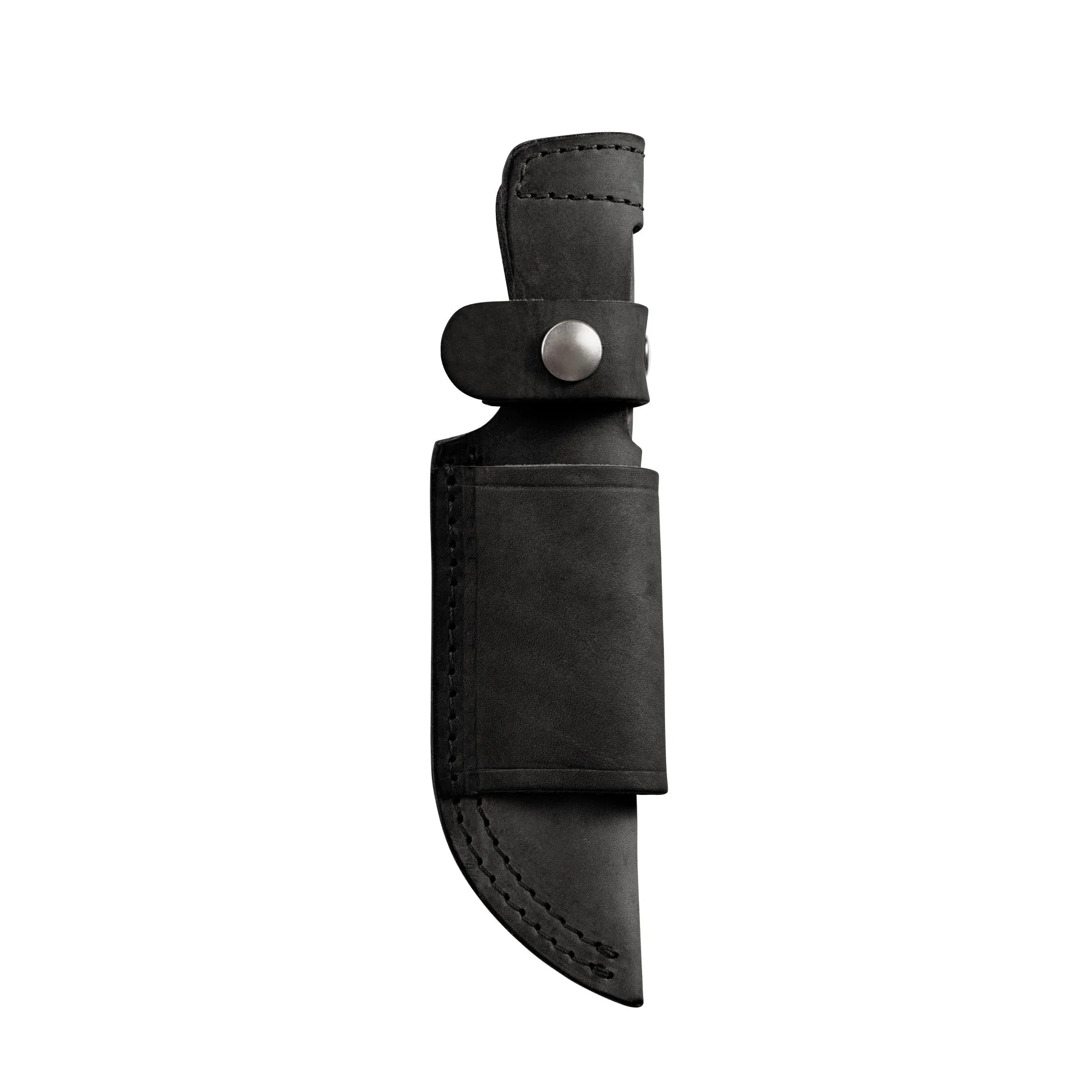
Trac™ Knife Sheath
-
Trac™ Knife Sheath: Available in Black, Brown-Black, and Brown with silver snaps. Color is the only variant option, so the choice is cosmetic rather than a difference in carry setup or retention.
Checking retention after you set it up
Retention is the part of sheath setup most worth slowing down for. The Trac uses a snap retention strap, and the supplied information does not include a specified break-in period, tension setting, or adjustment procedure. Work with what the sheath gives you and check it in a safe place before trusting it on the move.
- Seat the knife fully: Push the blade all the way into the sheath so the strap closes over the handle rather than partway down it.
- Close the snap and test the hold: With the sheath empty of your hand, tip it gently and confirm the strap is doing the work of holding the knife in place.
- Check the strap side: If you switched to vertical carry, confirm the retention strap is rotated to the side you actually want it on before you rely on it.
- Recheck after the first carries: New leather can settle with use. Recheck the snap and strap position after your first few days of carry rather than assuming the first fit is final.
Knife sheath fit tips for horizontal and vertical carry
Horizontal carry changes what the sheath presses against. With the belt running through the fixed strap loop, the sheath sits along your waistband rather than hanging below it, so check that it clears your belt line, pockets, and anything you routinely carry on that hip. Vertical carry hangs lower and swings differently when you sit or bend, so test it in a chair and in a vehicle before committing to it for a full day.
Left versus right matters more than it sounds. Try the sheath on the side where your dominant hand reaches without crossing your body, then try the other side once. The sheath supports both, so the right answer is the one that lets you draw without looking down. If neither feels natural, the problem may be the carry position rather than the sheath itself.
Leather sheath maintenance for daily carry
The supplied product information does not include a manufacturer care routine, conditioning schedule, or cleaning procedure for the Trac sheath. Treat the points below as practical handling habits rather than official instructions, and follow any care guidance that comes with your sheath.
- Keep the leather dry: Full-grain leather is the material to protect. Avoid leaving the sheath soaked or storing it damp, and let it air dry away from direct heat if it gets wet.
- Watch the snap and stitching: The sheath is hand-stitched with a snap retention strap. Glance at both periodically, since these are the parts your daily carry depends on.
- Store it empty and open: When the sheath is off your belt for a while, storing it without a knife inside and with the strap unfastened avoids leaving the leather compressed in one shape.
- Expect color to change with use: Vegetable-tanned leather darkens and marks with handling. That is normal wear on this material, not damage.
Break-in expectations for a new Trac sheath
A new full-grain leather sheath is stiffer than a broken-in one, and the Trac is no exception. The supplied information does not specify a break-in method or a timeframe, so the honest approach is to carry it and let it conform gradually rather than forcing it. If the sheath feels tight at first, check that the knife is fully seated and that the strap is on the correct side before assuming the fit is wrong.
What you can control is how you wear it. Consistent carry in the same position on the same side gives the leather a chance to shape around your belt and body. Switching between horizontal and vertical every day works against that, so pick one setup, live with it for a while, and change only if it genuinely does not suit you.
Is the Trac sheath the right daily carry for you?
The Trac Knife sheath suits someone who wants one leather sheath that can move between vertical and horizontal belt carry and between left and right sides without buying a second piece of gear. The vegetable-tanned, hand-stitched full-grain cowhide construction and the three color options make it as much a look choice as a carry choice.
What the supplied information does not cover is which knife models the sheath fits, its dimensions, or its belt width range. Those are the details to confirm before you buy, because a sheath that carries well still has to fit your specific blade and belt. If you already know your knife and belt measurements, the Trac gives you a flexible, leather-built option at a catalog price of USD 37.00 against a comparison price of USD 50.00.