Why hand position matters more on a long training leash
On a standard walking leash, your hands mostly manage tension. On a 16-foot training lead like the EzyDog Track 'N' Train Leash, they also shape the signal your dog reads when you ask for a recall. The extra length gives your dog room to make a choice, and your hand position determines how clearly you can communicate that choice without turning the leash into a tug-of-war.
The Track 'N' Train Leash is built with ultra-grippy webbing and an extra-long 16-foot lead, designed for general training, recall training, and tracking. That length is useful for teaching a dog to respect walking freedom while you maintain control, but it also means small hand movements travel farther down the line. A consistent grip helps you avoid confusing signals.
The leash this guide refers to
-
Track 'N' Train™ Leash: Extra-long 16-foot lead with ultra-grippy webbing. The 16-foot length gives your dog space to practice recall, while the grippy webbing helps you maintain a secure hold during hand transitions.
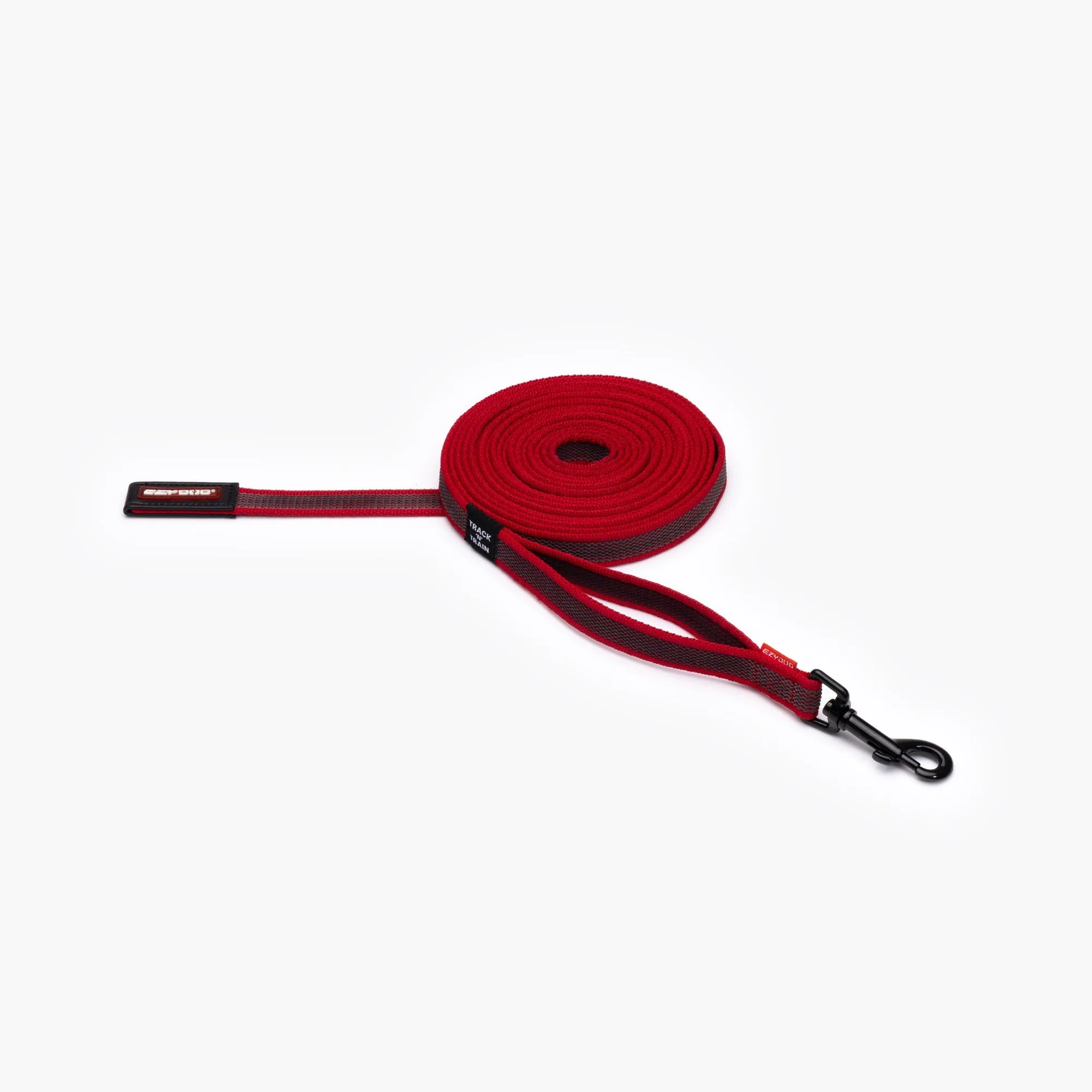
Track 'N' Train™ Leash
-
Track 'N' Train™ Leash: Designed for general training, recall training, and tracking. Hand positioning is most relevant when you are using the leash as a training tool, not just for casual walks.
A simple hand-position routine for recall practice
These steps assume you are in a safe, enclosed area and your dog already has some basic recall understanding. The goal is to make your hand movements predictable so your dog can focus on the cue, not the leash.
- Start with a loose hold and a clear cue: Hold the handle or a loop of the leash in one hand, with the rest of the 16-foot lead gathered loosely in your other hand. Give your recall cue once, using a consistent word or whistle. Keep your hands still as you say it so the cue is not overshadowed by leash movement.
- Use your free hand for the signal, not the leash: If you use a hand signal for recall, such as patting your leg or opening your arms, keep that gesture separate from the hand holding the leash. This helps your dog distinguish between a visual recall signal and random leash handling.
- Gather the leash smoothly as your dog returns: As your dog moves toward you, gather the slack in a hand-over-hand motion rather than letting the leash trail on the ground. The ultra-grippy webbing gives you a secure hold, but keep the gather calm and steady so it does not feel like a correction.
- Reward at your side, then reset: When your dog reaches you, reward and pause briefly. Then release your dog back to the practice area with a clear release cue. Reset your hand position to the loose hold before the next repetition.
Grip habits that keep your recall signals clear
- Keep the leash hand quiet during the cue: Avoid waving or jerking the leash as you call your dog. A still leash hand makes your verbal cue and any separate hand signal easier to read.
- Separate the signal hand from the leash hand: If you use a hand signal, assign it to the hand that is not managing the leash. This prevents the leash from moving every time you signal.
- Hold the slack, not the dog: Gather excess leash in loops rather than wrapping it tightly around your hand. A relaxed gather gives you room to adjust without creating constant tension.
- Use the grippy webbing to your advantage: The Track 'N' Train Leash has ultra-grippy webbing, which can help you maintain a secure hold during hand transitions. Still, keep your grip firm but not white-knuckled so you can respond smoothly.
What the supplied information does not cover
The product information for the Track 'N' Train Leash does not include specific instructions for hand placement, leash-wrap safety, or a step-by-step recall training protocol. The routine above is general training guidance, not a manufacturer-prescribed method. There are also no supplied care instructions for the leash, so follow any care labels that come with the product.
Because the leash is 16 feet long, you will need to judge the right amount of slack for your dog's size, speed, and training level. The supplied information does not specify a maximum dog weight or a recommended distance for recall practice, so choose a safe, enclosed space and adjust based on your dog's behavior.
When a different leash setup might suit you better
If your dog is still learning basic leash manners or you are practicing in a busy area, a shorter training leash may be easier to manage. The Track 'N' Train Leash is designed for training that benefits from extra length, such as recall and tracking. For everyday walks where you want the leash to stay mostly slack, a standard-length leash or a shock-absorbing option may be more practical.
Hand position is only one part of recall training. Your dog also needs clear, consistent cues and rewards for coming when called. Use the leash as a safety line and a training aid, not as a way to force a recall.