Quick Answer
For moving loose soil or mulch, a transfer shovel is the better tool. For digging into hard ground or prying up roots, a round point shovel is the better choice.
Why Shape Matters for Your Task
A transfer shovel has a wider, flatter blade designed to scoop and carry loose material like soil, compost, or gravel. A round point shovel has a pointed, curved blade that penetrates compacted dirt and pries up roots. Using the wrong shape means more effort and less efficiency.
The Handle Difference: Steel vs Fiberglass
Both the Steel Shaft D-Handle Transfer Shovel and the D-Handle Transfer Shovel with Fiberglass Shaft have a D-handle, which gives you a secure two-handed grip for lifting heavy loads. The steel shaft offers exceptional durability and is ideal for frequent, heavy use. The fiberglass shaft provides superior strength and resilience, making it a good choice for tasks where you might stress the handle.
Trade-Offs to Consider
A transfer shovel is not designed for deep digging or prying, so if your primary task is breaking new ground, a round point shovel is necessary. A round point shovel, however, is less efficient for moving large volumes of loose material because its curved blade doesn't hold as much.
Transfer Shovel vs Round Point: Key Trade-Offs
- Blade Shape: Transfer shovel: wide, flat blade for scooping and carrying. Round point shovel: pointed, curved blade for digging and prying.
- Primary Use: Transfer shovel: moving loose soil, mulch, compost, or gravel. Round point shovel: digging holes, breaking ground, prying roots.
- Handle Choice: D-handle transfer shovels offer a secure two-handed grip. Steel shaft (product 2504668) for maximum durability. Fiberglass shaft (product 2504648) for shock absorption and weather resistance. Choose steel for longevity, fiberglass for resilience.
Product Facts
-
Steel Shaft D-Handle Transfer Shovel: The steel handle ensures exceptional durability and long-lasting quality. This makes the steel shaft model a durable, long-term investment for regular heavy use in tough conditions.
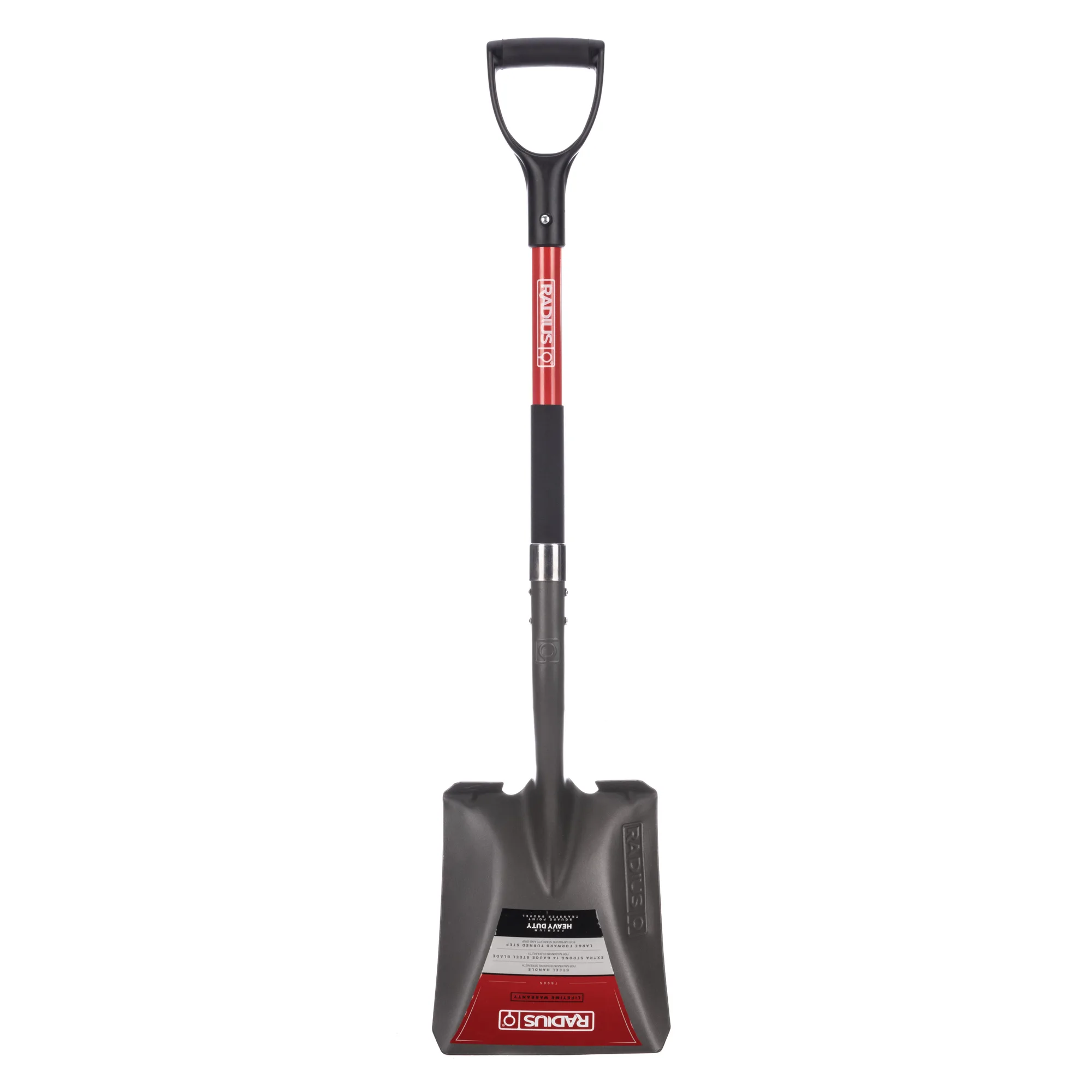
Steel Shaft D-Handle Transfer Shovel
-
D-Handle Transfer Shovel with Fiberglass Shaft: The fiberglass handle offers superior strength and resilience, perfect for heavy-duty tasks. Fiberglass absorbs shock and resists weather, making it a resilient choice if you work on rocky soil or in wet conditions.
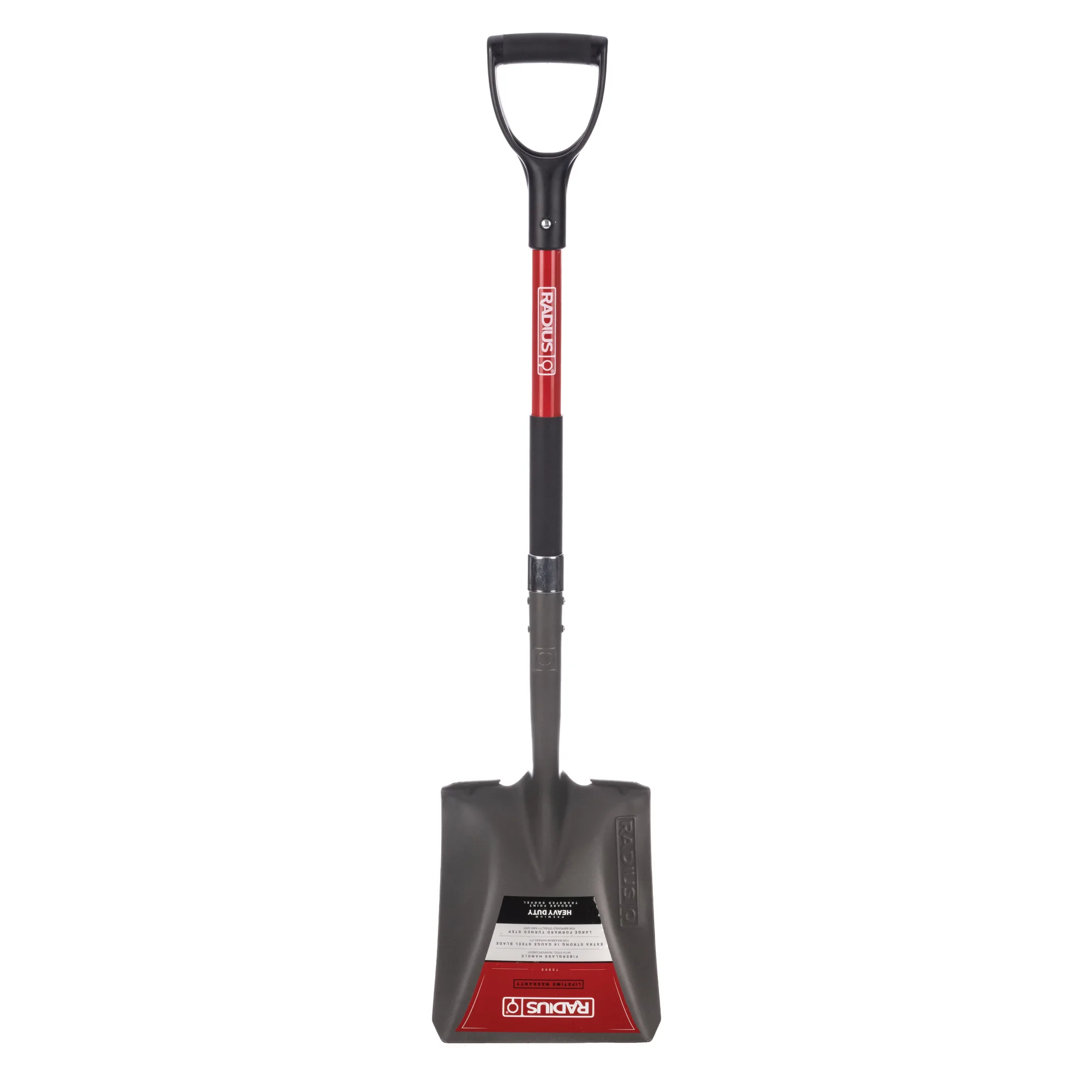
D-Handle Transfer Shovel with Fiberglass Shaft
Which One Should You Choose?
Best for
- Moving loose materials like soil, mulch, or gravel efficiently
- Tasks where you need to scoop and carry, not dig deep
Not for
- Digging into hard, compacted soil or prying up roots (choose a round point shovel)