Quick answer
Choose Trapwords when your group enjoys bluffing, table talk, and watching rivals squirm under a custom list of forbidden words. Choose Decrypto when your group prefers tight, repeatable deduction where every clue you give is a risk you manage across rounds.
The core tension each game creates
Trapwords and Decrypto are both team word games, but they generate pressure from different directions. In Trapwords, one team writes a list of forbidden words before the other team tries to guess a secret word, so the tension comes from social prediction: can you anticipate exactly which obvious clue your opponents will ban? In Decrypto, teams exchange coded clues for numbered words, and the tension is structural. Your own clues become evidence that the opposing team can intercept, so a clue that works this round might expose your code later.
Why the trap list changes who wins
The trap list in Trapwords is written by the opposing team, which means the game rewards players who think about how other people think. A group full of punsters and lateral thinkers will get more mileage out of this than a group that just wants to solve a puzzle quietly. Decrypto, by contrast, rewards consistency and record-keeping. If your group likes revisiting the same clues and building a shared vocabulary over several rounds, Decrypto's structure gives that instinct somewhere to go.
Player count and table fit
Trapwords is built around team-versus-team play, so it needs enough people to split into two sides and keep the guessing lively. Decrypto also runs on teams, but its round structure means fewer players can still feel like a full game because the deduction happens between teams rather than inside one. If your usual table is three or four people, Decrypto tends to hold up better; if you regularly have six or more, Trapwords gives everyone a job.
Where Letter Jam fits in
If your group likes word games but not team-versus-team conflict, Letter Jam is the cooperative alternative: players help each other build words from letter cards they cannot see themselves. It is a different kind of tension, more about collective problem-solving than outsmarting an opponent, so it is worth knowing about before you commit to either Trapwords or Decrypto.
Trade-offs to weigh before you buy
- Bluffing and table talk: Trapwords leans on social reads and banter because the opposing team writes the forbidden words. Pick it if your group talks loudly and enjoys needling each other.
- Deduction and record-keeping: Decrypto rewards players who track clues across rounds and stay consistent. Pick it if your group likes quiet analysis more than negotiation. If your table splits between talkers and thinkers, the thinker-heavy group will usually prefer Decrypto.
- Team size and setup: Trapwords needs two clear teams to work, so it shines at larger tables. Decrypto's team structure holds up better when you only have a few players.
- Cooperative alternative: Letter Jam removes the opposing team entirely and turns word-building into a shared puzzle for 2-6 players. Consider Letter Jam if your group dislikes losing to another team.
Product facts
-
Letter Jam: Letter Jam is a 2-6 player cooperative word game where players hold letter cards so only the other players can see them. This is the cooperative option if your group wants word guessing without direct team conflict.
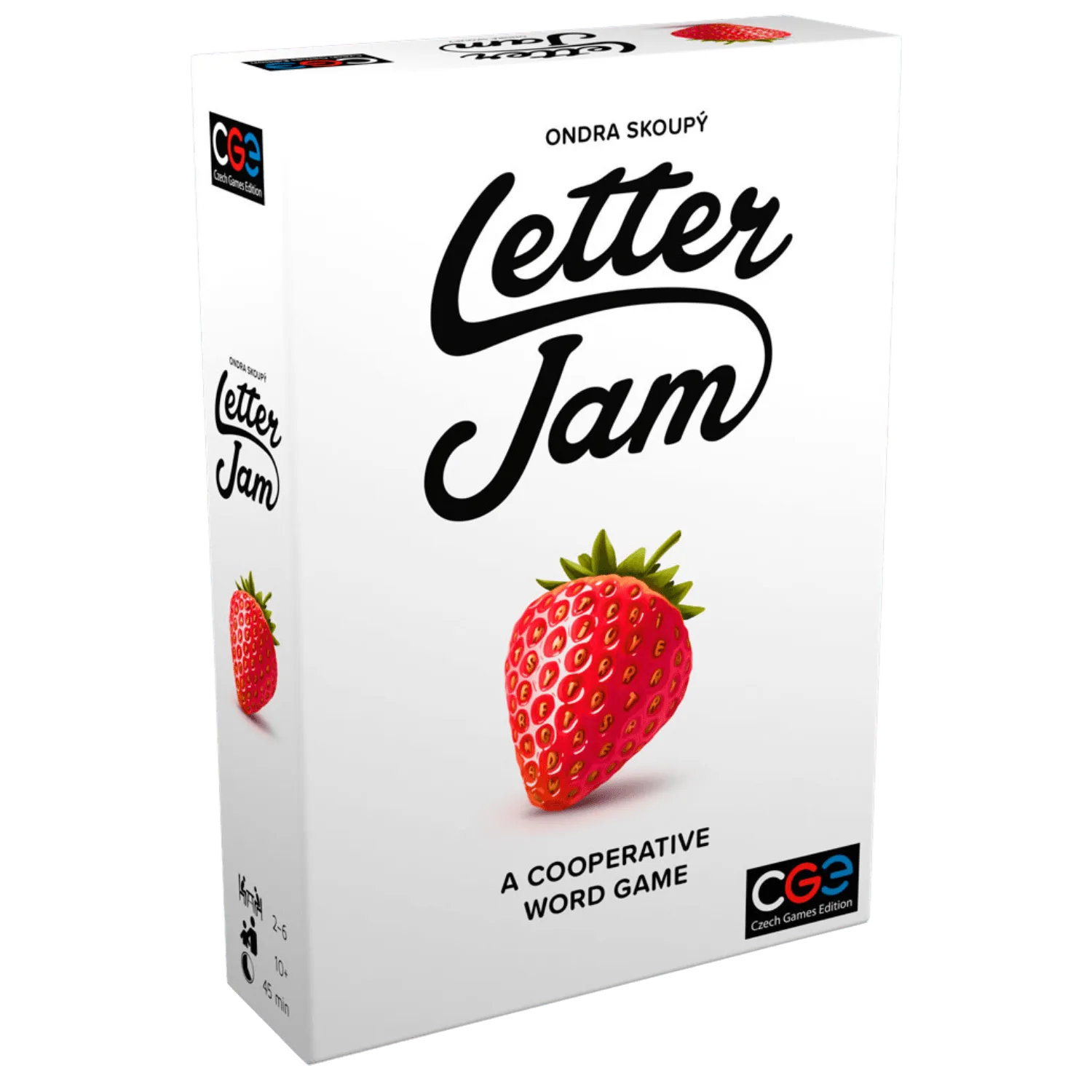
Letter Jam
Which game should you get?
Best for
- Groups of six or more who enjoy bluffing and table talk
- Players who like writing custom restrictions to trip up their friends
- Parties where loud, fast rounds matter more than deep deduction
Not for
- Small groups of three or four who want a full-feeling game
- Players who prefer quiet deduction over social negotiation
- Groups that dislike direct team-versus-team competition and would rather cooperate