Quick answer
Replace trauma kit consumables at least once a year, or immediately after any use, expiration date, or damage. Check tourniquets, gauze, chest seals, and tape every six months, and restock items you use for training right away so your kit stays mission-ready.
What drives the replacement clock in a trauma kit
Three clocks run at once: the manufacturer's expiration date, the condition of the packaging, and whether the item has been opened or used. Expiration dates matter most for sterile items like hemostatic gauze and chest seals. Packaging condition matters for everything—a crushed box or a pinhole in a sterile pouch means the item is no longer reliable. Use is the fastest clock: once a tourniquet is applied in training or a real event, it should be replaced or retired according to the maker's guidance.
How to set a restocking schedule that actually works
Pick two dates a year—say, when you change smoke detector batteries and when you do your annual gear check—and do a full inventory on each. Between those deep checks, do a quick visual scan monthly. Keep a small log taped inside the kit lid with columns for item, date checked, and action taken. That log turns a vague 'someday' task into a five-minute habit.
- Monthly: confirm the kit is where it belongs, latches are intact, and nothing is visibly crushed or wet.
- Every six months: check expiration dates on gauze, chest seals, and medications; rotate anything expiring within 90 days to the front.
- Annually: replace all expired consumables, inspect tourniquets for wear, and restock anything used for training.
- After any use: replace every opened item before the kit goes back into service.
Which items expire fastest—and which last longer
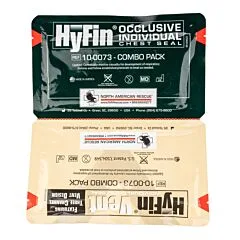
Sterile hemostatic gauze and chest seals typically carry the shortest shelf life because their sterile barrier and active ingredients degrade. Nitrile gloves and trauma shears usually last longer but still need inspection for tears, cracks, or rust. Tourniquets are the exception: they do not 'expire' in the same way, but UV exposure, heat, and repeated folding can weaken them. Follow the maker's replacement guidance for tourniquets and mark the date you put them in service.
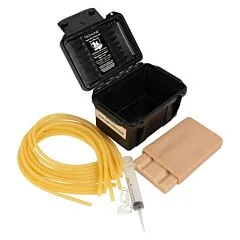
If a kit includes a training simulator, keep it separate from your live supplies so you never confuse practice gear with ready-to-use stock. The Techline Trauma IV in a Box Simulator is designed for hands-on IV training and belongs in a skills bag, not in a trauma kit you would grab in an emergency.
How to restock without overbuying
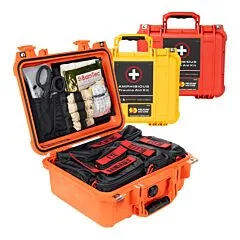
Count what you actually carry, not what you wish you carried. A compact kit like the Amphibious Trauma Aid Kit (ATAK) is organized for rapid response, so match your restock order to its existing layout rather than adding items that force you to repack under stress. Buy one spare of each critical consumable and store it in a labeled 'ready reserve' pouch. When you use the spare, that empty slot is your signal to reorder—no guesswork.
For teams, assign one person to own the restock log and set a recurring calendar reminder. For individuals, tie the check to a routine you already keep, like daylight saving time changes or the start of a new season.
Trauma kit restocking FAQ
How often should I replace hemostatic gauze?
Follow the expiration date printed by the manufacturer. If none is visible, replace it annually. Any gauze that has been opened, even if unused, should be replaced. Write the replacement date on the package when you first stock it.
Do tourniquets expire?
Tourniquets do not carry a standard expiration date, but heat, sunlight, and repeated folding can degrade the materials. Inspect for cracks, fading, or stiffness and replace per the maker's guidance. Mark the in-service date on the tourniquet and replace it after any real or training use.
What if my kit has no expiration dates on the packaging?
When dates are absent, treat the item as if it expires one year from purchase. Note the purchase date in your kit log and replace on that anniversary. A simple log solves the missing-date problem without guesswork.
Should I restock items I used for training?
Yes. Training use opens packaging and exposes items to handling, so those supplies are no longer sterile or reliable. Replace them before the kit goes back into service. Keep training supplies separate from live kit stock to avoid confusion.
Products that support a restocking routine
- Amphibious Trauma Aid Kit (ATAK): The Amphibious Trauma Aid Kit (ATAK) is a compact, mission-ready medical kit designed to provide essential trauma care in demanding environments, with organized access for rapid response. A kit with a fixed, organized layout makes it easier to spot missing or expired items during a restock check and to return everything to its place.
- Techline Trauma IV in a Box Simulator: The Techline Trauma IV in a Box Simulator is a training aid designed for practicing intravenous (IV) access in a simulated trauma setting. Keeping a dedicated simulator lets you build skills without consuming your live trauma supplies, which reduces how often you need to replace stock.