Quick Answer
Choose tray play when you want the lowest-mess, easiest-to-clean sensory option for babies and toddlers who put everything in their mouths. Choose sensory bins when your child is past the mouthing stage and you want longer, deeper open-ended play with fillers like rice, water beads, or sand. Many families use both: trays for daily quick play, bins for supervised weekend sessions.
tray play
If you have ever swept rice off the kitchen floor for the third time in one week, you have probably wondered whether tray play is the smarter mess-free alternative to a full sensory bin. Both approaches give children tactile, calming sensory input. The difference is in containment, setup time, and how much supervision each one demands.
This comparison looks at the real trade-offs between tray play and sensory bins using the tools and toys you likely already own or are considering. You will see which setup fits babies, which suits older kids, and how to combine both without turning your living room into a cleanup project.
What Counts as Tray Play?
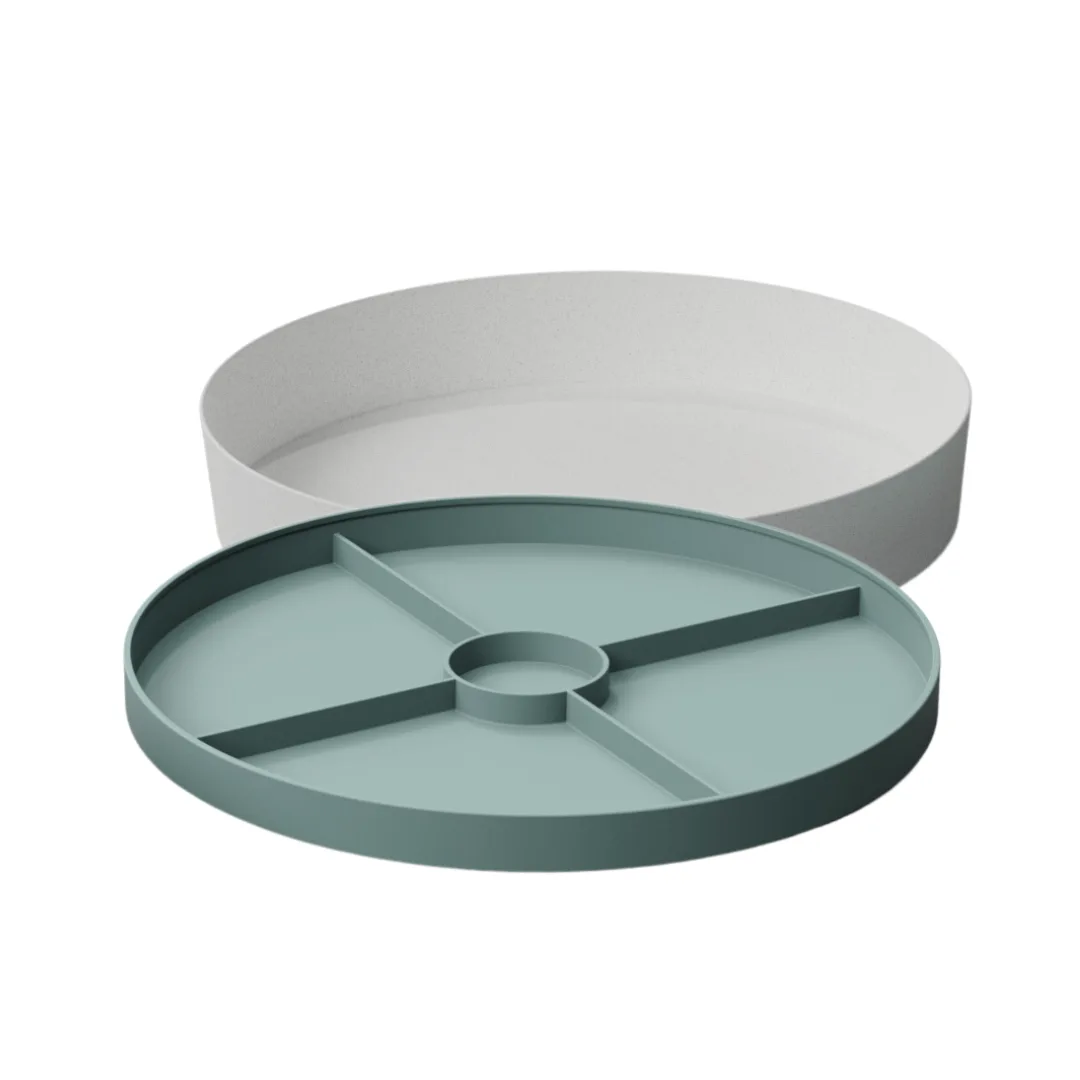
Tray play means offering sensory input on a defined, contained surface: a highchair tray, a baking sheet with a lip, a shallow plastic tray, or a dedicated play tray. You place one or two safe items on the tray and let your child explore. Because the surface has edges, loose pieces stay put far better than they would on a floor or table.
The biggest advantage is speed. Setup takes seconds, cleanup is a wipe-down, and you can do it in a highchair while dinner cooks. The trade-off is limited volume: a tray holds a few items, not a deep fill of rice or water beads. Tray play works best for mouthing babies and toddlers who need safe, chewable sensory tools rather than loose fillers.
- Use a tray with a raised lip so pieces cannot roll off easily.
- Stick to one or two items at a time for babies under 18 months.
- Keep a damp cloth nearby so cleanup stays under a minute.
What Counts as a Sensory Bin?
A sensory bin is a container filled with a base material, such as rice, dried beans, water beads, sand, or shredded paper, plus scoops, cups, and small toys. The depth and volume are the point: children dig, pour, bury, and scoop, which builds fine motor skills and sustained attention.
The trade-off is supervision and cleanup. Loose fillers escape, and many common bin bases are choking hazards for children who still mouth objects. Sensory bins also need a dedicated container, a splat mat, and a storage plan. For families short on space or time, that overhead is the main reason they look for sensory bin alternatives.
- Reserve bins for children past the mouthing stage, typically age three and up.
- Place the bin on a mat or towel to catch spills before they spread.
- Store filler in an airtight container so setup stays quick next time.
Mess, Setup, and Cleanup Compared
Tray play wins on mess control. Edges contain small pieces, and there is no loose filler to scatter. Setup is immediate, and cleanup is a single wipe. If your child loses interest after two minutes, you have lost almost no time.
Sensory bins win on engagement duration. A deep bin keeps children playing far longer because there is more to do, but that engagement comes with a bigger cleanup footprint. You will likely vacuum or sweep afterward, and you need to supervise closely to keep filler out of mouths and off carpets.
- Choose tray play on busy weeknights and bins for unhurried weekend play.
- If you hate vacuuming, tray play is the lower-risk daily option.
Safety and Age Fit
For babies and young toddlers, tray play is the safer default because you control exactly what goes on the tray. Food-grade silicone teethers and sensory toys are designed to be chewed, grabbed, and explored without small parts. That makes tray play a natural fit for the mouthing stage.
Sensory bins introduce loose, small materials that are not safe for children who still put everything in their mouths. If your child is past that stage, bins add valuable variety. If not, tray play with chew-safe toys gives you the sensory benefit without the choking risk.
- Match the setup to your child's mouthing stage, not their age on paper.
- When in doubt, choose the option with fewer loose parts.
How to Blend Both Approaches
You do not have to pick a side. Many families use tray play as the everyday routine and bring out a sensory bin once or twice a week. The tray handles quick regulation breaks and mouth-safe chewing; the bin handles longer, messier, open-ended exploration.
A practical bridge is to put sensory toys that double as teethers on a tray for babies, then move those same toys into a shallow bin with a safe filler once your child stops mouthing. That way the toys you already own keep working as your child's needs change.
- Start with a tray and add a bin only when mouthing has stopped.
- Reuse the same toys across both setups to get more value.
Trade-Offs at a Glance
- Mess control: Tray play contains pieces behind a raised edge, while sensory bins rely on a container and mat to hold loose filler. Pick trays if you want cleanup measured in seconds.
- Play duration: A deep bin offers more volume to dig and pour, which holds attention longer than a few items on a tray. Pick bins if your child needs extended, self-directed play.
- Age and safety: Trays pair well with chew-safe silicone toys for mouthing babies, while bins introduce small loose materials that are not safe for children who mouth objects. Match the setup to your child's mouthing stage first.
- Setup and storage: Tray play needs almost no preparation or storage space, while bins require a container, filler storage, and a spill mat. Pick trays if space or time is tight.
Sensory Toys That Work on a Tray
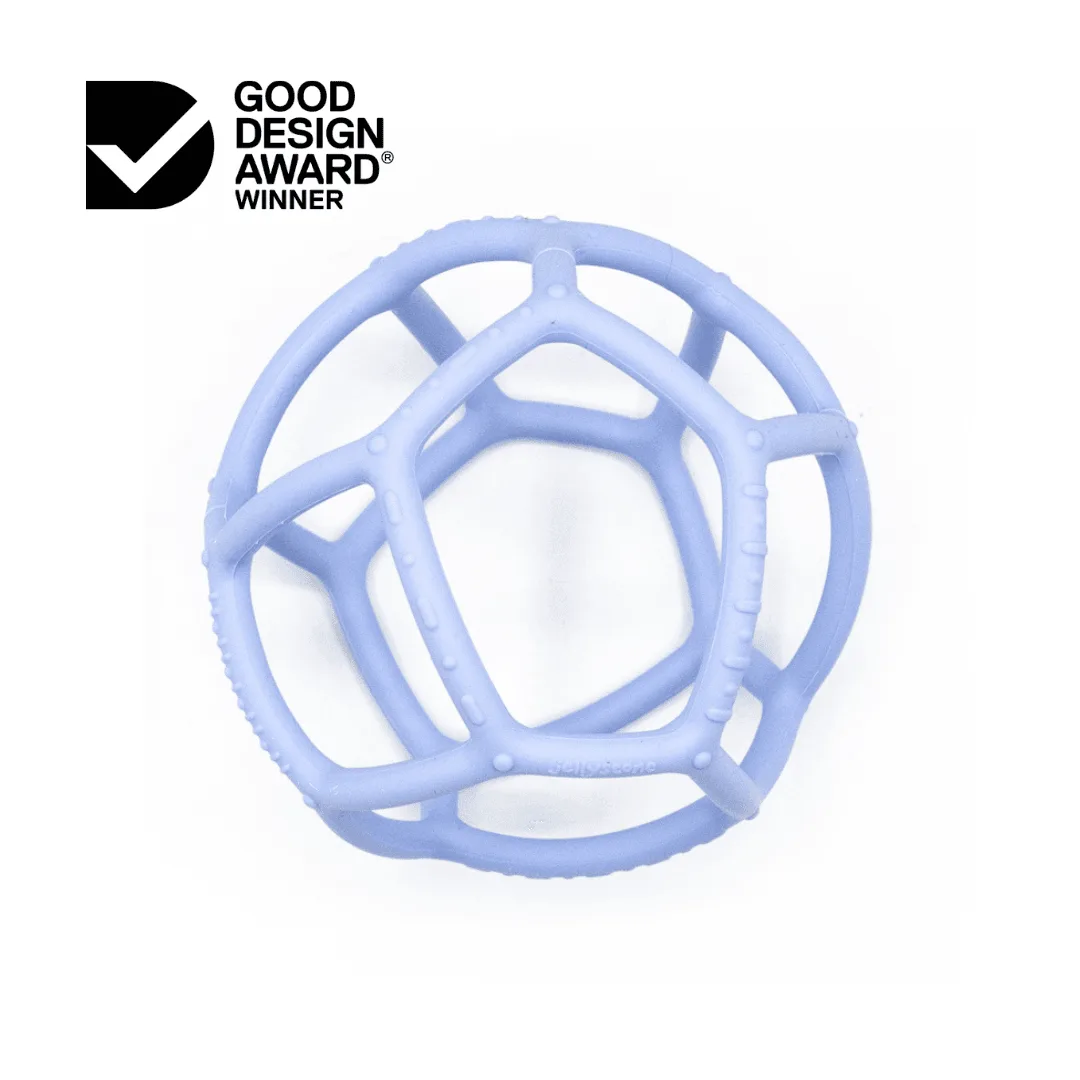
- Sensory Ball: A teether and toy rolled into one, made from food-grade silicone and free from nasty chemicals, with an open frame design that is easy for babies to grab. It suits tray play for mouthing babies because it is safe to chew and simple to wipe clean after use.
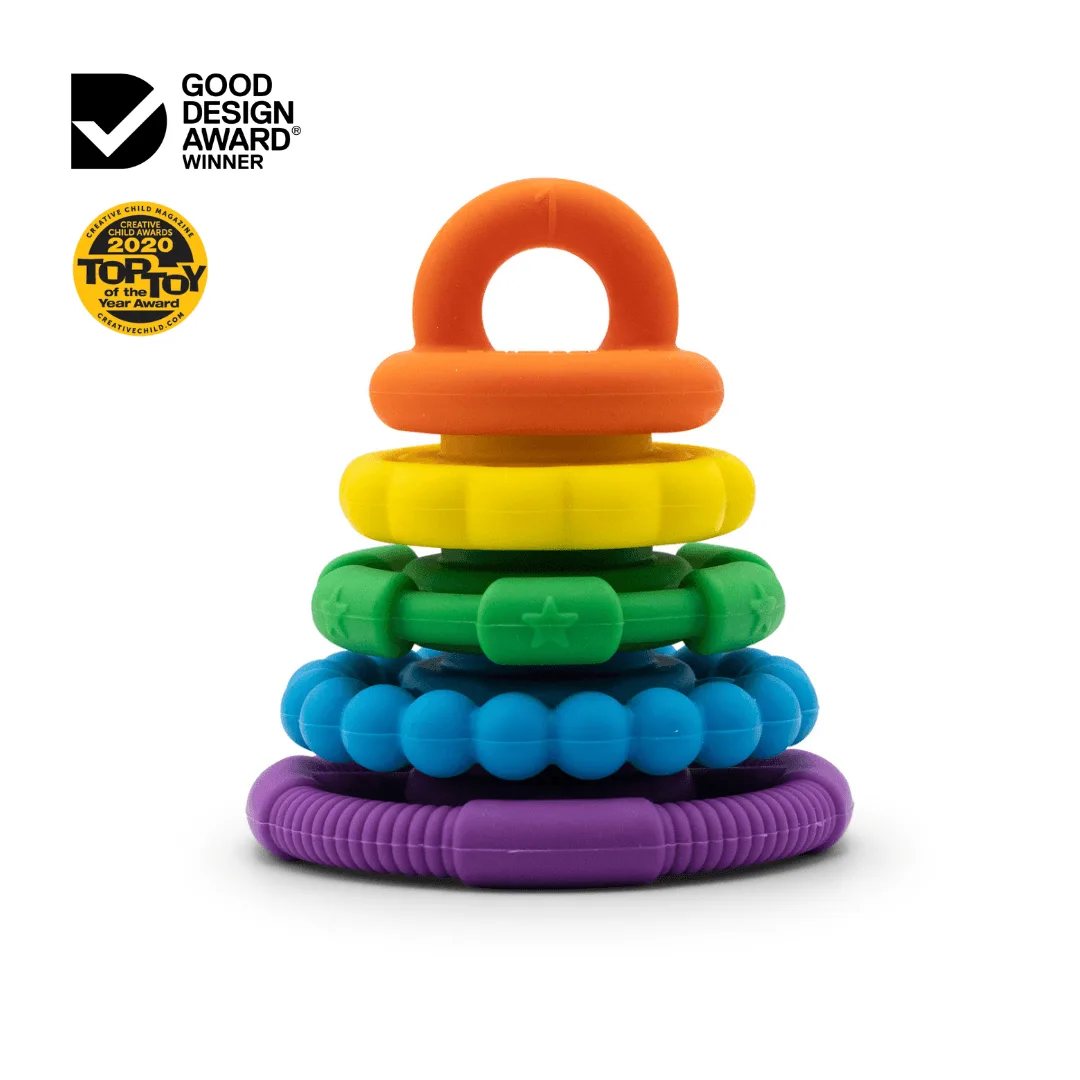
- Rainbow Stacker and Teether Toy: A multi-purpose toy whose silicone stacking rings double as soothing teethers, and which older children use to practice hand-eye coordination by stacking. One tray item covers both the chewing stage and later stacking play, so it grows with your child instead of being outgrown.
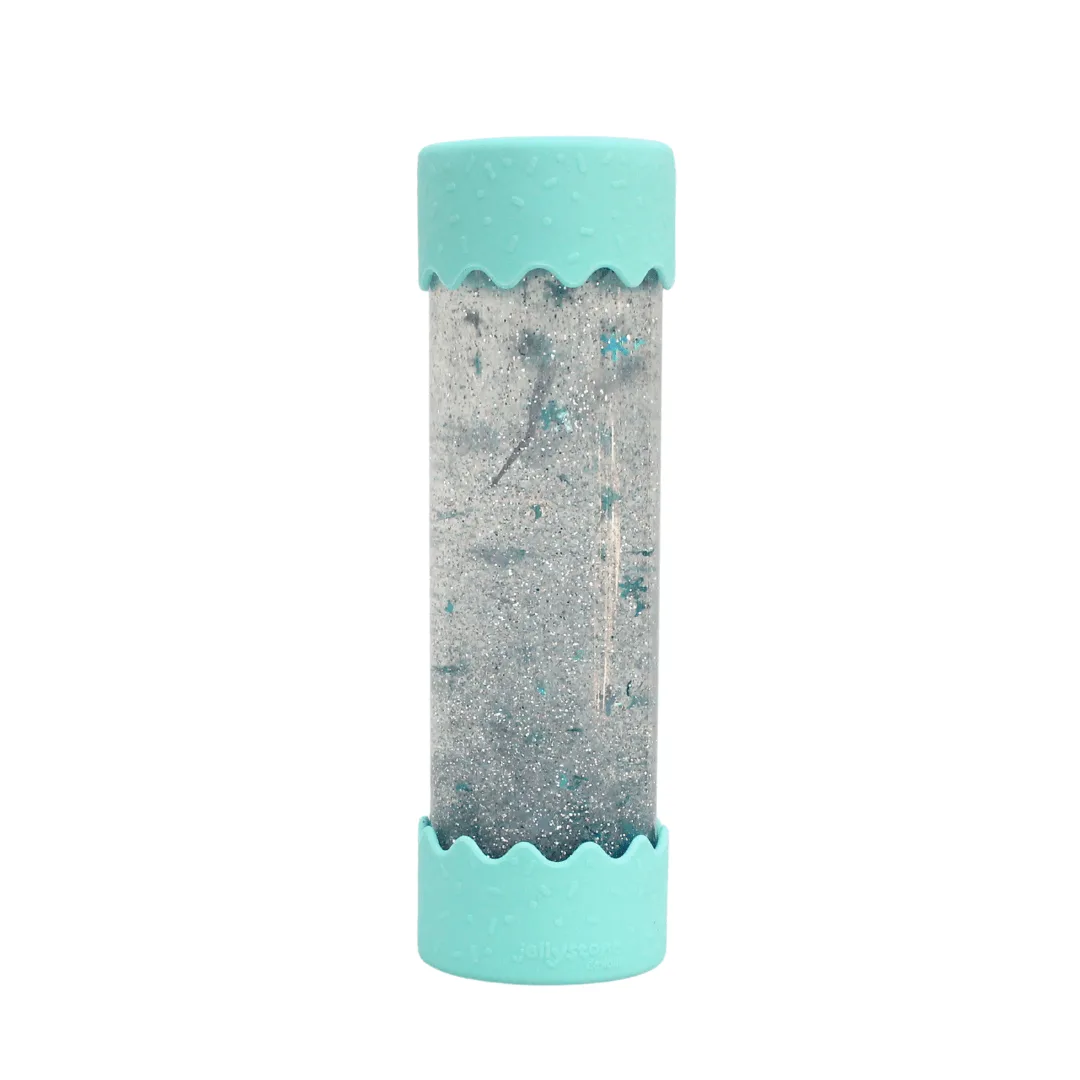
- Baby Calm Down Bottle: A mini, baby-friendly calm down bottle prefilled with sparkles and water and totally sealed. Because it is sealed, it adds visual sensory input to a tray with no loose filler and nothing to spill.
Which Setup Fits Your Child?
Best for
- Babies and toddlers who still mouth objects and need chew-safe sensory input
- Families with limited space, time, or tolerance for cleanup
- Quick sensory breaks during dinner prep or transitions
Not for
- Children past the mouthing stage who need long, deep, open-ended play sessions
- Families specifically wanting scooping, pouring, and burying with loose fillers
Tray play and sensory bins are not rivals so much as two tools for different stages. Start with a tray and chew-safe silicone toys for babies, then add a bin once mouthing stops and your child is ready for loose fillers. That progression keeps sensory play low-mess, safe, and genuinely useful at every age.