Two Small Italian Pastas, One Clear Difference
Tre Mari Tubettini and Tre Mari Sedanini are close cousins. Both are made in Italy, both come in 500g packs, and both list the same cooking window of 10-12 mins. The real decision comes down to shape: Tubettini are short, hollow tubes, while Sedanini are slender, slightly curved rods. That difference changes how each one holds sauce, how it feels in soup, and what kind of dish it suits best.
Because the two products share so much on paper, this comparison focuses on what the shape does in the kitchen. Where the supplied information does not confirm a detail, such as exact dimensions or recommended uses, we say so rather than guess.
What the Labels Confirm
-
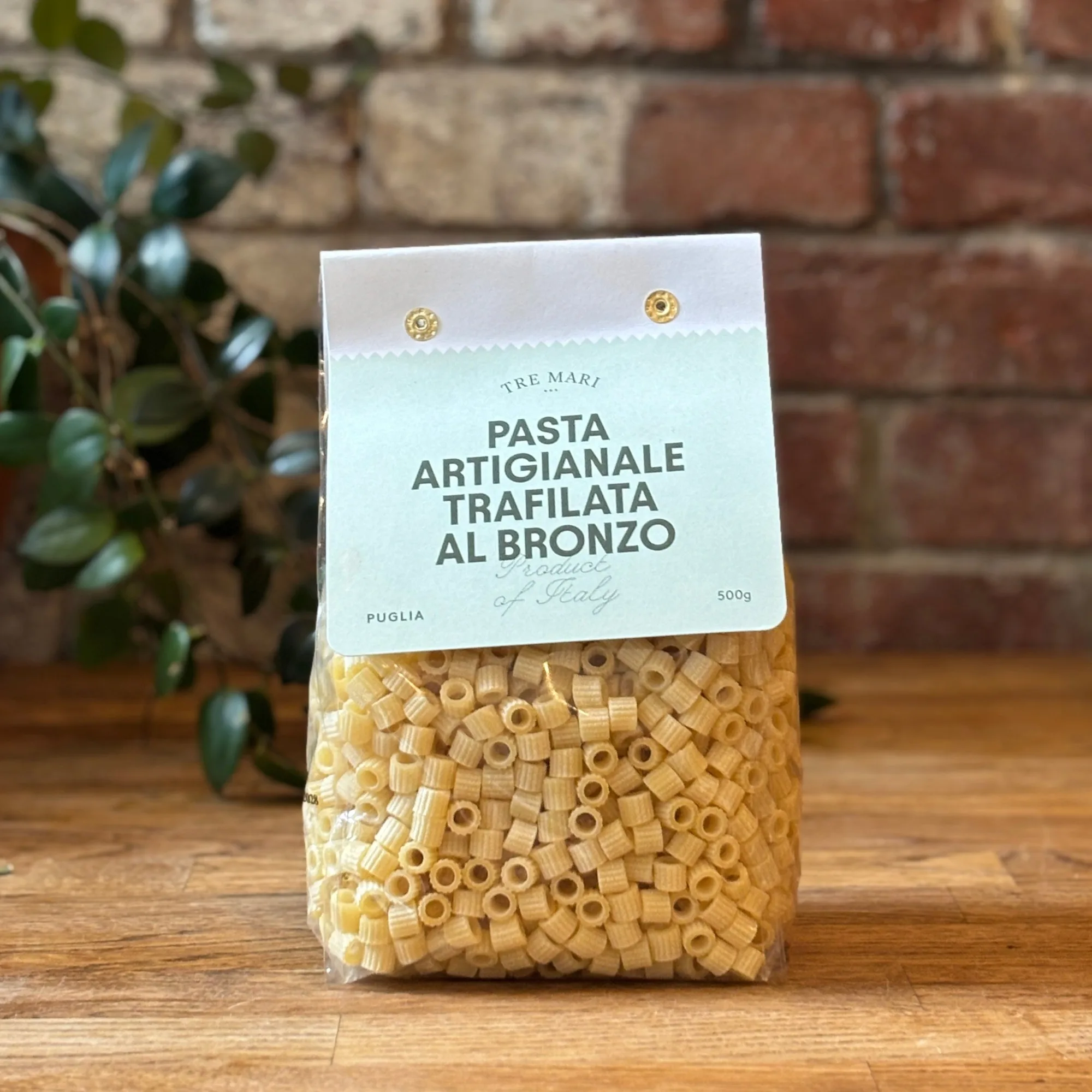
Tre Mari Tubettini: Tre Mari Tubettini, made in Italy, 500g net weight, cooking time 10-12 mins. Confirms the basics you need for portioning and timing before you choose between the two shapes.
Tre Mari Tubettini
-
Tre Mari Sedanini: Tre Mari Sedanini, made in Italy, 500g net weight, cooking time 10-12 mins. Shows that Sedanini matches Tubettini on origin, pack size and cooking window, so shape is the deciding factor.
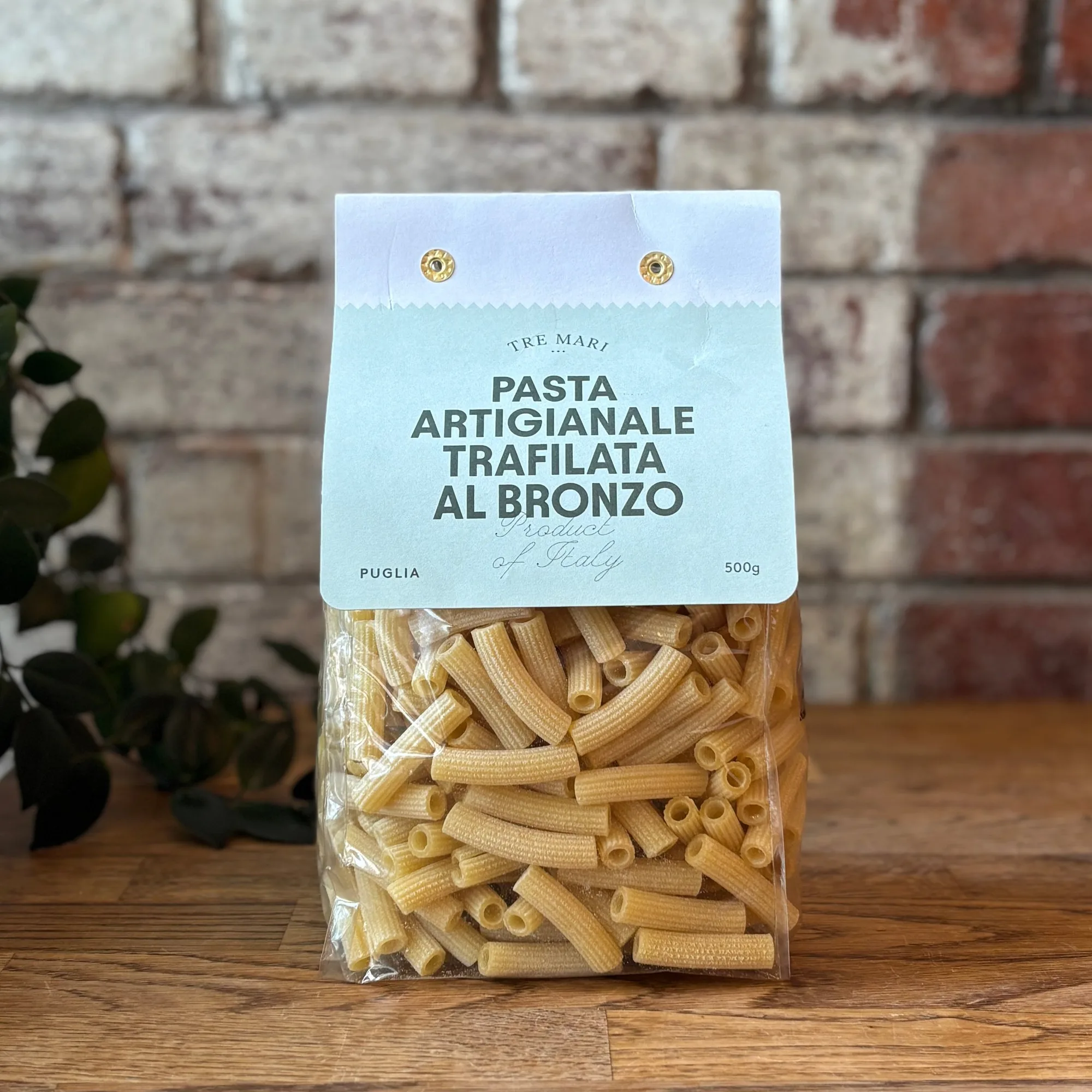
Tre Mari Sedanini
How the Shapes Compare in the Kitchen
Neither product record lists exact dimensions, so judge the shapes by their familiar form rather than by measurements.
- Shape and texture: Tubettini are short hollow tubes; Sedanini are thin, elongated rods. Tubettini tend to trap liquid inside the tube, while Sedanini stay slim and separate more easily.
- Best for soup: Tubettini's hollow shape is a natural fit for broth-based soups, where the tubes fill with liquid. Sedanini also work in soup but stay more slender and less scoopable.
- Best for sauce: Sedanini's long, thin form carries thicker sauces and clings well in a pan. Tubettini suit lighter sauces that pool inside and around the tubes.
- Baked dishes: Both can go into a baked pasta, but Tubettini's hollow shape holds ricotta or a loose sauce more readily. The supplied records do not give baking instructions, so follow your recipe.
- Cooking window: Both list 10-12 mins. Start tasting at the earlier end of that window, since the exact time depends on your pot, heat and preferred bite.
When to Reach for Tubettini
- You are making brothy soup: The hollow tube catches broth and small vegetables, making each spoonful more substantial.
- You want a pasta that holds a loose sauce: Tubettini's interior gives runny or light sauces somewhere to settle.
- You are feeding mixed ages: Small tubes are easy to scoop and chew, which suits family bowls and casual suppers.
When to Reach for Sedanini
- You want a thicker sauce to cling: The slender rod shape gives a meaty or tomato-heavy sauce plenty of surface to coat.
- You are tossing pasta in a pan: Sedanini stay separate and mix evenly with vegetables, olives or a drizzle of oil.
- You prefer a firmer, more defined bite: The thin, straight form keeps its identity on the plate rather than blending into the sauce.
What the Records Do Not Tell You
The supplied information does not confirm exact piece dimensions, recommended serving sizes, or specific recipe pairings for either pasta. It also does not include storage or care instructions. These are gaps in the available record, not signs that the products lack those details. If you need precise measurements for a recipe, treat the shape descriptions as a guide and adjust as you cook.
Both pastas list the same 10-12 mins cooking window, so timing alone will not separate them. Use the shape test instead: choose Tubettini when you want hollows to catch broth or sauce, and Sedanini when you want slim strands that coat evenly.
The Practical Verdict
If your week leans toward soup, Tubettini is the more natural pick. If you mostly toss pasta with sauce or vegetables, Sedanini earns its place. Because both come in 500g packs at the same cooking window, buying one of each lets you match the shape to the dish rather than committing to a single style.
Whichever you choose, taste at the start of the 10-12 mins window and pull the pasta when it suits you. The shape difference is real, but the cooking window is shared, so your own bite preference is the final judge.