Quick answer
A well-fitting triangle bikini top sits flat against your bust with no gaping at the cup edge, the band stays level and snug around your ribcage, and the straps hold the triangles in place without digging into your shoulders or neck. Adjust the straps and back clasp before judging the size.
Why triangle tops feel different from bras
Triangle bikini tops are built for adjustability, not structured support. Most have sliding triangles and tie or clasp closures, so the same top can fit a range of bodies—but only if you set it up correctly. A bra holds its shape on its own; a triangle top relies on you to position the cups and tension the straps. That is why two people in the same size can get very different coverage.
Coverage is a trade-off, not a size problem
If you want more coverage from a triangle top, you can usually slide the cups outward along the straps or choose a larger size, but that may loosen the band. Smaller cups give less coverage but a tighter, more secure feel. Decide which matters more before you size up or down.
When to stop adjusting and change size
Straps can fix tension and position, but they cannot fix a band that is too loose or cups that are too small. If the band rides up your back or the cups leave red marks and spill over, adjusting further will not help—try a different size. If the band is snug and level but the cups gape, tighten the straps first before sizing down.
How to get the right triangle bikini top fit
- 1. Start with the band, not the straps: Fasten the back clasp or tie the band so it sits level around your ribcage—snug enough that you can fit two fingers under it, but not so tight that it digs in. Common mistake: tightening the straps first, which pulls the band up and makes it ride.
- 2. Position the triangles over your bust: Slide each triangle along the strap so the cup covers the center of your bust, with the apex pointing slightly outward. Check that the bottom edge sits flat against your ribcage, not floating. Common mistake: pulling the cups too high, which reduces coverage and creates gaping.
- 3. Adjust strap length for lift and security: Tighten the straps evenly until the top feels secure when you lift your arms and twist your torso. You should be able to take a deep breath without the band shifting. Common mistake: over-tightening one side, which twists the cups off-center. If the straps dig into your shoulders or neck, loosen them slightly and check whether the band is doing its share of the support.
- 4. Test movement and coverage: Bend forward, reach overhead, and rotate your shoulders. The triangles should stay in place without exposing your bust or requiring constant readjustment. If the top slips, first try shortening the straps a little; if it still slips, the band may be too loose or the cups too small.
- 5. Fix common slipping and gaping: For slipping straps, tighten them and check the band tension. For gaping cup edges, try sliding the triangles closer together or sizing down if the band is already snug. For digging, loosen the straps and confirm the band is not too tight. A top that needs constant tugging after these adjustments is the wrong size or shape for you.
- 6. Choose your size based on band fit first: Use your underbust measurement to pick the band size, then adjust the straps for your bust. If you are between sizes, size up for more coverage or size down for a tighter band—but expect a trade-off. Common mistake: sizing up to fix gaping cups, which usually makes the band too loose.
Product example
-
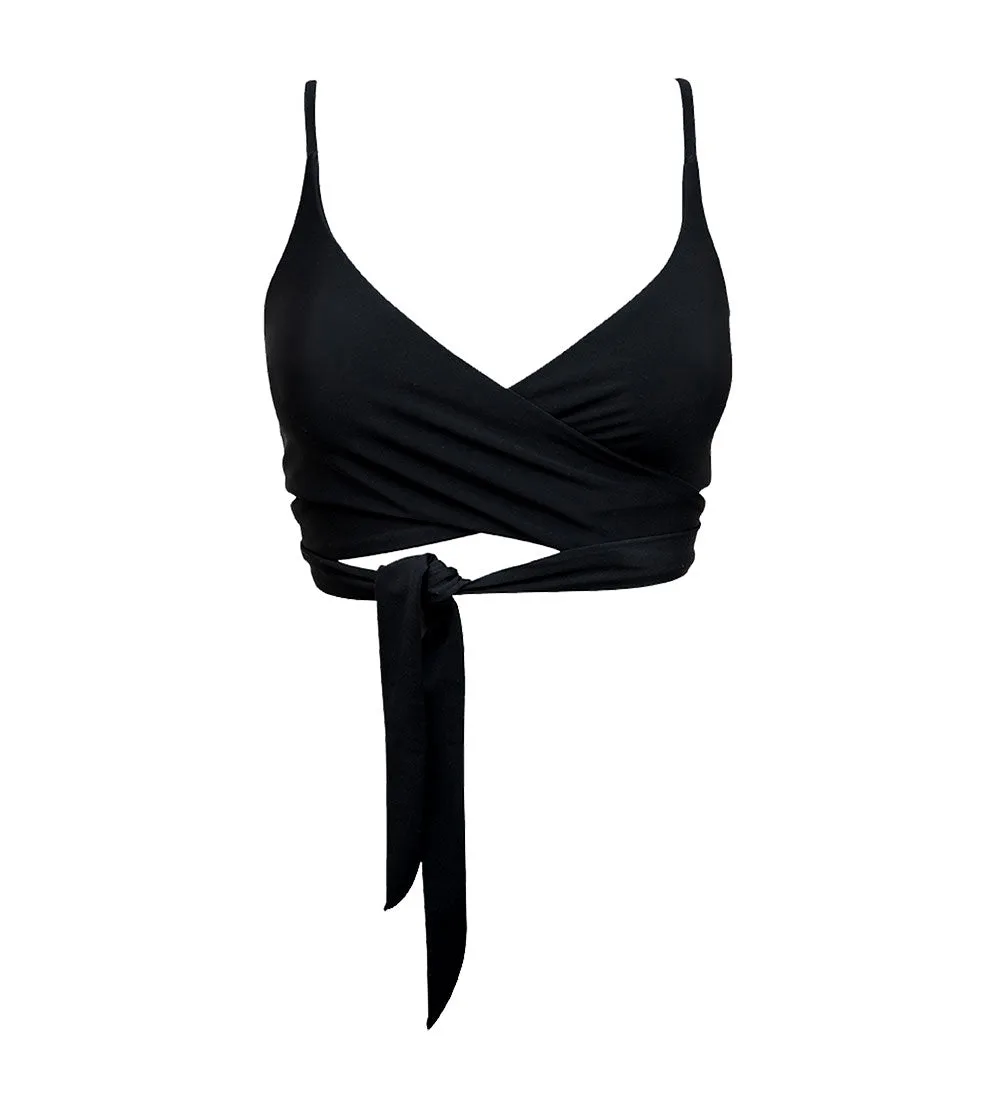
Triangle: Wireless, double-lined triangle top with fully adjustable straps and a gold rear clasp, available in XS–L. The double lining adds opacity and structure without underwire, and the adjustable straps let you fine-tune lift and coverage for small or fuller busts.

Triangle