What a Small Triangular Block Does Differently
A standard rectangular block gives you flat, even support. A triangular block, especially a small pair like the MeFree Small Yoga Triangular Blocks, changes the game by offering angled surfaces that let you adjust height and tilt within a single prop. That angled design gives you more flexibility in how you position the block under your hand, foot, or hip.
If your practice focuses on precise alignment—common in Iyengar yoga—the small size (13 cm length × 10 cm breadth × 16.5 cm height) keeps the block close to your body without crowding your stance. It weighs only 0.3 kg per block, making it easy to carry to the studio or stash in a yoga bag.
MeFree Small Triangular Blocks at a Glance
-
Triangular Block- Small Pair: Dimensions: 13 cm length × 10 cm breadth × 16.5 cm height; weight: 0.3 kg per block. The compact size supports precise placement without taking up extra mat space, and the light weight makes the pair easy to transport.
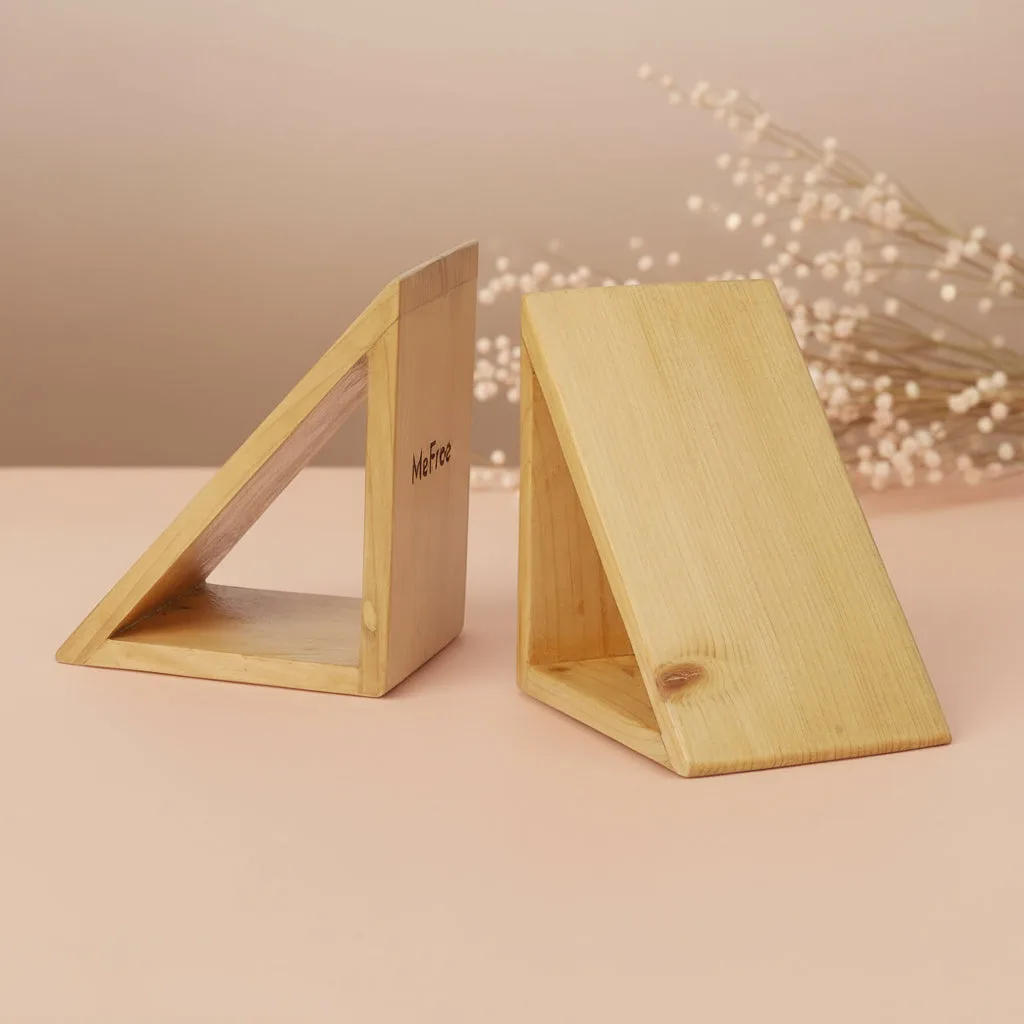
Triangular Block- Small Pair
-
Triangular Block- Small Pair: Angled design allows different height options and positioning. You can choose the block's orientation to match the depth of your pose, giving you more control over alignment than a fixed-height rectangle.
-
Triangular Block- Small Pair: Handcrafted pinewood with a solid construction that ensures stability during use. Wood provides a firm, non-slip surface that supports weight without compressing, unlike foam blocks.
-
Triangular Block- Small Pair: Designed for Iyengar Yoga practitioners and suitable for both beginners and experienced yogis. The block's shape and size are optimized for alignment-focused practices, but anyone can use it to make poses more accessible.
Choosing Between a Triangular Block and a Standard Block
The main trade-off is versatility versus specificity. A standard rectangular block gives you three flat heights and a broad surface for support. A triangular block gives you angled options that can help you fine-tune the tilt of your pelvis or the angle of your hand in standing poses like Utthita Trikonasana (Triangle Pose) and Virabhadrasana II (Warrior II).
If you primarily need a prop for seated poses, reclining chest openers, or restorative work, a rectangular block may serve you better. If your practice emphasizes alignment in standing and balancing poses, the triangular block's angled edges let you make micro-adjustments that a flat block cannot.
How to Decide if a Small Triangular Block Pair Is Right for You
- Check your practice style: If you regularly do Iyengar yoga or alignment-driven standing poses, the angled support matches that method. For general vinyasa or restorative, a standard block may be more versatile.
- Consider portability: At 0.3 kg each, this pair is light and compact enough to carry daily. If you travel to a studio, the small size fits easily into a yoga bag.
- Assess the poses you use most: The block is designed to support Utthita Trikonasana and Virabhadrasana II. If your routine includes those poses frequently, the triangular shape adds value.
- Think about surface preference: Pinewood is firm and stable but does not compress. If you prefer a softer surface under your hands or knees, a foam block may be more comfortable.
Caring for Your Pinewood Triangular Blocks
Wood blocks require a different care routine than foam. Gently dust the surface with a dry, soft cloth to remove loose dirt and dust. Avoid soaking the wood or using harsh cleaners, as moisture can warp the natural material. Store them in a dry area to keep the finish intact.