The short answer: apply it after serum, morning or night
True Balance Gel Cream is a moisturizer, so it belongs near the end of your skincare routine — after cleansing and after any serum you use, but before sunscreen in the morning. Its gel-to-cream formula is designed for oily and acne-prone skin, which makes it a sensible fit for combination skin where the T-zone gets shiny while cheeks may feel normal or slightly dry.
You can use it in the morning, at night, or both. The supplied product information does not specify a required frequency, so let your skin's comfort guide you rather than following a fixed schedule.
How to layer True Balance Gel Cream with serum
Order matters more than speed. Apply products from lightest to heaviest so each layer can settle before the next.
- Start with clean skin: Cleanse and gently pat dry. If you use a toner or essence, apply it now and give it a moment to absorb.
- Apply your serum: Press or pat your serum over the face, concentrating on areas that need it. Let it absorb for about a minute before moving on.
- Apply True Balance Gel Cream: Smooth a small amount over the face, including the oily T-zone. The gel-to-cream texture spreads easily, so start with less than you think you need and add more only if skin feels tight.
- Finish with sunscreen in the morning: If it is your morning routine, follow with a broad-spectrum sunscreen as your final step. At night, the gel cream can be your last layer.
Why a gel cream suits combination skin
Combination skin often needs a moisturizer that hydrates without leaving an oily film. True Balance Gel Cream is formulated with natural actives and plant stem cells from Moringa and Noni, which the catalog describes as known to detoxify the skin, reduce sebum production, and minimise the appearance of pores. That makes it a reasonable choice for a lightweight moisturizer for an oily T-zone.
The gel-to-cream texture is the practical detail: it starts light and spreads like a gel, then settles like a cream. For combination skin, that means you can apply one product across the whole face rather than switching between a gel for the T-zone and a richer cream for the cheeks.
What the catalog confirms about True Balance Gel Cream
-
True Balance Gel Cream: Gel-to-cream formula designed for oily and acne-prone skin. Explains why it can work as a single moisturizer for combination skin without feeling heavy.
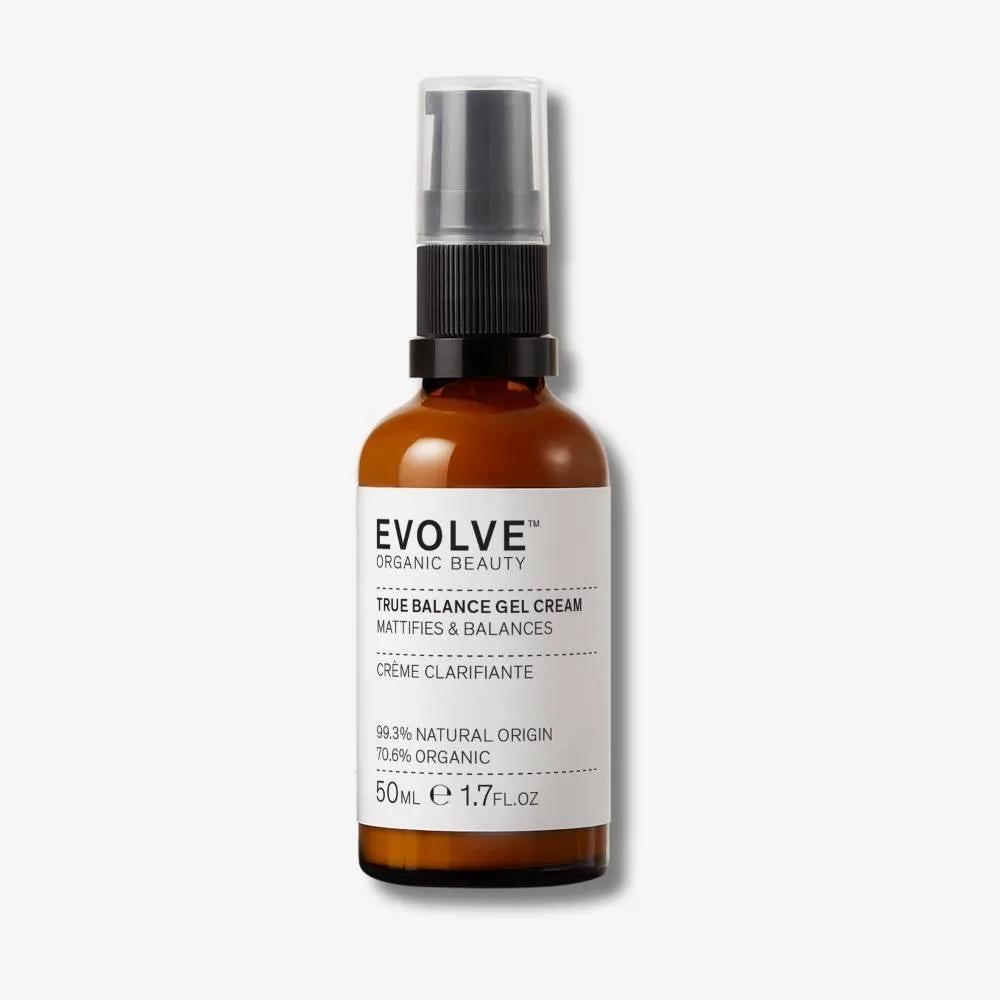
True Balance Gel Cream
-
True Balance Gel Cream: Formulated with Moringa and Noni Plant stem cells, known to detoxify the skin, reduce sebum production, and minimise the appearance of pores. Supports the choice for an oily T-zone where shine and visible pores are the main concerns.
-
True Balance Gel Cream: Protects and balances the microbiome. A useful detail if you prefer a moisturizer that supports the skin's natural balance rather than simply adding moisture.
Morning vs. night: when to apply gel cream
There is no rule that a gel cream is only for one time of day. The right slot depends on what else you use and how your skin feels.
- Morning routine: Apply after serum and before sunscreen. A gel cream is a good fit under makeup because it is designed to feel light, though the catalog does not make a specific makeup claim.
- Night routine: Apply as your last step after serum. If your cheeks feel dry at night, you may prefer a richer moisturizer there and keep the gel cream for your T-zone — but the supplied information does not include a multi-zone application instruction, so treat that as personal preference rather than a product rule.
- Both morning and night: If your skin tolerates it, using the same gel cream twice a day keeps the routine simple. The catalog does not specify a maximum frequency, so stop or reduce use if skin feels tight or uncomfortable.
What to do if your skin feels dry or tight
A gel cream is not a rich moisturizer. If your cheeks feel tight after applying True Balance Gel Cream, you have two sensible options: apply a little more to the dry areas, or use a richer cream on those areas and keep the gel cream for the oily T-zone. The catalog does not provide a specific quantity or layering instruction beyond the general order above, so adjust based on comfort rather than a fixed rule.
The product is described as suitable for oily and acne-prone skin. If your combination skin is more dry than oily, a gel cream may not be enough on its own — that is a trade-off to consider before buying.