Why the Tulips Window Set Makes a Practical Paper Towel Swap
The Tulips Window Swedish dishcloth set of 3 brings a cheerful floral print to your kitchen while doing the same heavy lifting as any SWEDEdishcloth: absorbing spills, wiping counters, and drying dishes without the waste of paper towels. Each cloth replaces up to 17 rolls of paper towels over its life, and the set gives you three cloths to rotate through a week of cleaning.
Because the cloths are printed with non-toxic, water-based ink, the tulip design stays vibrant through many washes — provided you follow the care routine the manufacturer supports. This guide walks you through daily use, washing, and end-of-life steps so you can keep the Tulips Window set working (and looking) its best.
What the Tulips Window Cloth Can Do (and What It Can't)
-
Eco-Friendly Swedish Dishcloths - Tulips Window Set of 3 (Paper Towel Replacements): Each cloth absorbs 20 times its weight in liquid, making it a super-efficient, eco-friendly cleaning tool. A single Tulips Window cloth can handle a large spill or a wet counter without needing a backup — a key advantage over paper towels that often tear or require multiple sheets.
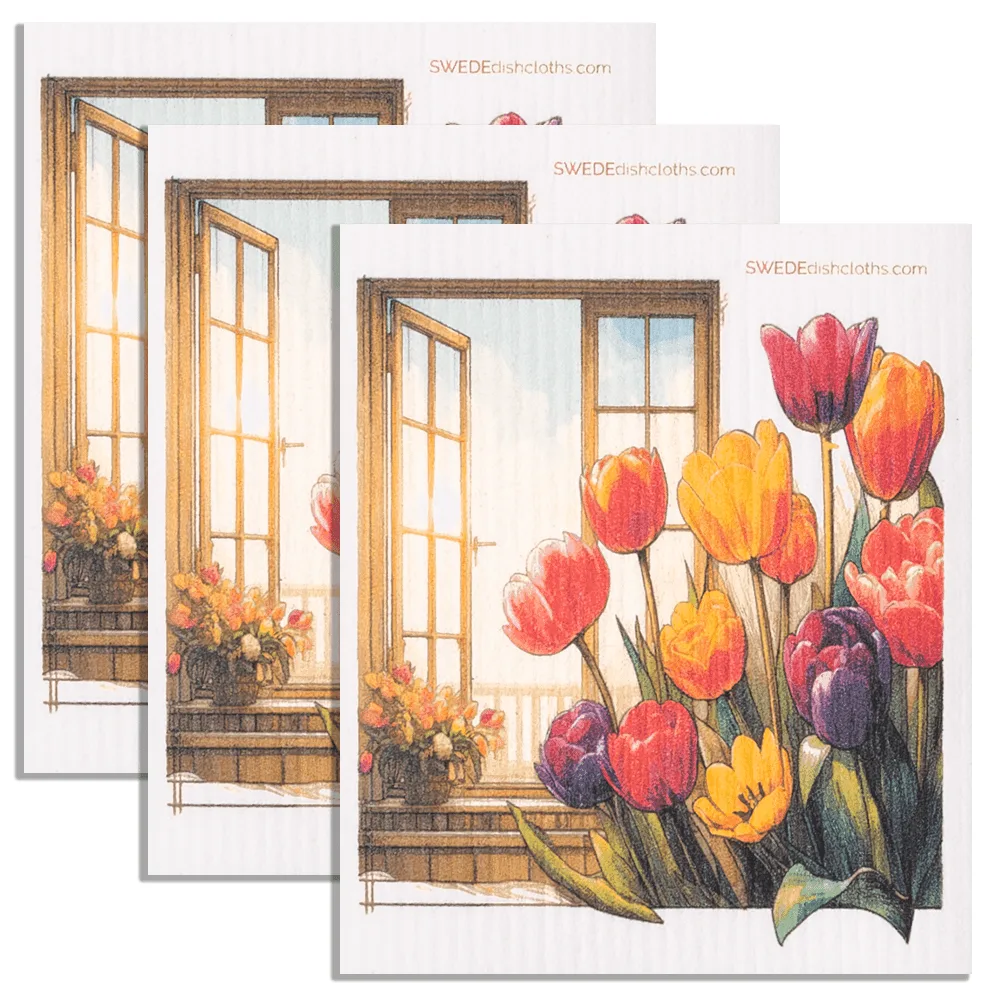
Eco-Friendly Swedish Dishcloths - Tulips Window Set of 3 (Paper Towel Replacements)
-
Eco-Friendly Swedish Dishcloths - Tulips Window Set of 3 (Paper Towel Replacements): Replace up to 17 rolls of paper towels with a single Swedish dishcloth. With three cloths in the set, you can realistically eliminate several weeks' worth of paper towel waste from your kitchen. The savings add up quickly in both cost and landfill reduction.
-
Eco-Friendly Swedish Dishcloths - Tulips Window Set of 3 (Paper Towel Replacements): SWEDEdishcloths are crafted from a unique blend of all-natural wood pulp cellulose from sustainable forests and renewable cotton fibers. The material blend gives the cloth its absorbency and durability. It is also fully compostable at end of life, so nothing goes to waste.
Daily Cleaning Routine for the Tulips Window Dishcloth
The Tulips Window cloth works best when you use it like a reusable paper towel — grab it for spills, wipe down counters after cooking, or dry freshly washed dishes. Here is a simple daily routine supported by the product record.
- Start with a damp cloth for most jobs: For wiping counters or cleaning up spills, wet the cloth slightly and wring it out. The dampness helps lift dirt and grease without leaving streaks. The cloth's 20x absorbency means even a small amount of water goes a long way.
- Use it dry for polishing glass and mirrors: For the 'window' part of the Tulips Window design, a dry cloth works well on glass, stainless steel, and mirrors. The cellulose fibers pick up dust and leave a lint-free shine — no paper towel fuzz.
- Rinse after each use: After cleaning, rinse the cloth under warm water and squeeze out excess moisture. Hang it to dry over the sink or a dish rack. A dry cloth resists odors and stays fresh for the next use.
How to Wash the Tulips Window Cloths (Without Damaging the Print)
SWEDEdishcloths are machine washable up to 200 times, and the Tulips Window set is no exception. The non-toxic, water-based ink is designed to withstand regular washing, but a few simple habits help preserve the print longer.
Toss the cloths in the washing machine with your regular laundry — warm or cool water is fine. Avoid bleach and fabric softener, which can break down the cellulose fibers and dull the colors. You can also run them through the dishwasher on the top rack (skip the heated dry cycle).
After washing, reshape the cloth while damp and lay flat or hang to dry. The cloth will shrink slightly and stiffen as it dries, but it softens again once wet. This is normal behavior for cellulose-based materials.
When to Retire a Tulips Window Cloth
Even the most durable dishcloth eventually wears out. The product record confirms each cloth is washable up to 200 times. After that, the fibers may start to break down, and the cloth will lose absorbency. Here is how to know when it is time to retire one.
- The cloth feels thin or develops holes: Over hundreds of washes, the cellulose fibers naturally degrade. If the cloth starts to tear or feels noticeably thinner than when new, it has reached the end of its useful life.
- It no longer absorbs like it used to: If water beads up on the surface instead of soaking in, the cloth's absorbency is gone. At this point, it will not clean effectively and should be replaced.
- The print fades significantly: Some fading is normal after many washes, but if the tulip design becomes hard to see, the ink has worn away. The cloth still works, but the decorative appeal is diminished.
End-of-Life: Composting and Recycling the Tulips Window Cloth
When a Tulips Window cloth has done its job, it does not have to go to a landfill. The product record states that the cloths are made from all-natural materials and are completely compostable. You can toss used cloths into a home compost bin or add them to your municipal green waste. If you do not have a compost pile, the record notes that you can recycle used dishcloths with old newspapers — the cellulose fibers are similar to paper.
Seventeen rolls of paper towels generate about ten pounds of waste, plus plastic packaging that can take 100 years to biodegrade. By composting or recycling your retired dishcloths, you keep that waste out of the waste stream entirely.
Honest Tradeoffs to Consider
The Tulips Window set is a strong alternative to paper towels, but it is not a perfect replacement for every situation. The cloths need to be washed after heavy use (greasy pans, raw meat spills) and dried between uses to prevent odors. They also take up a little more space in the kitchen than a roll of paper towels.
For everyday spills, counter wiping, and dish drying, the tradeoff is minimal. The set of three means you always have a clean cloth ready while the others are drying or in the wash. If you are looking to reduce household waste without sacrificing cleaning performance, the Tulips Window dishcloth set is a practical, long-lasting choice.