Start with what the blend actually contains
Tulsi Ginger Green Tea combines high-quality green tea, farm-fresh tulsi leaves, and warming ginger. The catalog describes it as a balanced herbal infusion that pairs the light, clean taste of green tea with the earthy, aromatic character of tulsi and a gentle ginger kick. It is packed in convenient tea bags, so you do not need loose-leaf equipment to brew it.
If you are new to tulsi, expect a flavor that sits somewhere between basil and mint, with the ginger adding warmth rather than heat. The green tea base keeps the cup refreshing rather than heavy, which is why the catalog positions it for everyday wellness across all seasons.
What the catalog confirms about this tea
-
Tulsi Ginger Green Tea: Crafted with high-quality green tea, farm-fresh tulsi leaves, and warming ginger. These three ingredients define the flavor and aroma you will taste in every cup.
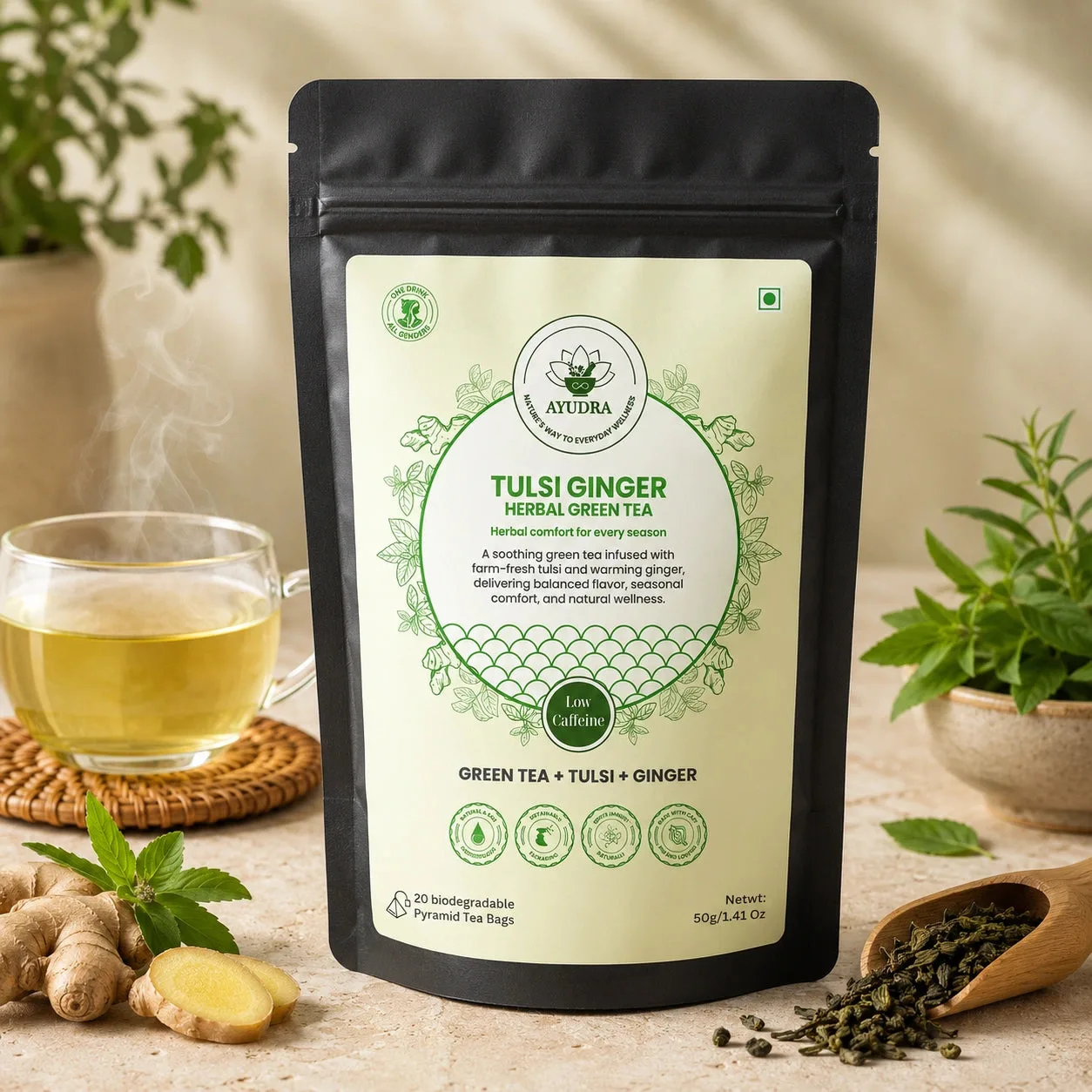
Tulsi Ginger Green Tea
-
Tulsi Ginger Green Tea: Packed in convenient tea bags for easy brewing. You can brew a cup without a teapot or strainer, which lowers the barrier for first-time drinkers.
-
Tulsi Ginger Green Tea: Described as suitable for daily consumption and all seasons. This helps you judge whether the blend fits a regular routine rather than an occasional treat.
What to look for when comparing tulsi ginger teas
Not every tulsi ginger blend is built the same way. Use these checkpoints when you read a label or product page.
- Ingredient order and clarity: Look for green tea, tulsi, and ginger listed plainly. The Ayudra catalog names all three, so you know the base before you buy.
- Format: bags vs loose leaf: Tea bags suit quick daily cups and office desks. Loose leaf gives more control over strength but needs a strainer. This blend comes in bags.
- Weight options: A larger bag lowers the cost per cup if you drink daily, but only if you store it well and finish it before the flavor fades.
- Flavor balance: Some blends lean heavily on ginger for heat; others let tulsi dominate. The catalog describes this one as balanced and soothing, with ginger as a warming note rather than the main event.
Choosing between 50gm, 100gm, 150gm, and 200gm
The only variant in the catalog is weight. There is no difference in ingredients or blend between sizes, so the decision comes down to how often you brew and how much cupboard space you have.
- 50gm: Best for a first trial or occasional drinkers. You can test whether you enjoy the tulsi-ginger combination without committing to a large bag.
- 100gm: A middle ground for one cup most days. It is easier to store than a 200gm bag and still gives you a few weeks of regular brewing.
- 150gm: Suits a household where two people drink tea regularly, or one person who brews multiple cups a day.
- 200gm: The best value per gram if you already know you like the blend and will drink it consistently. Only choose this if you can keep the bag sealed and away from heat and moisture.
How to brew your first cup without bitterness
The catalog does not supply exact water temperature or steeping time, so start conservatively. Use freshly boiled water that has cooled for a minute or two, and steep for a short time—around two to three minutes—then taste. Green tea turns bitter when over-steeped, and the ginger and tulsi will still come through if you keep the steep short. If the cup tastes weak, add another thirty seconds rather than starting over with a stronger bag.
One tea bag per cup is the usual starting point. If you prefer a stronger ginger note, use a smaller cup rather than two bags, which can make the green tea tannins harsh.
Trade-offs to weigh before you buy
- Caffeine: Green tea contains caffeine. The catalog does not state the exact amount, so if you are sensitive, avoid brewing this blend late in the evening or check with your healthcare provider.
- Herbal claims: The catalog mentions adaptogenic and immune-supporting properties associated with tulsi, but these are general descriptions of the herb, not medical claims about this product. Treat them as background, not a reason to replace prescribed care.
- Storage: The catalog does not specify a shelf life or storage instructions. Keep the bag tightly closed in a cool, dry place and use your senses—if the tea smells flat or musty, replace it.
- Price per cup: The listed catalog price is USD 599.25 against a comparison price of USD 799.00. Calculate the cost per cup based on how many bags you use daily to see whether a larger size genuinely saves money for your routine.
Who this blend suits—and who might look elsewhere
This tea is a good fit if you want a gently warming, aromatic cup that works in the morning or afternoon, and you prefer the convenience of tea bags. It also suits drinkers who find pure green tea too grassy and want tulsi and ginger to round out the flavor.
If you need a caffeine-free evening tea, look for a pure herbal blend instead—green tea is the base here. And if you dislike basil-like flavors, tulsi may not be your herb; a plain ginger green tea would be a safer first step.