What you are actually buying in a 250g jar
Tulsi Honey 250g from TEA AND is a raw, unpasteurized honey the producer describes as coming from the medicinal flower of vana tulsi (holy basil). If you are shopping for an herbal honey for tea, that origin is the main reason to consider it: the flavor is tied to the tulsi bloom rather than to a generic wildflower source.
The record also says the honey contains naturally occurring pollens, propolis and enzymes, and that flavor, color and density can vary with flowering and climatic changes. In practice, that means two jars bought at different times may not look or taste identical. That is a normal property of raw honey, not a defect, and it is worth knowing before you buy a larger format or plan to give it as a gift.
The product record at a glance
-
Tulsi Honey 250g: Tulsi Honey by Tea And India, described as connisseru's delight, is a raw honey produced from the medicinal flower of vana tulsi (holy basil). This is the core identity of the product: a single-floral raw honey with a tulsi connection, not a blended table honey.
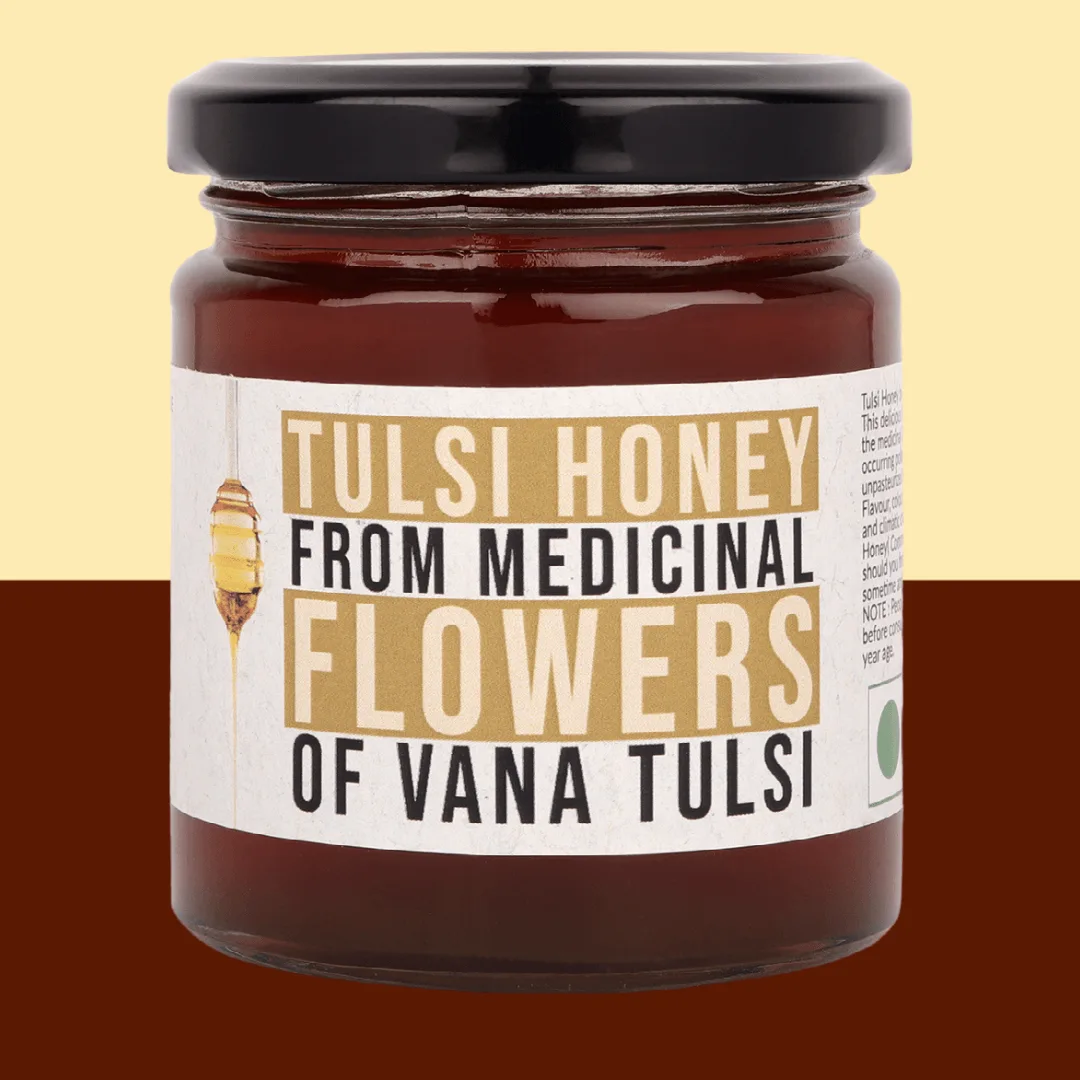
Tulsi Honey 250g
-
Tulsi Honey 250g: The honey contains naturally occurring pollens, propolis, enzymes and unique flavors found in raw unpasteurized honey. These are the qualities buyers usually look for when choosing raw honey over commercial processed honey.
-
Tulsi Honey 250g: Flavor, color and density of natural honey may vary due to flowering and climatic changes. Sets realistic expectations about batch-to-batch differences in a raw product.
Tulsi honey taste: what to expect from a raw, single-floral jar
The supplied record does not give a detailed tasting note, so the honest answer is that the exact flavor depends on the tulsi bloom and the season. What the record does confirm is that the honey carries the unique flavors of raw unpasteurized honey and that those flavors can shift with flowering and climate.
If you are used to mild clover or blended supermarket honey, expect a more variable experience: the same jar can taste different from one purchase to the next. That variability is part of buying raw honey, and it is a reason to try a 250g jar before committing to a larger size if you are new to tulsi honey.
Tulsi honey vs plain honey: the practical differences
Plain honey is a broad category, and the supplied evidence does not describe a specific comparison product. The useful comparison is therefore between this raw tulsi honey and the processed commercial honey many people keep in the cupboard.
- Raw vs processed: Tulsi Honey is described as raw and unpasteurized, with naturally occurring pollens, propolis and enzymes. Commercial processed honey is typically pasteurized and filtered, which gives a more uniform product but a different character.
- Crystallization speed: The record states that raw honey crystallizes much faster than processed commercial honey because of naturally found wax and pollens. If you want a honey that stays liquid on the shelf for months, that is a real trade-off.
- Batch consistency: Flavor, color and density of this honey may vary with flowering and climatic changes. Plain commercial honey is usually blended for consistency. Choose tulsi honey if you value character over uniformity.
- Tulsi connection: This honey is produced from the medicinal flower of vana tulsi (holy basil). If you specifically want a tulsi-associated honey for tea, that origin is the reason to pick it over a generic raw honey.
How to use tulsi honey in tea and everyday food
The supplied record does not include preparation or operating instructions, so the following are general serving ideas rather than manufacturer directions. Keep the honey out of actively boiling liquid if you want to preserve its raw character, and add it once the cup has cooled slightly.
- Stir into warm tea: Use it as you would any raw honey: stir a spoonful into warm tea after steeping. The tulsi origin makes it a natural fit for herbal and tulsi-based brews.
- Drizzle over breakfast foods: Raw honey works on yogurt, oatmeal, toast or pancakes. Because the flavor can vary by batch, taste a little first before adding a lot.
- Use it in place of plain honey in recipes: Substitute it one-for-one in recipes that call for honey, keeping in mind that raw honey is denser and may crystallize. Warm the jar gently if needed.
- Keep the jar clean and dry: Use a dry spoon to avoid introducing moisture, and store the jar as you would other raw honey. The record does not specify a storage temperature, so follow general pantry guidance and your own judgment.
Crystallization is normal: how to bring it back to liquid
The product record is explicit that raw honey crystallizes much faster than processed commercial honey due to naturally found wax and pollens. If you find crystals, the record advises placing the jar in hot water or in the sun for some time, after which it should return to its natural liquid state. That is a simple fix, but it is worth knowing before you open the jar and think something has gone wrong.
Safety and suitability notes from the record
- Tulsi Honey 250g: Avoid giving honey to children below one year of age. This is a firm safety rule that applies to all honey, including this raw tulsi honey. It matters if you are buying for a household with an infant.
- Tulsi Honey 250g: People with specific allergies or diabetes should consult a specialist before consuming honey. The record itself flags these groups, so it is not a claim invented for this article. If either applies to you, check with a professional before buying.
What the record does not settle before you buy
The supplied product information does not include a detailed flavor profile, a harvest date, a specific tulsi variety beyond vana tulsi, or storage instructions beyond the crystallization note. It also does not confirm any health benefits, so treat any wellness claims you see elsewhere with caution. If those details matter to your decision, ask the seller directly before ordering. What the record does support is a raw, single-floral honey with a tulsi origin, natural variability, and a clear safety rule for infants.